
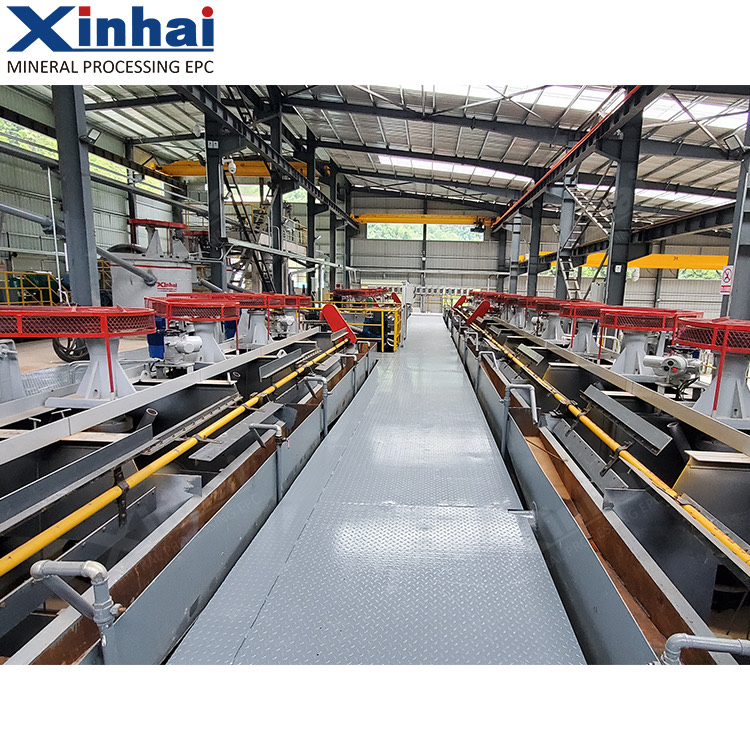
Typical process flow
- 1Crushing & screening
Run-of-mine ore is reduced in two or three stages to a ball-mill feed size below 10-15 mm using jaw and cone crushers in closed circuit with screens.
- 2Grinding & classification
A wet ball mill in closed circuit with hydrocyclones grinds to 60-80% passing 75 micron to liberate galena and sphalerite without over-generating slimes.
- 3Lead flotation (galena first)
Galena is floated in a rougher-scavenger-cleaner circuit while sphalerite and pyrite are held down with zinc sulphate and lime, producing a lead concentrate.
- 4Zinc flotation (activate then float)
The lead-circuit tailing is conditioned with copper sulphate to activate sphalerite, then floated at raised pH to make a separate zinc concentrate.
- 5Dewatering & tailings
Each concentrate is thickened and filtered to a shippable cake; tailings are thickened with process water recycled to the plant.
Lead-zinc ores are the classic test of selective flotation. Galena (PbS) and sphalerite (ZnS) sit side by side in the same ore, both float readily with sulphide collectors, and both often carry payable silver. The job is not to float the sulphides, that is easy, but to float them one at a time so the smelter receives two clean concentrates instead of one penalized bulk product. Xinhai builds the flowsheet around that differential separation.
Why differential flotation
A bulk lead-zinc concentrate is almost worthless: lead and zinc smelters pay for their own metal and penalize the other as a contaminant. The economic flowsheet therefore separates the two. The standard route floats galena first because it is naturally more floatable, while sphalerite is depressed with zinc sulphate (often with sodium cyanide or a cyanide-free SO2 scheme where cyanide is restricted). Once the lead concentrate is removed, the depressed sphalerite is reactivated with copper sulphate and floated at elevated pH, typically 10.5-11.5 with lime, to reject pyrite. Getting the depressant and activator balance right is the whole game.
The recommended flowsheet
Crushing, grinding and classification
Ore is crushed with a jaw crusher and cone crusher, then ground in a wet ball mill closed with a hydrocyclone cluster to 60-80% passing 75 micron. Liberation is critical for fine-grained or intergrown Pb-Zn ores; under-grinding leaves middlings that smear grade across both concentrates, while over-grinding makes slimes that hurt selectivity.
Sequential lead then zinc flotation
The conditioned pulp enters the lead circuit, a rougher-scavenger-cleaner train of mechanical flotation cells, dosed with a selective collector and a sphalerite depressant. The lead concentrate is cleaned two or three times to a 50-65% Pb grade. The lead tailing then goes to the zinc circuit, where copper sulphate activates the sphalerite and a fresh collector floats it to a 48-58% Zn concentrate. The full flotation equipment range covers rougher, scavenger and cleaner duties, and a packaged flotation plant can be configured for the two-circuit layout. Silver, if present, generally follows the lead concentrate and adds payable value.
Dewatering
Both concentrates are thickened in a thickener and filtered to a low-moisture cake, because concentrate moisture is freight paid on water over long export hauls. Tailings are thickened and stored with clarified water returned to the mill.
Design choices that drive results
- Reagent scheme: the depressant-activator pair (zinc sulphate, cyanide or SO2, copper sulphate) decides how cleanly Pb and Zn separate; it is set from testwork, never copied.
- Grind size: fixed by liberation; the single biggest lever on misplacement between the two concentrates.
- Oxidation: oxidized lead-zinc minerals float poorly and may need sulphidization or a separate route, so the sulphide-to-oxide ratio must be measured first.
- Pyrite and iron: high pyrite raises lime demand and complicates zinc selectivity.
For a worked regional example, see the 1,200 t/d lead-zinc flotation plant in Morocco, and for the selective-separation logic in a related ore, read our copper flotation flowsheet guide. Two lead-zinc ores rarely behave alike, so Xinhai runs the ore test, designs the differential circuit and delivers the complete plant under an EPC+M+O contract. To size a flowsheet for your ore, contact us for an ore test.
Frequently Asked Questions
Why float lead before zinc instead of a bulk concentrate?
Lead and zinc smelters pay only for their own metal and penalize the other, so a mixed bulk concentrate is heavily discounted. Differential flotation floats galena first while depressing sphalerite, then activates and floats the zinc separately. This produces two clean, separately saleable concentrates and recovers payable silver, which is far more valuable than a single bulk product.
What grade and recovery can lead-zinc flotation achieve?
On clean sulphide ores a well-designed circuit typically yields a 50-65% Pb concentrate at 85-95% Pb recovery and a 48-58% Zn concentrate at 85-92% Zn recovery. Figures depend on mineralogy, grain size, oxidation and pyrite content. Complex or oxidized ores recover less, which is why grade and recovery targets are set from testwork rather than promised.
What reagents are used to separate lead from zinc?
The lead circuit uses a sulphide collector with a sphalerite depressant, classically zinc sulphate plus sodium cyanide, or an SO2-based scheme where cyanide is restricted. The zinc circuit then adds copper sulphate to activate the depressed sphalerite and lime to raise pH and reject pyrite, followed by a fresh collector. The exact dosages are tuned to your ore.
Does the silver report to the lead or zinc concentrate?
In most lead-zinc ores silver associates with galena and reports mainly to the lead concentrate, where the smelter pays for it as a by-product. Some silver can follow the zinc, depending on mineralogy. A mineralogical and assay study during testwork shows where the silver deports so the flowsheet and smelter terms can be set to capture its value.
Can oxidized lead-zinc ore be floated?
Oxidized lead-zinc minerals such as cerussite and smithsonite do not float with standard sulphide collectors. They usually require sulphidization with sodium sulphide before flotation, or a different route altogether for highly oxidized ore. Measuring the sulphide-to-oxide ratio in testwork is essential, because applying a sulphide flowsheet to oxide ore leaves most of the metal in the tailing.
Related projects
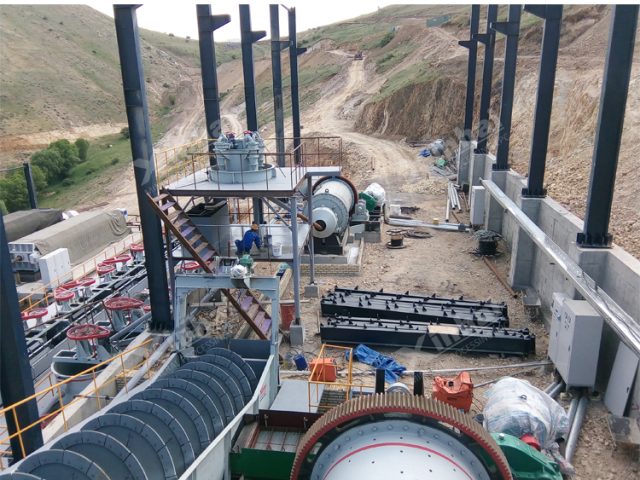
2 Mt/a Spodumene (Lithium) Plant — Zimbabwe
Typical 6% Li2O concentrate at 75-85% recovery; DMS plus flotation flowsheet
Read case →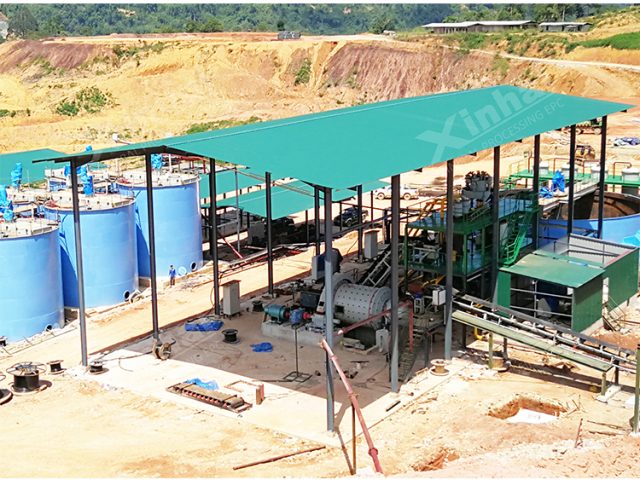
1,000 t/d Gold CIP Plant — Nicaragua
Typical 90-95% Au recovery on clean free-milling ore; CIP route lowered carbon cost
Read case →500 t/d Gold CIP Plant — Sudan
Typical 90-94% Au recovery on free-milling ore; compact CIP layout for fast deployment
Read case →