
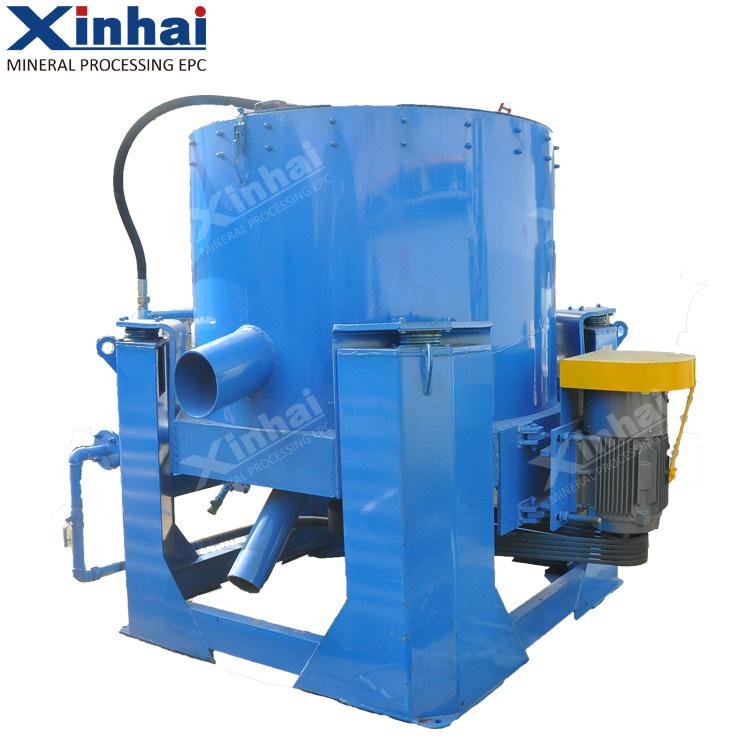
Typical process flow
- 1Crushing & washing
Ore is crushed and scrubbed in a washing/screening stage to strip clay and slimes, which often raises the lump-ore grade enough to ship part of the feed directly.
- 2Screening & sizing
Washed ore is screened into size fractions so each downstream device, jig, table or magnetic separator, sees a controlled feed size.
- 3Gravity concentration (jig & table)
Coarse and medium manganese is upgraded by jigging and shaking tables, exploiting the density difference between manganese minerals and silica gangue.
- 4High-intensity magnetic separation
Fine and middling fractions pass through wet high-intensity magnetic separators that capture weakly magnetic manganese minerals from non-magnetic gangue.
- 5Dewatering & tailings
Concentrate is dewatered to a shippable product; slimes and tailings are thickened with wash and process water recycled to the plant.
Manganese is awkward to beneficiate because the ore is variable and the minerals are only weakly magnetic. Much of the world’s manganese sits in clay-rich, weathered deposits where the first and cheapest gain is simply washing the dirt off. Beyond that, manganese oxides and carbonates carry a useful density contrast against silica but respond only to high-intensity magnetic fields, so the economic flowsheet combines three tools, washing, gravity and high-intensity magnetic separation, applied in that order.
Start with washing
Weathered manganese ore is typically locked up in or coated with clay and fine silica. Scrubbing and screening removes that low-grade slime fraction and frequently lifts the lump-ore grade by several percentage points on its own, sometimes enough to ship part of the washed lump directly without further treatment. Washing also unburdens the gravity and magnetic stages downstream by removing the slimes that would otherwise blind screens and dilute concentrate. For many ores, the wash plant is where the largest, lowest-cost grade improvement is won, which is why the flowsheet always begins there.
The recommended flowsheet
Crushing, washing and sizing
Run-of-mine ore is crushed with a jaw crusher and, where needed, a cone crusher, then scrubbed and screened. Sizing is essential: the washed ore is split into fractions so each gravity and magnetic unit receives a controlled feed size. Screening equipment closes the circuit and keeps each stream within its target band.
Gravity concentration
Coarse and medium manganese is upgraded by gravity, which is cheap and reagent-free. Jigs treat the coarser fraction and a shaking table cleans the sands, both exploiting the density difference between manganese minerals (around 4-5 g/cm3) and silica gangue (around 2.65 g/cm3). The full gravity concentration range covers these duties. Gravity alone, however, leaves manganese in the finer and intergrown fractions, which is where magnetic separation takes over.
High-intensity magnetic separation
Manganese minerals are paramagnetic, weakly magnetic, so they need a strong field to be captured. A wet high-intensity magnetic separator pulls manganese from non-magnetic quartz and other gangue in the fine and middling streams, recovering manganese that gravity cannot. See the wet drum magnetic separator and the broader magnetic separation range, and for the choice between wet and dry routes read our wet vs dry magnetic separation guide. Dry high-intensity units suit arid sites and coarser feed.
Dewatering
The combined gravity and magnetic concentrate is dewatered to a shippable product on a thickener and filter, while slimes and tailings are thickened so wash and process water can be recycled, important where the wash circuit consumes large volumes.
Design choices that drive results
- Clay content: sets how much value washing alone delivers and how much water the plant needs.
- Mn-to-Fe ratio: high iron complicates the separation and may cap the achievable grade; it must be measured.
- Oxide vs carbonate: carbonate ores behave differently and can need calcination for some end uses.
- Magnetic field strength: because manganese is weakly magnetic, separator intensity is the key lever on fine-fraction recovery.
Manganese ores vary widely, so the split between washing, gravity and magnetic separation must be set from testwork rather than assumed. Xinhai runs the ore test, designs the staged flowsheet and delivers the complete processing plant under an EPC+M+O contract. To find the highest-value route for your ore, contact us for an ore test.
Frequently Asked Questions
Why does manganese ore need high-intensity magnetic separation?
Manganese minerals are paramagnetic, only weakly magnetic, so the low-intensity drum separators used for iron ore cannot capture them. A high-intensity field is required to pull manganese away from non-magnetic silica gangue, especially in fine and intergrown fractions where gravity is ineffective. This is why high-intensity magnetic separation is the workhorse stage after washing and gravity in most manganese flowsheets.
How much can washing alone improve manganese grade?
For clay-rich, weathered manganese ores, scrubbing and screening can raise the lump-ore grade by several percentage points by removing low-grade clay and slimes, sometimes enough to ship part of the washed lump directly. The exact gain depends on how much clay is present and how the manganese is distributed by size, both of which are measured in testwork before sizing the wash plant.
What manganese concentrate grade is achievable?
A combined washing, gravity and high-intensity magnetic flowsheet typically produces a 35-48% Mn concentrate at 70-90% recovery. Achievable grade is limited by the manganese-to-iron ratio and the degree of liberation, since high iron and fine intergrowth cap the upgrade. Targets are set from ore testwork rather than promised, because manganese deposits vary widely in mineralogy and clay content.
Does the order of washing, gravity and magnetic stages matter?
Yes. Washing comes first because it removes clay cheaply and unburdens later stages. Gravity follows to upgrade coarse and medium manganese without reagents. High-intensity magnetic separation comes last to recover the fine and middling manganese that gravity misses. Running them in this order captures the lowest-cost grade gains first and reserves the more expensive magnetic stage for the streams that need it.
Can low-grade manganese ore be made saleable?
Often yes. Many low-grade and weathered manganese ores upgrade well because the manganese is concentrated in particular size fractions or locked behind clay. Washing, gravity sorting and high-intensity magnetic separation together can lift a low-grade feed to a saleable 35-48% Mn concentrate. Whether it is economic depends on the Mn-to-Fe ratio and liberation, which testwork establishes before committing to a flowsheet.
Related projects
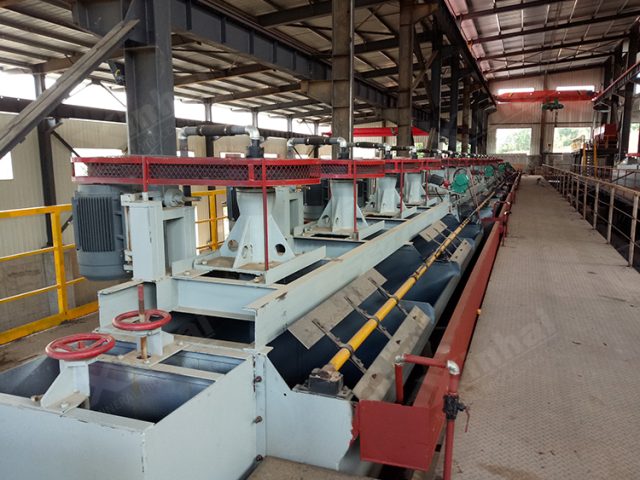
1,500 t/d Copper Flotation Plant — DR Congo
Typical 88-93% Cu recovery to a saleable concentrate; conventional sulfide flotation flowsheet
Read case →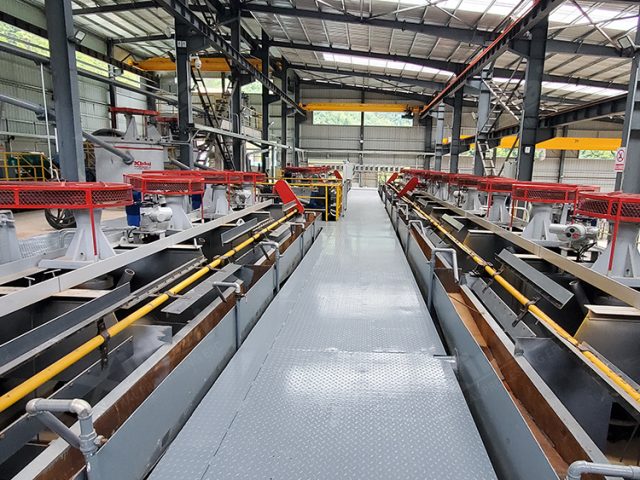
1,200 t/d Lead-Zinc Flotation Plant — Morocco
Separate Pb and Zn concentrates; typical 85-92% recovery via differential flotation
Read case →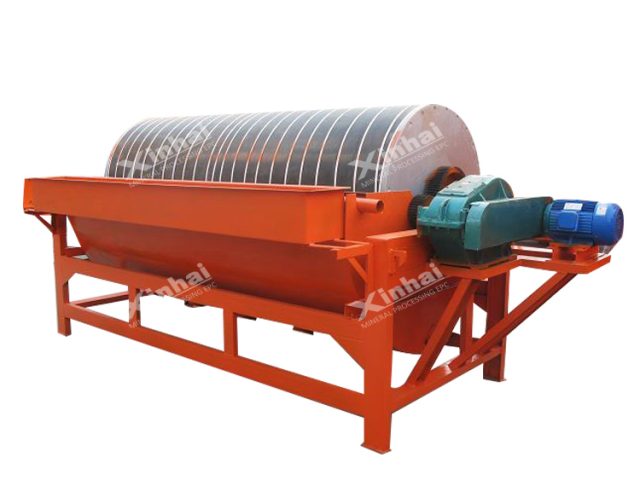
2,000 t/d Iron Ore Magnetic Plant — Kazakhstan
Typical 64-66% Fe concentrate at 90-95% recovery; staged wet magnetic separation
Read case →