
Thickening and dewatering remove water from concentrate and tailings, recovering process water and producing transportable solids. Thickeners settle solids to a dense underflow and recover clear water; filter presses and vacuum filters then squeeze the slurry to a low-moisture cake. Xinhai sizes each stage to your solids loading, target moisture and water-recovery goals.
Thickening and dewatering are the water-management end of every flowsheet. Concentrate must be dried for transport and sale, tailings must be densified for safe disposal or dry stacking, and process water must be recovered to cut consumption, which matters most at arid sites. The job is usually done in two steps: a thickener removes the bulk of the water by gravity settling, then a filter takes the thickened slurry down to a handleable, low-moisture cake.This hub carries the full sequence. The deep cone thickener settles solids with flocculant assistance to a high-density underflow while overflowing clarified water for reuse, ideal for paste tailings and high water-recovery duty. For final dewatering, the plate-and-frame filter press produces the driest cake, typically 15-25% residual moisture, in batch cycles suited to concentrates and difficult tailings, while the disc vacuum filter dewaters continuously at high throughput, well matched to free-filtering concentrates such as magnetite and many flotation products.Selection depends on solids type, required final moisture, continuous versus batch operation and capital budget. Filter presses give the lowest moisture but run in cycles; vacuum filters give continuous high tonnage at slightly higher moisture; thickeners almost always sit ahead of either to recover water and feed a consistent density. These units take feed from flotation and other concentration stages, and clarified overflow returns to the grinding circuit.Thickener sizing is driven by the solids settling rate measured in a settling test, which sets the required tank area, while underflow density is governed by bed depth, rake torque and flocculant dosing. Flocculant type and dose are worth getting right early: the correct polymer can transform a slow-settling slurry into a sharp interface, cutting both tank size and downstream filter load. On the filtration side, cake moisture and cycle time depend on particle size distribution and filter-cloth selection, so a bench filtration test on representative material is the most reliable basis for sizing. Where water is scarce or tailings must be dry-stacked, pairing a high-rate or deep cone thickener with a filter press gives the strongest combination of water recovery and final dryness.For choosing between the technologies, read our guide on tailings dewatering: thickeners vs filter presses vs vacuum filters. Share your solids type, tonnage and target cake moisture on the contact page for a dewatering recommendation.
Thickening & Dewatering models
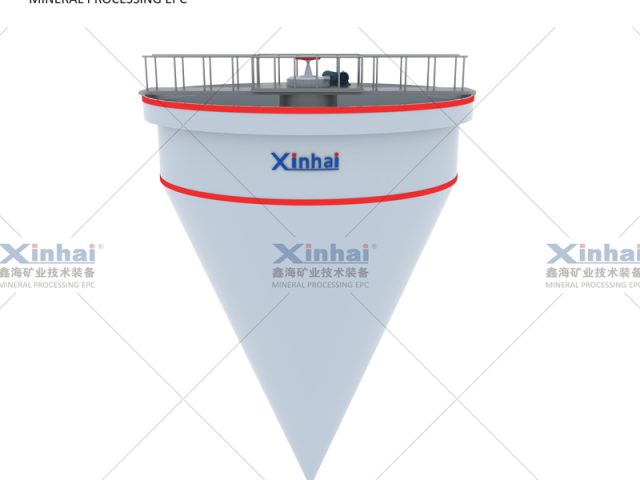
Deep Cone Thickener | High-Efficiency Thickener
Configurable by diameter (single units to large paste duty)
View details →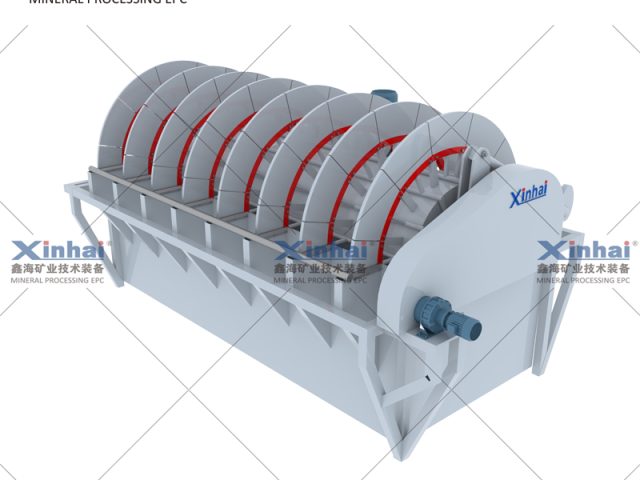
Disc Vacuum Filter | Ceramic Filter for Dewatering
Configurable by disc number / area
View details →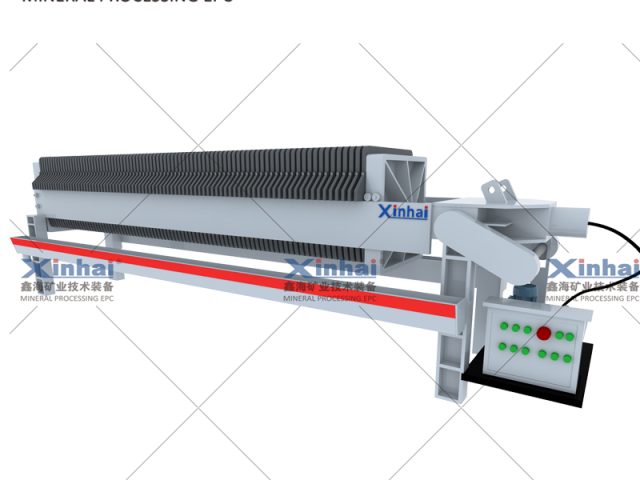
Filter Press | Plate-and-Frame & Membrane Filter Press
Configurable by plate area / chamber volume
View details →Frequently asked questions
Do I need a thickener and a filter, or just one?
Most circuits use both. The thickener does the bulk water removal by settling and recovers clarified water for reuse, delivering a dense underflow at consistent density. The filter then takes that thickened slurry to a low-moisture cake for transport or disposal. Using both reduces filter load and water consumption, which lowers operating cost overall.
What cake moisture can a filter press achieve?
Plate-and-frame filter presses typically produce the driest cake, often in the 15-25% residual moisture range depending on particle size and slurry properties, because they apply high mechanical pressure. Disc vacuum filters run continuously but leave somewhat higher moisture. Achievable moisture is confirmed by filtration test work on your specific material.
Filter press or vacuum filter for my concentrate?
Choose a filter press when you need the lowest possible moisture or are handling fine, hard-to-filter material, accepting batch operation. Choose a disc vacuum filter for high-throughput, free-filtering concentrates such as magnetite or coarse flotation products where continuous operation and lower capital matter more than the last few points of moisture.
How much water can a thickener recover?
A well-designed thickener with proper flocculant dosing recovers the large majority of the process water as clarified overflow for reuse, which is decisive at water-scarce sites. Underflow density and overflow clarity depend on solids settling characteristics and flocculant selection, both set during settling test work. We size thickener diameter to your solids loading and settling rate.