The role of the disc vacuum filter
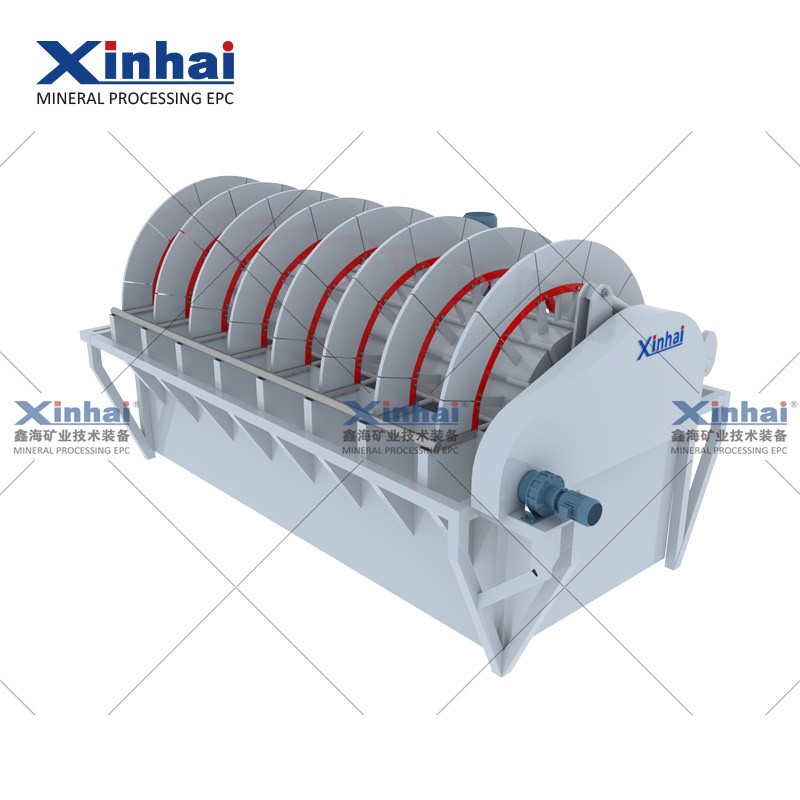
The disc vacuum filter is the continuous, low-cost workhorse for dewatering free-filtering concentrates such as iron, copper and other metal slurries. Where a filter press batches material to the driest possible cake, a disc filter runs nonstop and is ideal when you have steady tonnage of a material that filters readily. Several discs share one shaft, so a single compact machine offers a large filtration area.
How it works
Each disc is built from filter sectors covered in cloth or, in the ceramic version, fine ceramic plates. The lower part of each disc dips into a slurry tank; vacuum drawn through the shaft pulls filtrate through the media and forms cake on the disc face. As the disc rotates out of the slurry the cake dries, then a scraper or blow-back releases it into a discharge chute. The cycle repeats continuously as the shaft turns.
Ceramic vs conventional disc filters
Conventional cloth disc filters are simple and economical. Ceramic-plate filters use micro-porous media whose capillary action holds liquid but blocks air, so they need only a fraction of the vacuum energy and produce a noticeably drier cake with very clear filtrate. As a rule of thumb, ceramic units suit fine concentrates where moisture and energy cost matter; cloth units suit coarser, higher-tonnage duty. Xinhai sizes disc number and total area to your dry-tonnage target either way.
- Continuous operation at steady tonnage
- Large area from multiple discs on one shaft
- Ceramic option for low moisture and low vacuum power
- Self-cleaning media with backwash or scraper discharge
Where it fits the dewatering circuit
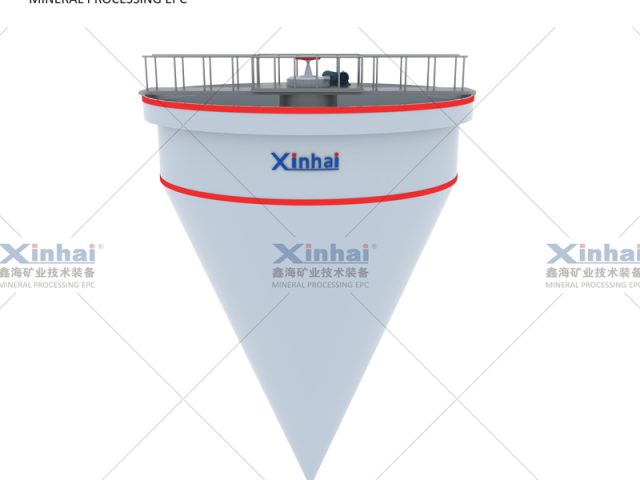
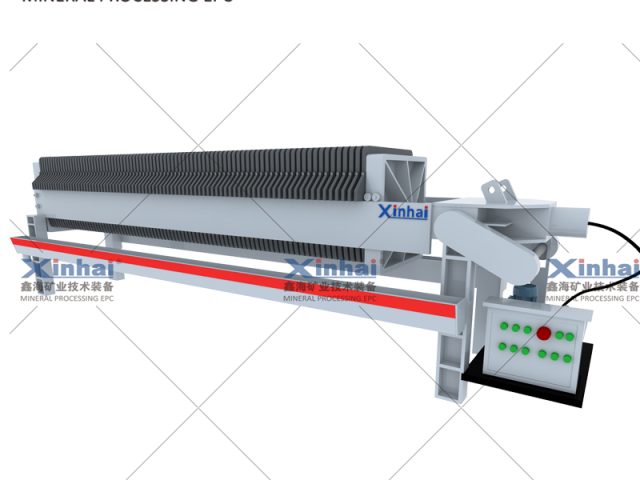
A disc vacuum filter follows a deep cone thickener that pre-dewaters and stabilizes the feed density, which keeps cake formation even and the filtrate clear. A steady, dense feed is the single biggest factor in consistent disc-filter output, so the thickener and filter are designed as a pair. For the driest possible cake, or for batch duty on slow-filtering tailings that do not dewater well under vacuum, compare the filter press instead.
Browse the full thickening and dewatering range, and see our tailings dewatering guide for how vacuum filters compare with presses and thickeners. To match a unit to your concentrate, contact our engineers.
Technical Specifications
| Type | Disc vacuum filter (cloth or ceramic plate) |
|---|---|
| Operation | Continuous, rotating disc |
| Filtration area | Configurable by disc count |
| Cake moisture | Low (ceramic lowest, ~10-15%) |
| Vacuum energy | Very low for ceramic media |
| Motor power | 5.5-45 kW |
| Discharge | Scraper / backwash self-cleaning |
| Application | Iron, copper & metal concentrate dewatering |
| Customization | OEM / ODM, sized by filtration test |
Frequently Asked Questions
What is the advantage of a ceramic disc filter?
Ceramic plates use micro-porous capillary media that hold liquid but block air, so the vacuum pump moves almost no air. That cuts vacuum energy dramatically, produces very clear filtrate and yields a drier cake than cloth filters. The trade-off is more careful media cleaning, but on fine concentrates the energy savings are significant.
Disc vacuum filter or filter press?
A disc vacuum filter runs continuously at low cost and suits steady tonnage of free-filtering concentrate, leaving slightly higher cake moisture. A filter press batches material to the driest cake and handles slow-filtering tailings better. Choose the disc filter for continuous concentrate duty; the press where minimum moisture or dry stacking is critical.
What cake moisture can a disc filter reach?
Conventional cloth disc filters typically leave 15-20% moisture, while ceramic-plate filters can reach roughly 10-15% on fine concentrate. Final moisture depends on particle size and filterability, confirmed by a filtration test. For the absolute lowest moisture a membrane filter press is still drier, at higher batch cost.
How do I size a disc vacuum filter?
Sizing is based on your dry tonnes per hour and the material's specific filtration rate from a bench test, which sets the total disc area and number of discs. Free-filtering coarse concentrate needs less area per tonne than fine material. Feeding from a thickener keeps feed density steady so the discs form cake evenly.