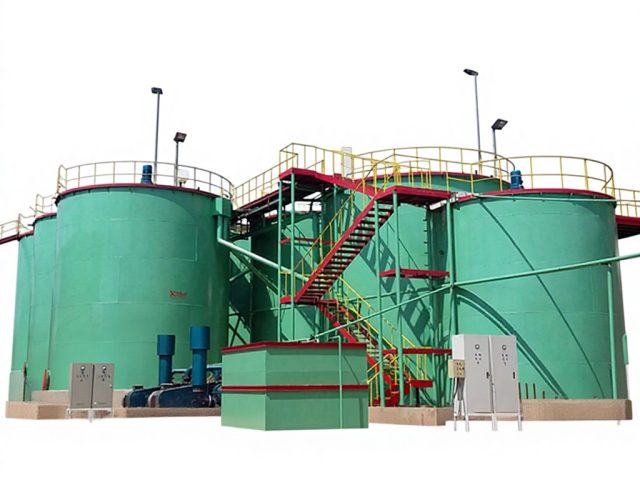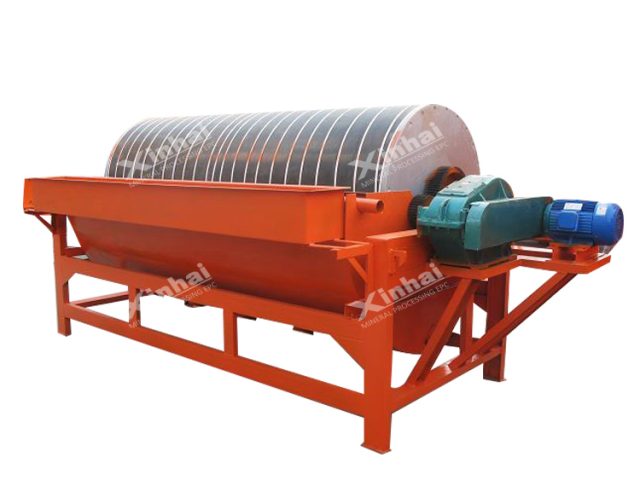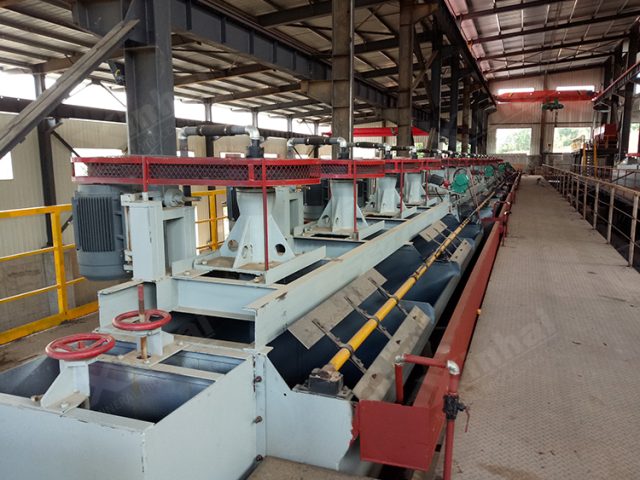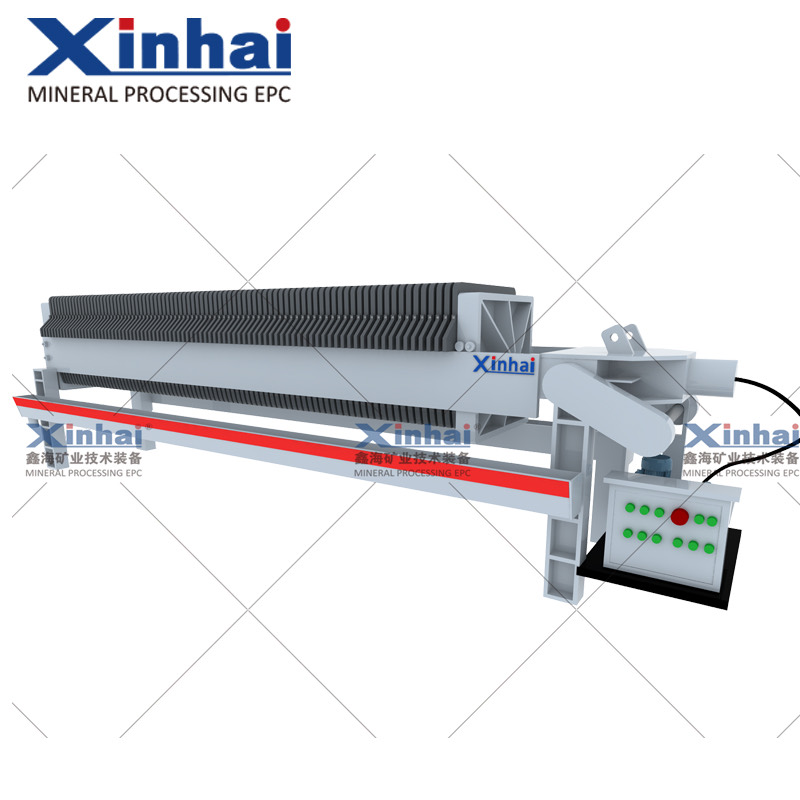
Thickeners are the first dewatering stage, lifting slurry from 20-30% to 45-65% solids and recovering process water at high tonnage. Filter presses then take that underflow to 75-85% solids, producing a stackable filter cake for dry tailings. Disc vacuum filters give continuous output at 80-88% solids for concentrate dewatering. Most plants combine a thickener with a filter.
Dewatering decides how much water a plant recycles, how it stores tailings and how heavily it depends on a dam. With dry-stack tailings now standard practice for new permits in many countries, choosing the right combination of thickener and filter is a core design decision, not an afterthought. The three devices below remove water at different points in the circuit and at very different cost-per-tonne, so the question is rarely which one but in what sequence.
The dewatering chain: coarse to fine water removal
Water removal gets harder and more expensive the drier you go. A sensible circuit removes the easy water first by sedimentation, then tackles the bound water by pressure or vacuum filtration. The typical sequence is thickener then filter, with cyclones sometimes splitting coarse sand for separate dewatering. Each stage has a job:
- Thickening: bulk water recovery and slurry densification, the cheapest water you will ever remove.
- Filtration: final moisture reduction to a handleable or stackable cake.
Thickeners vs filter presses vs vacuum filters
| Parameter | Thickener | Filter press | Disc vacuum filter |
|---|---|---|---|
| Output solids | 45-65% | 75-85% (cake) | 80-88% (cake) |
| Operation | Continuous | Batch | Continuous |
| Capacity | Very high (per m2 floor) | Medium | High |
| Capital cost | Low-medium | High | Medium-high |
| Best for | Bulk water recovery, dam feed | Dry-stack tailings, low residual moisture | Continuous concentrate dewatering |
| Cloth/wear parts | Rake liners, drive | Filter cloths, plates | Ceramic/cloth discs, vacuum pump |
Thickeners: the workhorse first stage
A deep cone thickener uses gravity sedimentation, aided by flocculant, to settle solids into a dense underflow while clarified overflow water returns to the plant. A deep-cone or high-rate design produces underflow at 45-65% solids and reclaims the bulk of process water, often 70-85% of incoming water, which is decisive in arid regions. Thickeners are the cheapest water removal per tonne and almost always come first. Where space allows, a thickener alone can feed a conventional tailings dam; where dry stacking is required, it pre-densifies feed for filtration and dramatically cuts the load on the downstream filter. See the full thickening and dewatering range for sizing options.
Thickeners are sized on settling-flux testwork, not rules of thumb, because settling rate and achievable underflow density depend heavily on particle size and flocculant response. The flocculant itself is a key operating cost and a key performance lever: the right type and dose can double the settling rate and add several percent to underflow solids, while an under-dosed or poorly mixed feed produces a dilute underflow that overloads the downstream filter. A deep-cone design pushes underflow density toward the high end, approaching paste consistency for some ores, which is why it is favored where dry or paste tailings are the goal.
Filter presses: the route to dry stack
A plate-and-frame filter press clamps filter cloths between plates and forces slurry through under pressure, producing a firm cake at 75-85% solids that can be trucked and stacked without a dam. The press operates in batches: fill, pressurize, optional membrane squeeze and air blow, then discharge. It delivers the lowest residual moisture and the clearest filtrate, which is why it is the standard for dry-stack tailings and for high-value concentrate where every percent of moisture costs freight. The trade-offs are higher capital cost, cloth replacement and batch cycle management.
Vacuum filters: continuous concentrate dewatering
A disc vacuum filter draws slurry onto rotating discs under vacuum, forming and discharging cake continuously at roughly 80-88% solids. Continuous operation suits steady, high-tonnage streams such as iron or copper concentrate, and ceramic-disc versions cut energy use sharply versus conventional cloth designs. Vacuum filters generally leave slightly more moisture than a pressure filter and depend on a reliable vacuum system, but their continuous output and lower per-tonne energy make them attractive where a stackable but not bone-dry cake is acceptable.
The ceramic-disc variant deserves a note because it changes the economics. Its microporous ceramic plates hold vacuum within the plate, so only a small vacuum pump is needed and air is not drawn through the cake as in a conventional cloth filter. The result is markedly lower power per tonne and very clear filtrate, at the cost of careful plate maintenance and acid cleaning to prevent blinding. For steady concentrate streams, the energy saving over the plant life can be substantial, which is why ceramic vacuum filters have become common on iron and copper concentrate duties.
How to choose and sequence
Start from the discharge requirement and work backward. If a permitted dam is available and water recovery is the goal, a thickener may be enough. If dry stacking is mandated, plan for a thickener plus filter press. For continuous concentrate at high tonnage, a thickener plus vacuum filter is often the lower-cost continuous option.
- Always thicken first. Feeding a filter at 50%+ solids instead of 25% can halve filter area and cost.
- Match flocculant to ore. Settling rate and underflow density depend heavily on flocculant type and dose; bench-test before sizing.
- Mind the fines. Clay-rich tailings settle slowly and filter slowly; a deep-cone thickener and paste-capable press handle them better.
- Recover water deliberately. Pair dewatering with slurry pumps and a closed water loop to minimize freshwater make-up.
- Plan for variability. Tailings characteristics shift as the orebody and grind change, so size equipment with headroom rather than at the average case.
One more consideration is increasingly decisive on new projects: the regulatory and closure picture. Dry-stack tailings remove the standing-water dam that drives the worst tailings-failure risks, and many jurisdictions now favor or require filtered tailings for new permits. That regulatory pressure, combined with the water-recovery savings, is why the thickener-plus-filter route is steadily displacing conventional dam-only schemes even where a dam would be technically adequate. Factoring closure cost and permitting risk into the comparison usually tilts the economics further toward filtration than capital cost alone suggests.
Dewatering is a system, not a single machine. Because Xinhai delivers the full circuit under one EPC+M+O contract, the thickener, filter and water-return are sized together against your actual tailings sample rather than bolted on at the end.
Frequently Asked Questions
What moisture can a filter press achieve on tailings?
A plate-and-frame filter press typically produces a cake at 75-85% solids, equivalent to roughly 15-25% moisture, depending on particle size and whether a membrane squeeze and air blow are used. Coarse, low-clay tailings reach the dry end of that range; clay-rich material stays wetter. That cake is firm enough to truck and stack as dry tailings.
Do I need both a thickener and a filter?
Usually yes. The thickener cheaply removes bulk water and densifies the slurry, which can halve the filtration area needed and cut filter capital and operating cost. Feeding a filter press directly with dilute slurry at 20-30% solids is far less economic than feeding thickener underflow at 50-60% solids. Thicken first, then filter.
Filter press or vacuum filter for concentrate dewatering?
Choose a vacuum filter for continuous, high-tonnage streams where 80-88% solids cake is acceptable and uptime matters; it has lower per-tonne energy on ceramic discs. Choose a filter press when you need the lowest possible moisture and clearest filtrate, for example high-value concentrate where freight cost per percent of water is significant, or for batch flexibility.
How much process water can a thickener recover?
A well-flocculated high-rate or deep-cone thickener commonly returns 70-85% of incoming water as clarified overflow for reuse. The exact figure depends on feed dilution, target underflow density and ore mineralogy. In arid sites this recovered water is the single biggest reason thickeners pay back quickly, often within the first year of operation.
What are the main wear and consumable costs?
For thickeners, rake liners, the drive and flocculant are the main running costs. For filter presses, filter cloths are the principal consumable and are replaced periodically as they blind. For vacuum filters, the discs and vacuum pump are the key items. Sizing for conservative cycle times and good cloth selection keeps these costs predictable.