Why a deep cone thickener
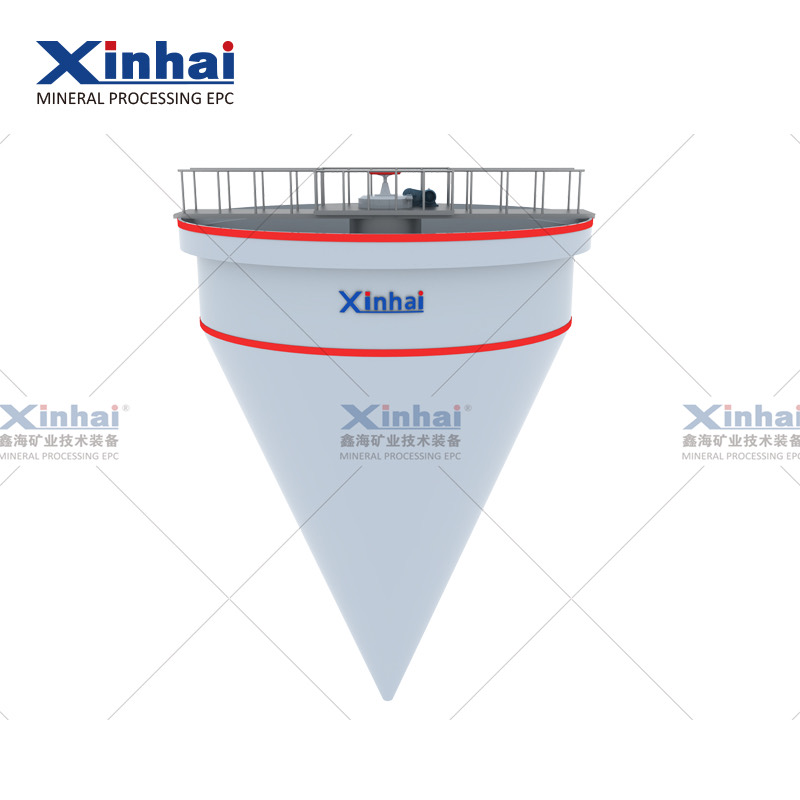
Thickening is the bridge between wet processing and water recovery. After flotation, leaching or gravity recovery, slurries are dilute and must be dewatered so clean water can be recycled and solids sent to filtration or tailings. The deep cone (high-efficiency) thickener achieves this with a steep conical bottom and a tall mud bed that compresses settled solids to a high underflow density, often 60-70% solids or more, far above a conventional flat-bottom thickener.
How it works
Feed enters a central feedwell where flocculant is dosed and mixed. Flocculated particles settle rapidly, clarified overflow weirs off the top for recycle, and the thickening rake slowly consolidates the bed in the deep cone. The combination of bed depth and slow raking dewaters the underflow by self-weight compression, so the discharge can be pumped as a dense paste or thickened slurry.
Selection logic
Sizing is driven by settling rate, target underflow density and flocculant response, usually confirmed by a settling test on your actual slurry. As a rule of thumb, finer and more clayey tailings settle slower and need more area or more flocculant. Xinhai sizes tank diameter, cone angle and rake torque to your throughput and required underflow, and integrates a bed-level and torque control loop so the rake never overloads.
- High underflow density for paste or pumped tailings
- Steep cone for compact footprint and gravity discharge
- Automatic flocculant dosing and bed-level control
- Torque-limited rake drive with lift protection
Where it fits the water circuit
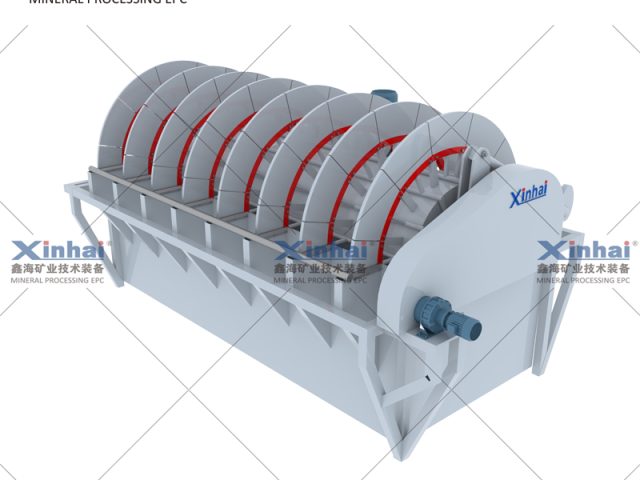
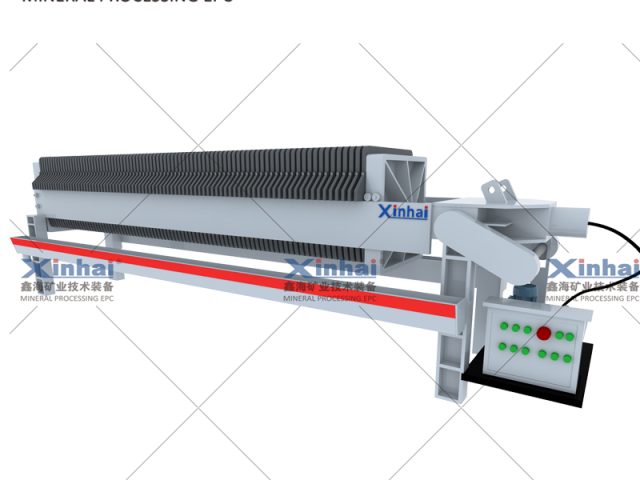
The deep cone thickener cuts fresh-water makeup by recycling clarified overflow and reduces the load on downstream filters by sending them a denser, more consistent feed, which shortens filter cycles and lowers their energy use. For final dewatering of the underflow, pair it with a filter press for the driest cake, or a disc vacuum filter for continuous, lower-cost duty on free-filtering concentrate. The dense underflow it produces is normally pumped on to those units rather than flowing by gravity.
See the full thickening and dewatering range, and for help choosing between thickener and filter our guide on tailings dewatering compares the options. To size a unit to your slurry, contact our engineers.
Technical Specifications
| Type | Deep cone / high-efficiency thickener |
|---|---|
| Underflow density | Typically 60-70%+ solids |
| Tank diameter | Configurable to throughput |
| Cone angle | Steep (deep cone) for dense discharge |
| Rake drive power | 1.5-45 kW |
| Control | Auto flocculant dosing, bed-level & torque control |
| Overflow | Clarified water for recycle |
| Application | Tailings, concentrate, paste thickening |
| Customization | OEM / ODM, sized by settling test |
Frequently Asked Questions
What underflow density can a deep cone thickener reach?
Deep cone thickeners typically reach 60-70% solids and can produce paste-grade underflow on suitable tailings, well above conventional flat-bottom thickeners. Actual density depends on particle size, flocculant and bed depth, so we confirm it with a settling test on your slurry before sizing the unit.
How do I size a thickener for my plant?
Sizing starts with a settling and flocculation test on your actual slurry to find the unit-area requirement. From there we set tank diameter, cone angle and rake torque to your throughput and target underflow density. Finer, more clayey tailings settle slower and need more area or flocculant.
Thickener or filter press for tailings?
They work together. A thickener recovers most of the process water and produces a dense underflow at low cost, while a filter press takes that underflow to a dry, stackable cake. For dry-stack tailings or strict water recovery you typically use both. Our tailings dewatering guide compares the trade-offs.
How much flocculant does it use?
Flocculant dosage depends on particle size and mineralogy, commonly in the range of tens of grams per tonne of solids, optimized by jar testing. The thickener's automatic dosing keeps consumption tight as feed varies. Lower dosage means lower operating cost, so reagent selection is part of the design work.