
Feeders meter material at a controlled, steady rate into crushers, mills and downstream units, preventing surging and choking. Grizzly feeders take coarse run-of-mine rock and scalp off fines and dirt ahead of the primary crusher; electromagnetic feeders dose finer material precisely. Xinhai sizes feeders to your feed size, tonnage and the unit they supply.
Feeding is the unglamorous step that keeps a plant running smoothly. Every crusher, mill and concentrator performs best on a steady, even feed; surging starves and then chokes the next unit, hurting both throughput and product consistency. A feeder’s job is to draw material from a hopper or stockpile and deliver it at a controlled rate, and in many cases to do useful work along the way such as scalping fines or dirt before crushing.This hub covers two feeder types for different positions in the circuit. The ZSW vibrating grizzly feeder handles coarse, heavy run-of-mine rock at the plant front, metering it into the primary jaw crusher while its grizzly bars scalp off fines and clay so the crusher only sees material that needs breaking, improving crusher efficiency and reducing wear. The electromagnetic vibrating feeder gives fine, precise rate control for smaller or pre-crushed material, dosing feed to mills, screens or reagent points where steady, adjustable flow matters more than handling large lumps.Selection depends on feed particle size, required tonnage, the degree of rate control needed and whether scalping is wanted. Heavy coarse feed and the need to remove fines point to a grizzly feeder; precise metering of finer material points to an electromagnetic unit. Grizzly feeders sit directly ahead of the crushing circuit, while electromagnetic feeders commonly meter feed onto a vibrating screen or into the grinding circuit.Grizzly bar spacing is a design choice worth getting right: it is normally set close to the crusher’s closed-side setting so that any material already fine enough to pass the crusher drops through and bypasses it, freeing crusher capacity for the rock that actually needs breaking. Feeder width and length are sized to the feed lump size and the target tonnage, with enough trough length to let the bed stratify so fines reach the bars. Electromagnetic feeders, by contrast, have no rotating parts and adjust output almost instantly through their controller, which makes them well suited to closed-loop control where feed rate must track downstream demand. We match feeder type, size and control to the unit being fed so the whole circuit sees a smooth, even flow.For how feeders fit a full plant layout, see our overview of a mineral processing EPC project. Tell us your feed size, target tonnage and the unit being fed on the contact page and we will specify the feeder.
Feeders & Conveying models
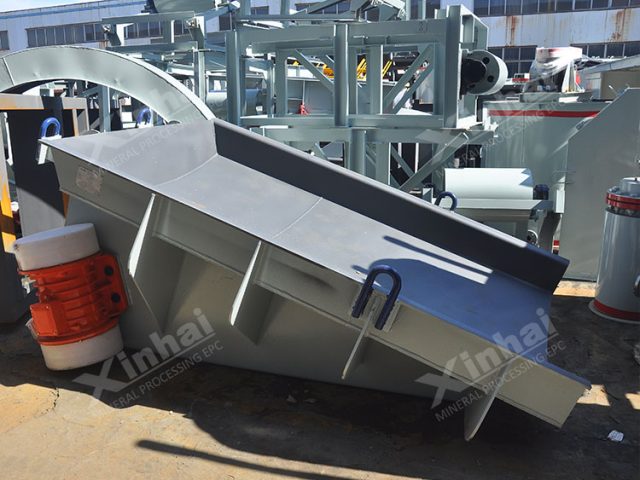
GZ Electromagnetic Vibrating Feeder | Precise Feeder
1-100 t/h (configurable)
View details →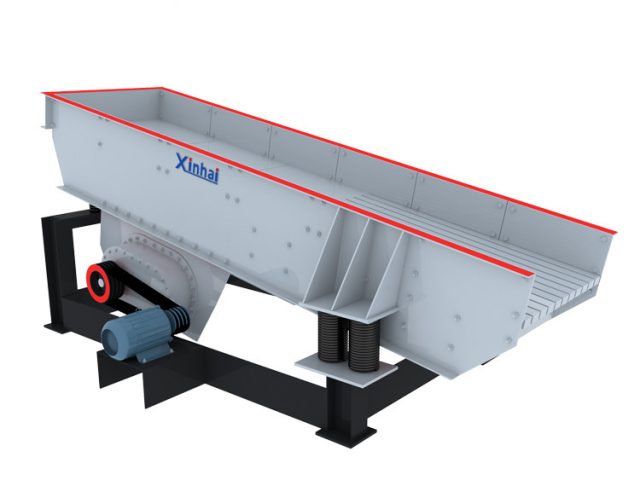
ZSW Vibrating Grizzly Feeder | Primary Feeder
30-1,000 t/h (configurable)
View details →Frequently asked questions
What does a grizzly feeder do that a plain feeder doesn't?
A grizzly feeder combines feeding with scalping: as it meters run-of-mine rock toward the primary crusher, its spaced grizzly bars let fines and clay fall through and bypass the crusher. This means the crusher only processes material that actually needs breaking, which boosts crusher capacity, cuts wear on the liners and removes dirt early.
Why is steady feeding important?
Crushers, mills and concentrators all perform best on an even, controlled feed. Surging overloads a unit one moment and starves it the next, causing inconsistent product size, lower throughput and accelerated wear. A correctly sized feeder smooths the flow so each downstream unit operates at its design point, protecting both recovery and equipment life.
What capacity and feed size can these feeders handle?
Grizzly feeders are built for coarse, heavy run-of-mine lumps and high tonnage at the plant front, with size matched to the primary crusher opening. Electromagnetic feeders handle finer, pre-crushed material at lower tonnage but with precise rate control. We size both to your specific feed size, bulk density and required throughput.
How is the feed rate controlled?
Vibrating feeders adjust output by varying vibration amplitude and frequency; electromagnetic units allow fine, near-instant rate changes through their controller, which suits automated dosing. Grizzly feeders are typically set for a target rate matched to the crusher. We can integrate feeders with plant control so feed rate tracks downstream demand.