
Flotation separates valuable minerals from gangue by attaching them to air bubbles in a reagent-conditioned slurry, lifting them into a froth concentrate. It is the dominant method for sulphide ores such as copper, lead-zinc and refractory gold. Xinhai supplies individual mechanical cells and complete rougher-cleaner-scavenger circuits matched to your mineralogy.
Flotation is the most widely used concentration method for fine-grained sulphide and some oxide ores. After grinding to liberation size, the slurry is conditioned with collectors, frothers and modifiers that make the target mineral hydrophobic; air bubbles then carry it to a froth layer that overflows as concentrate while gangue reports to tailings. A working circuit chains rougher, scavenger and cleaner stages so recovery and grade can be tuned independently.This hub offers two building blocks. The JJF mechanical flotation machine is a self-aerating cell available in a range of tank volumes, used as the rougher, scavenger or cleaner unit in copper, lead-zinc, fluorite and gold flowsheets. The copper flotation plant packages those cells with conditioning tanks, reagent dosing and froth handling into a complete circuit delivering typical copper recoveries of 85-95% at concentrate grades suited to smelter terms. Cell count and volume are scaled to throughput and required residence time.Selection hinges on ore mineralogy, liberation size, target grade-recovery point and froth characteristics. Feed first passes through the grinding circuit with a hydrocyclone controlling the flotation feed size, since flotation works best in a fairly narrow particle band, roughly 20-150 microns. Concentrate and tailings are then sent to thickening and dewatering. Reagent scheme, pH and conditioning time are set during ore test work, which is why a tested flowsheet beats off-the-shelf cell sizing.Total cell volume is sized from the flotation residence time the ore needs, which the laboratory kinetic test provides, multiplied by your slurry flow; the bank is then split into several cells in series so pulp cannot short-circuit from feed to discharge. Roughers are run for recovery, cleaners for grade, and a scavenger recovers what the rougher missed, with cleaner tailings and scavenger concentrate usually recycled to lift overall performance. Air rate, impeller speed, pulp level and froth depth are the day-to-day controls an operator uses to chase the target grade-recovery point. Because every orebody floats on its own kinetics, we size cells from your test data rather than from a generic capacity table.For the full circuit logic, see our copper ore beneficiation flowsheet guide. Tell us your ore type, head grade and target concentrate spec on the contact page and we will propose a cell arrangement and reagent regime.
Flotation Cells & Machines models
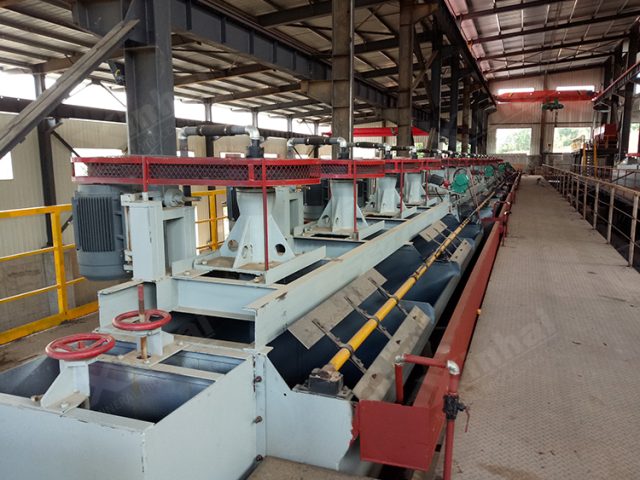
Copper Ore Flotation Plant | Rougher-Cleaner Circuit
100-3,000 t/d (configurable)
View details →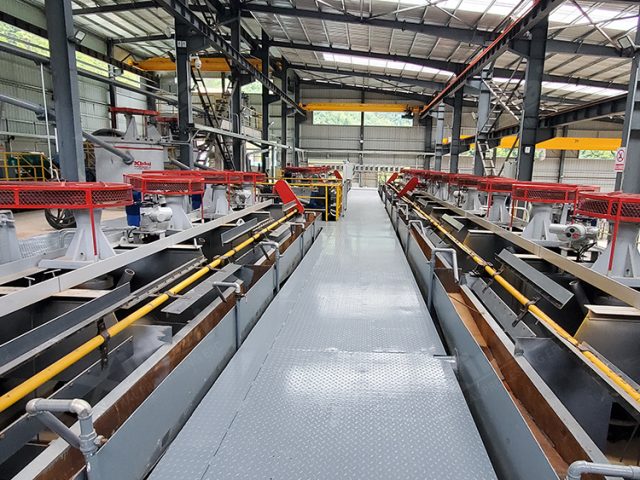
JJF Flotation Machine | Mechanical Flotation Cell
1-20 m³ per cell (banks to suit tonnage)
View details →Frequently asked questions
Which ores are suited to flotation?
Flotation is the standard route for sulphide ores including copper, lead-zinc, molybdenum and pyritic gold, and it also treats some oxides and industrial minerals such as fluorite and spodumene. Ores must be ground to liberation size first. Coarse free gold or strongly magnetic ores are usually better recovered by gravity or magnetic methods.
How many flotation cells does my circuit need?
Cell count depends on throughput, required residence time and the number of stages (rougher, scavenger, cleaner). Higher tonnage and harder-floating minerals need more total cell volume. We size the bank from your ore-test kinetics so each stage achieves its target grade and recovery without short-circuiting feed.
What recovery can a copper flotation plant achieve?
Well-designed copper flotation circuits typically recover 85-95% of the copper into a concentrate grading toward smelter-acceptable levels, though the exact grade-recovery point depends on mineralogy, liberation and reagent scheme. We frame these as achievable ranges set during test work, not guarantees, because every orebody floats differently.
What reagents does flotation use and are they included?
A typical scheme uses a collector to make the target mineral hydrophobic, a frother to stabilize the froth, plus pH modifiers and depressants for selectivity. The exact reagents and dosages are determined during ore testing. We specify the reagent regime and dosing equipment as part of the plant design, with reagents sourced locally where possible.