
Crushing reduces run-of-mine rock to a size the grinding mill can accept, usually in two or three stages. Jaw crushers take primary duty on large hard feed; cone crushers handle secondary and tertiary reduction to a tighter product. Xinhai sizes the crushing stage so mill feed is consistent and the circuit avoids bottlenecks.
Crushing is the first comminution stage, taking blasted run-of-mine rock down to a size the grinding mill can handle. It is almost always staged: a primary crusher accepts large lumps and makes a coarse product, and one or two secondary/tertiary crushers tighten the size before the mill. Matching crusher product to mill feed is what keeps the whole circuit balanced, since an oversized crusher discharge starves the mill of capacity while excessive crushing wastes energy that the mill could do more efficiently.This hub carries the two core machine types. The PE jaw crusher is the standard primary unit, using a compression action between a fixed and a moving jaw to break large, hard feed at high reduction ratio with simple, rugged operation. The spring cone crusher takes secondary and tertiary duty, crushing pre-reduced rock to a finer, more uniform product with its overload-protecting spring release guarding against tramp metal. A typical hard-rock line pairs a jaw primary with a cone secondary feeding the grinding circuit.Selection depends on feed size, ore hardness and abrasiveness, target product size and throughput. Hard abrasive ores demand robust liners and influence the reduction split between stages. Crushed product is screened on a vibrating screen to return oversize and send fines forward, and raw feed is metered into the crusher by a grizzly feeder that also scalps off fines and dirt. The crushing product then sets the feed for the grinding circuit.A jaw crusher typically achieves a reduction ratio around 5 or 6 to 1, so very large run-of-mine feed often needs a secondary stage to reach mill-feed size rather than asking a single crusher to do too much. Each crusher should run in closed circuit with a screen on the finer stages, returning oversize so the discharge stays within a controlled top size; this keeps the mill from seeing rogue coarse particles. Cone crushers run best when choke-fed, meaning the chamber is kept full so rock crushes against rock and produces a more cubical, uniform product with less liner wear. We set the number of stages, the reduction split and the screen apertures together so the circuit reaches your target product size efficiently and the mill is never starved or overloaded.For how crushing fits a complete plant, see our overview of a mineral processing EPC project. Send your feed size, ore hardness and target product on the contact page and we will lay out a crushing stage.
Crushing Machinery models
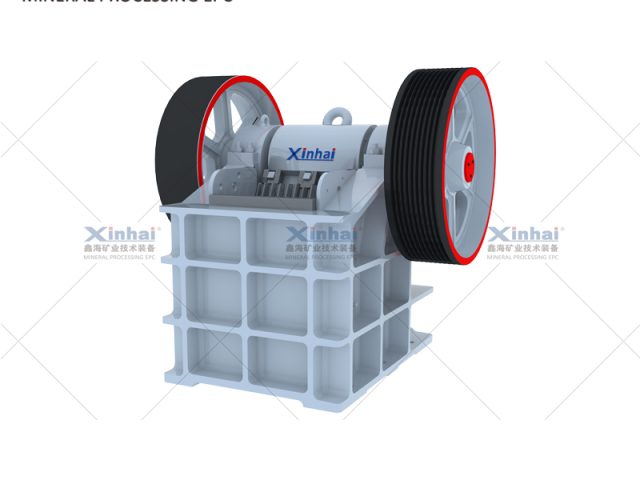
PE Series Jaw Crusher | Primary Rock Crusher
1-800 t/h (configurable)
View details →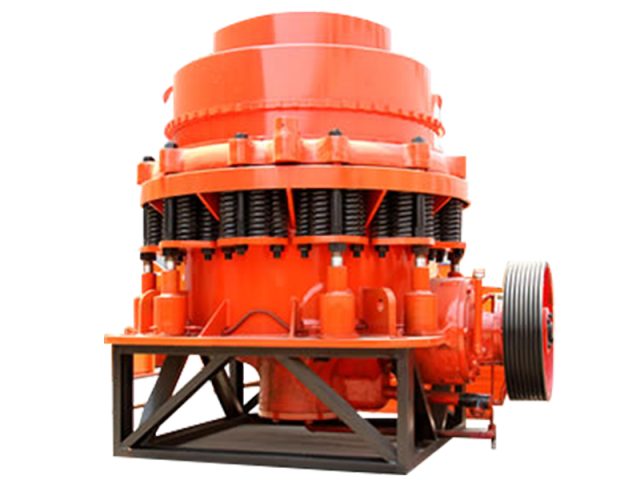
Spring Cone Crusher | Secondary & Fine Crushing
5-750 t/h (configurable)
View details →Frequently asked questions
Do I need a jaw crusher, a cone crusher, or both?
Most hard-rock plants use both. The jaw crusher takes primary duty, breaking large run-of-mine lumps at a high reduction ratio. The cone crusher then handles secondary or tertiary crushing to produce a finer, more uniform product for the mill. For small operations or soft ore a single stage may suffice, but staged crushing is more efficient at scale.
What feed size can a jaw crusher accept?
Jaw crushers accept large feed, with the maximum lump roughly 80% of the feed-opening width; a PE400x600 class unit takes feed up to about 340 mm. Product size is adjusted by the discharge setting. We select the model so the feed opening comfortably exceeds your largest run-of-mine lumps to avoid bridging and choking.
How do I match crusher output to my mill?
The crushing circuit should deliver a product at or below the maximum feed size your ball mill can grind efficiently, screened to remove oversize. We size the crusher stages and screens together so mill feed is consistent, which prevents the mill from becoming the bottleneck and keeps grinding energy efficient.
What are the main wear parts on a crusher?
On a jaw crusher the wear items are the fixed and movable jaw plates and cheek plates; on a cone crusher they are the mantle and concave liners. Wear rate scales with ore abrasiveness. We supply manganese-steel wear parts and recommend liner profiles and replacement intervals based on your ore and tonnage.