Where the PE jaw crusher sits in the flowsheet
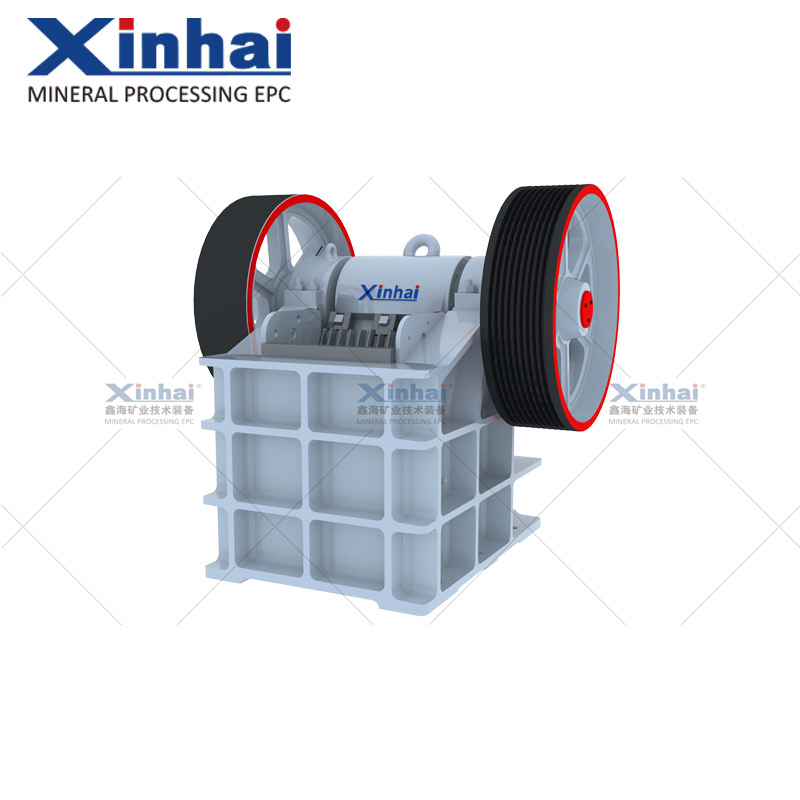
The PE jaw crusher is the workhorse of primary crushing. It takes run-of-mine ore straight from the vibrating grizzly feeder and reduces oversize rock to a manageable size before it moves to secondary crushing. In most hard-rock circuits it is the first machine ore touches, so reliability and a generous feed opening matter more than fine sizing here.
How it works
Material drops into a V-shaped chamber formed by a fixed jaw plate and a moving jaw driven by an eccentric shaft and toggle. As the moving jaw advances, rock is compressed and fractured; as it retreats, the broken product falls toward the discharge. The closed-side setting (CSS) is adjusted with shims or a wedge to control product size.
Selection logic
Two numbers drive jaw crusher selection: maximum feed size and required throughput. As a rule of thumb, feed should not exceed about 80% of the gape. A PE-400×600, for example, accepts feed to roughly 340 mm; larger PE-900×1200 frames take feed near 750 mm and push higher tonnage. Xinhai sizes the frame, motor and CSS range to your ore hardness and target product, since abrasive ores such as quartz-bearing gold rock wear plates faster than softer limestone.
- Primary reduction ahead of cone or impact crushing
- Adjustable CSS for a controlled product top size
- High-manganese jaw plates that reverse to double service life
- Heavy flywheels to smooth load on the eccentric shaft
Wear parts and operating cost
The main wear items are the fixed and moving jaw plates and the cheek plates lining the chamber. Mn13Cr2 or Mn18 castings are standard; plate life depends on ore abrasiveness and feed rate. Keeping the chamber choke-fed and avoiding tramp metal protects the toggle, which is designed as a sacrificial safety link.
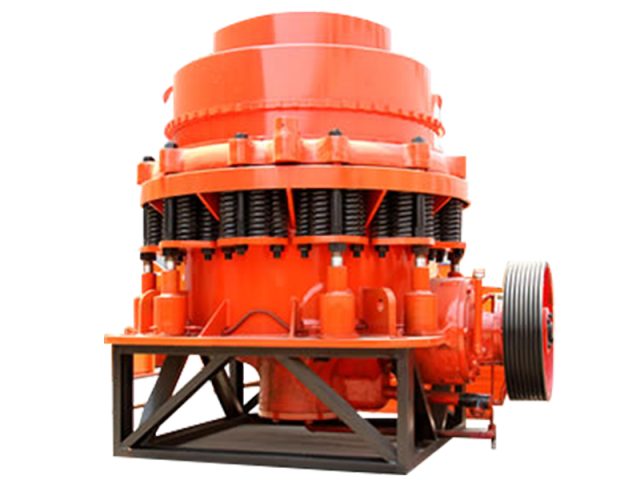
After primary reduction, product typically reports to a spring cone crusher for secondary or fine crushing, then to screening and grinding. Browse the full crushing machinery range, or see how crushing fits a complete plant in our CIP gold processing plant. For sizing help, contact our engineers with your ore and tonnage targets.
Technical Specifications
| Capacity | 1-800 t/h (configurable) |
|---|---|
| Max feed size | Up to ~1,000 mm |
| Closed-side setting (CSS) | 10-300 mm, adjustable |
| Motor power | 5.5-160 kW |
| Jaw plate material | High-manganese steel (Mn13Cr2 / Mn18) |
| Common models | PE-400x600 to PE-1200x1500 |
| Application | Gold, copper, iron, granite, limestone |
| Customization | OEM / ODM, sized to your ore |
Frequently Asked Questions
What feed size can a PE jaw crusher handle?
Feed should stay under about 80% of the crusher's gape. A PE-400x600 accepts rock up to roughly 340 mm, while a PE-900x1200 takes feed near 750 mm. Xinhai matches the frame size to your largest expected boulders so the chamber never bridges or chokes during primary crushing.
How much does a PE jaw crusher cost?
Pricing depends on frame size, motor rating and wear-plate grade. Smaller PE models start from around US$8,550 per set, with larger high-tonnage frames priced higher. Because Xinhai manufactures in-house, we can quote a configuration matched to your throughput rather than a fixed catalog unit.
What is the difference between a jaw crusher and a cone crusher?
A jaw crusher does primary reduction of large run-of-mine rock using compression between two plates. A cone crusher does secondary or fine crushing, producing a smaller, more uniform product. Most flowsheets pair a jaw crusher first, then a spring cone crusher downstream for finer sizing.
How long do the jaw plates last?
Plate life varies with ore abrasiveness, feed rate and CSS, but high-manganese plates typically run for several months under normal hard-rock duty and can be reversed once to extend service. Choke-feeding the chamber and screening out tramp metal are the main ways to maximize wear-part life.