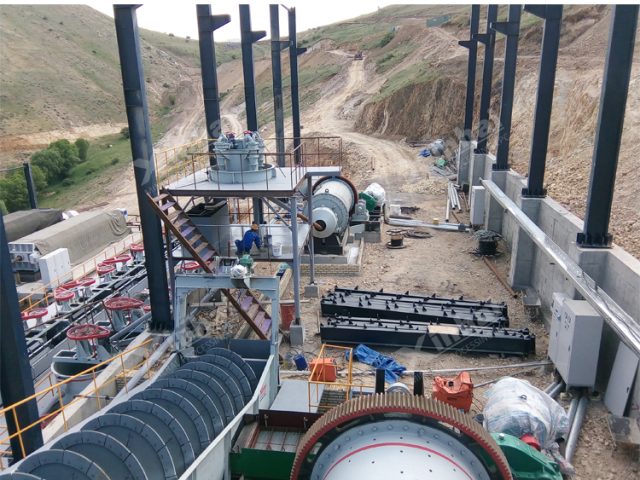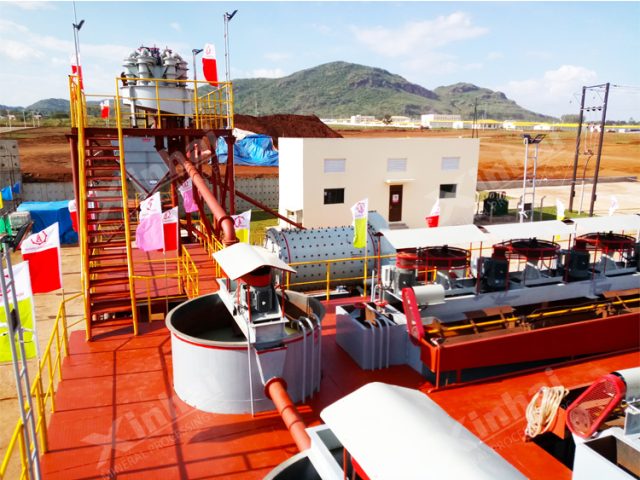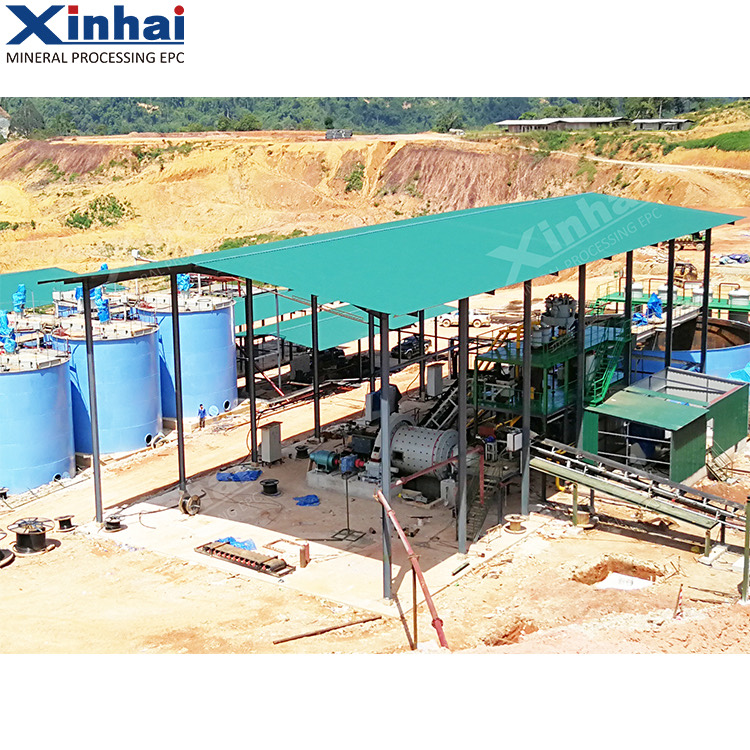
Turnkey CIP gold plant, engineered to your ore
Carbon-in-pulp is the standard recovery route for free-milling and oxidized gold ores where leached pulp can be screened cleanly. Xinhai supplies the complete flowsheet as a single-source EPC+M+O package, from crushing through to the gold room, so the leach kinetics, carbon inventory and tank sizing are matched to your assay rather than fitted to off-the-shelf hardware. That ore-first approach is what separates an engineered plant from a bag of equipment.
How the CIP circuit works
Ore is crushed and ground to a liberation size, typically 70 to 80 percent passing 75 microns, then thickened to a controlled pulp density before cyanidation. Leaching runs in a train of agitation tanks; the pregnant pulp then flows through a separate set of adsorption tanks where activated carbon captures the dissolved gold counter-current to the slurry. Loaded carbon is moved to elution and electrowinning, and barren carbon is reactivated in a regeneration kiln and recycled back to the adsorption train.
Where CIP fits versus CIL
In CIP, leaching and adsorption happen in distinct stages, which suits ores with fast leach kinetics and low preg-robbing tendency. If your ore is slower-leaching or carbonaceous, a carbon-in-leach configuration that combines the two steps may give higher recovery. We size both and recommend the better fit after ore testing. For the full trade-offs between routes, see our guide on CIL vs CIP vs heap leach.
What the package includes
- Crushing and grinding circuit with classification and thickening
- Leaching and CIP adsorption tank trains with double-impeller agitation tanks
- Desorption, electrowinning and carbon regeneration in the gold room
- Reagent dosing, tailings thickening and process water recovery
Typical gold recovery on suitable ores lands in the 90 to 96 percent range, with reagent and energy consumption optimized during commissioning. Pulp density, aeration rate and carbon movement are the main control levers, and we set up each so the plant holds recovery without over-consuming cyanide. Wear parts, liner schedules and a spares list are defined up front so the plant stays available through ramp-up and beyond.
Why buy the plant as one EPC scope
Buying the circuit as a single engineered scope removes the interface risk of mixing vendors and leaves one party accountable for the guaranteed grade and recovery. Xinhai handles ore testing, flowsheet and plant design, in-house manufacturing, installation, commissioning and operator training under our EPC+M+O model. Browse the full range of mineral processing plants or contact our process team with your ore data for a tailored proposal.
Technical Specifications
| Plant type | Carbon-in-pulp (CIP) gold beneficiation |
|---|---|
| Capacity | 50u20133,000 t/d (configurable) |
| Grind target | 70u201380% passing 75 u00b5m (ore-dependent) |
| Typical gold recovery | 90u201396% on free-milling ore |
| Adsorption stages | 5u20138 carbon tanks (configurable) |
| Carbon type | Coconut-shell activated carbon |
| Delivery model | Turnkey EPC+M+O, OEM/ODM |
| Power | 200u20132,500 kW typical, sized per flowsheet |
Frequently Asked Questions
How much does a CIP gold processing plant cost?
Pricing depends on throughput, ore hardness and the degree of automation. A compact line starts around US$159,900, while multi-thousand-ton-per-day plants are quoted after ore testing and flowsheet design. We provide an itemized budget covering equipment, installation and commissioning so you can compare scopes accurately.
What is the difference between CIP and CIL?
CIP leaches the ore first, then adsorbs gold onto carbon in separate tanks. CIL combines leaching and adsorption in the same tanks, which helps with slow-leaching or carbonaceous ores. We test your ore and recommend whichever route gives the best recovery and operating cost for your specific deposit.
What gold recovery can I expect?
For free-milling, low-clay ores ground to a proper liberation size, CIP typically achieves 90 to 96 percent recovery. Actual results depend on head grade, mineralogy and leach time, which is why we run bench and pilot tests before guaranteeing a design figure for your project.
What is the lead time and what do you need from me?
Lead time for a complete plant is usually several months from contract, depending on size. To start, send a representative ore sample plus target throughput, head grade and site conditions. We then test the ore, design the flowsheet and return a capacity, recovery and budget proposal.