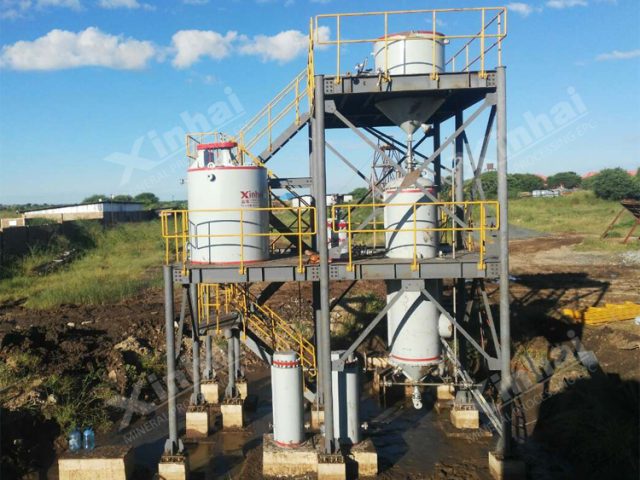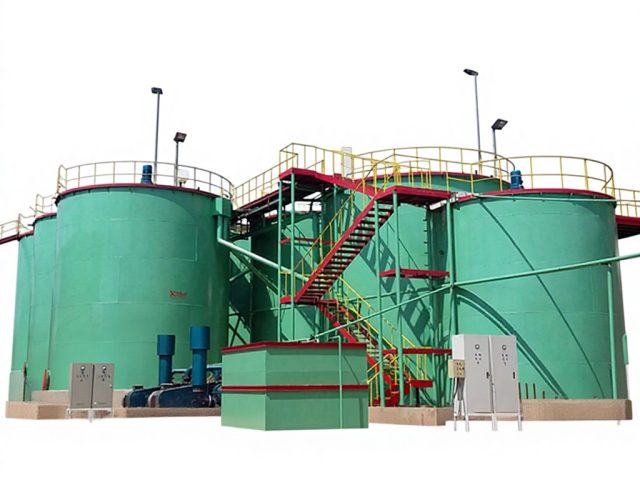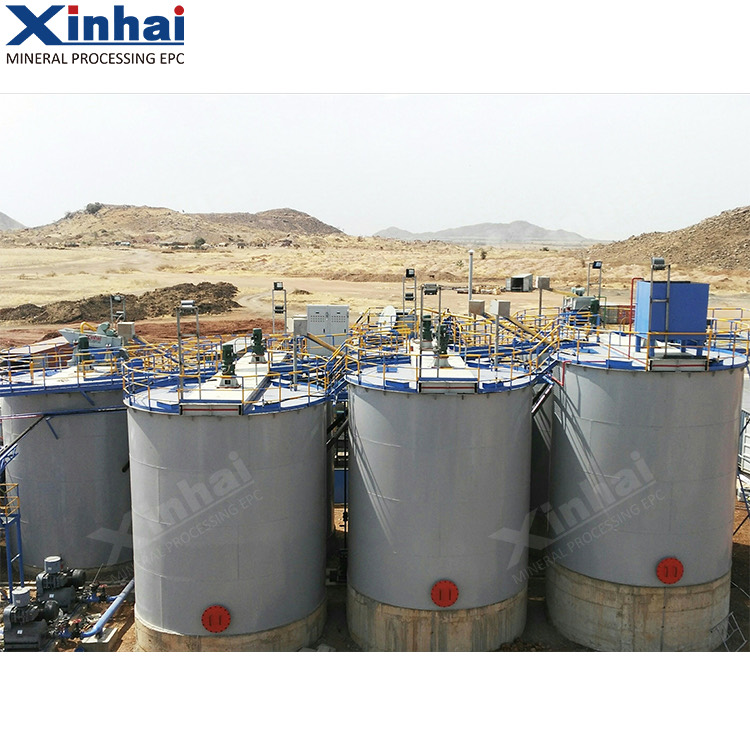
A compact 120 TPD gold CIP line
For small and mid-scale gold projects, a packaged CIP plant is often the fastest route from ore to dor. Xinhai’s 120 tpd configuration brings together grinding, cyanide leaching, carbon-in-pulp adsorption and the gold room into one engineered line, pre-balanced so the leach time, carbon inventory and tank sizing all match a 120-ton-per-day feed. The same design scales from roughly 50 up to 500 tpd, so a project can start modest and expand without re-engineering the whole flowsheet.
How the CIP circuit recovers gold
Crushed ore is ground to a liberation size, commonly 70 to 80 percent passing 75 microns, and conditioned to a controlled pulp density. The pulp leaches in a train of double-impeller agitation tanks, then flows through separate carbon adsorption tanks where activated carbon captures the dissolved gold counter-current to the slurry, with inter-stage screens holding the carbon back as pulp advances. Loaded carbon goes to elution and electrowinning, and stripped carbon is regenerated in a kiln and recycled back to adsorption.
Why CIP for this scale
- Suits free-milling, low-clay ores with fast leach kinetics and low preg-robbing tendency.
- Separating leaching from adsorption keeps carbon management simple and inter-stage screens cleaner.
- For slow-leaching or carbonaceous ores, a CIL variant may recover more; we test and advise.
On suitable ore, this line typically returns 90 to 96 percent gold recovery. Reagent dosing, aeration and carbon movement are tuned during commissioning to hold recovery while keeping cyanide and energy cost per ounce in check, and operators are trained to read those levers during ramp-up. A defined spares list and wear schedule keep the small plant running with minimal downtime, which matters most where a remote site cannot wait on parts.
Turnkey, and ready to scale
Because it ships as one EPC scope, the 120 tpd plant arrives mass-balanced and water-balanced rather than assembled from mismatched parts, and a single party stays accountable for the agreed grade and recovery. Under our EPC+M+O model we handle ore testing, flowsheet design, in-house manufacturing, on-site installation and operator training, then stay through ramp-up. Compare it with the full-scale CIP gold plant, read our small-scale gold plant guide, or contact us for a quote.
Technical Specifications
| Plant type | Carbon-in-pulp (CIP) gold plant |
|---|---|
| Base capacity | 120 t/d (50u2013500 t/d configurable) |
| Grind target | 70u201380% passing 75 u00b5m (ore-dependent) |
| Typical recovery | 90u201396% on free-milling ore |
| Adsorption stages | 5u20137 carbon tanks (configurable) |
| Included scope | Grinding, leaching, CIP, elution, electrowinning |
| Best fit | Free-milling, low-clay gold ores |
| Delivery model | Turnkey EPC+M+O, OEM/ODM |
Frequently Asked Questions
Is 120 TPD a fixed capacity?
No, 120 tpd is a popular base configuration, but the same plant design scales from roughly 50 to 500 tons per day. We adjust grinding, tank count and gold-room sizing to your target throughput. Send us your planned feed rate and head grade and we will size the line accordingly.
Should I choose CIP or CIL for my ore?
CIP suits free-milling, low-clay ores with fast leach kinetics and low preg-robbing behavior. If your ore leaches slowly or is carbonaceous, a CIL circuit that combines leaching and adsorption can recover more gold. We run bench tests on your ore and recommend the route that gives the best recovery and cost.
What gold recovery does the plant achieve?
On suitable free-milling ore ground to a proper liberation size, the CIP line typically recovers 90 to 96 percent of the gold. Actual recovery depends on head grade, mineralogy and leach time, so we confirm a design figure through ore testing before finalizing the flowsheet.
How much does a small gold CIP plant cost?
Entry pricing for a compact packaged line starts around US$8,888 per set, with the full plant cost driven by throughput, grinding scope and gold-room equipment. After reviewing your ore and capacity target, we provide an itemized budget covering equipment, installation and commissioning.