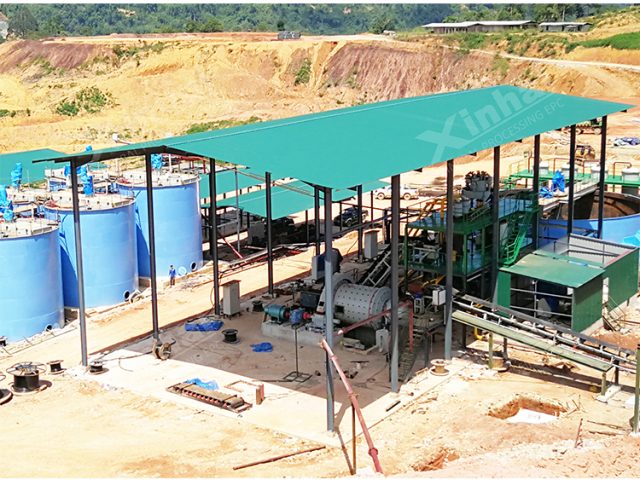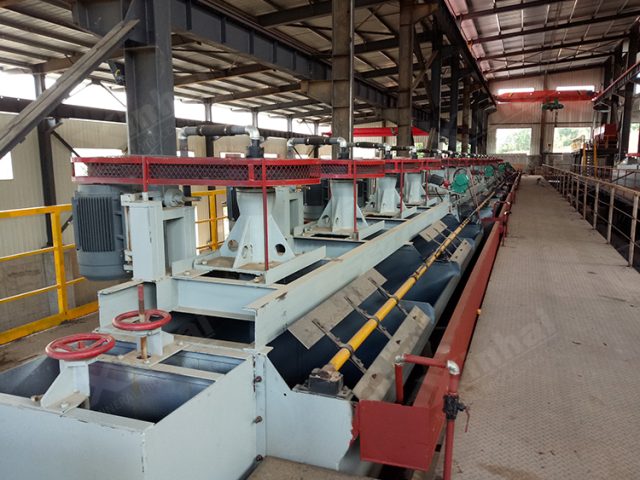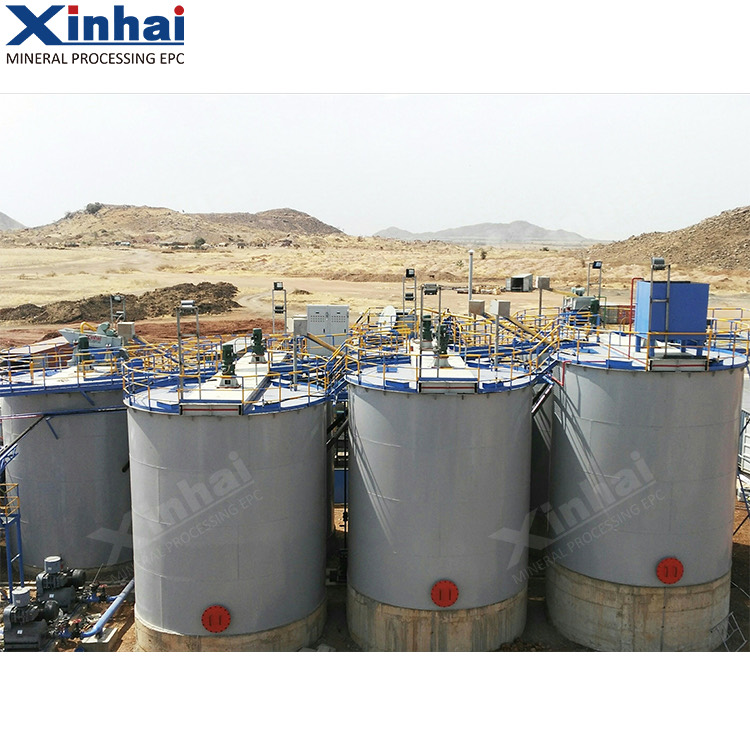
A small-scale gold plant of 20-200 t/d typically needs a jaw crusher, vibrating feeder and screen, a wet ball mill with classifier, a gravity stage (centrifugal concentrator plus shaking table), and a CIP leaching circuit with elution. Equipment commonly runs US$150,000-600,000 depending on tonnage, ore type and whether leaching is included.
Many first-time and junior miners ask the same question: what does it actually take to turn gold ore into doré on a small budget. The honest answer is that a small-scale plant is still a full flowsheet in miniature, with the same unit operations as a large mine, just sized down. This guide lays out the equipment list, indicative budget ranges and the design choices that most affect cost and recovery for plants in the 20-200 tonnes-per-day (t/d) range.
Match the plant to the ore first
Before any equipment is bought, two questions decide the whole design: is the gold free-milling or refractory, and is it coarse or fine. Free-milling, coarse gold can be recovered largely by gravity alone, which is the cheapest plant to build and run. Finely disseminated or sulphide-locked gold needs leaching, which adds tanks, reagents and an elution circuit but lifts recovery from perhaps 40-60% (gravity only) to 88-95% (gravity plus CIP). A 1-2 tonne metallurgical test on a representative sample is the single best investment you can make before ordering steel.
Two diagnostic tests are worth commissioning early. A gravity-recoverable-gold (GRG) test tells you how much of the gold can be won by gravity alone, which sets the size of the gravity stage and the cyanide you can avoid. A bottle-roll cyanidation test on the gravity tailing tells you the leach recovery and reagent consumption to expect. Together they convert the vague question of which plant into hard numbers: recovery, reagent cost per tonne and the split between gravity and leach. Skipping this step is the most expensive shortcut in small-scale gold, because it tends to surface only after the plant is built and underperforming.
The equipment list, stage by stage
1. Crushing and feeding
Run-of-mine ore is reduced to a millable size, usually below 15-25 mm. A small plant typically uses a single-stage or two-stage crusher with a feeder ahead of it.
- PE jaw crusher for primary reduction; a PE-400×600 handles roughly 15-60 t/h.
- Vibrating grizzly feeder to meter ore and scalp fines.
- A spring cone crusher as a second stage if a finer, tighter product is needed.
2. Grinding and classification
Grinding liberates the gold, typically to 60-80% passing 75 micron for leaching. A closed circuit of mill plus classifier keeps the product size consistent.
- Wet ball mill sized to your tonnage and target grind.
- Spiral classifier or a hydrocyclone to close the grinding circuit.
3. Gravity recovery
Free gold should be captured as soon as it is liberated, before it dissolves slowly or is lost. A gravity stage is cheap insurance and often recovers a third or more of the gold.
- Centrifugal concentrator in the grinding circuit to catch fine free gold.
- Shaking table to clean the gravity concentrate to a smeltable grade.
4. Leaching and recovery (for refractory or fine gold)
The gravity tail goes to a cyanide leach. A CIP plant adsorbs dissolved gold onto activated carbon in a train of agitated tanks, then an elution and electrowinning system strips the carbon and recovers gold for smelting. For the choice between CIP, CIL and heap leach, see our guide to CIL vs CIP vs heap leach.
A small leach circuit is usually a string of six to eight agitated tanks giving a total residence time of 18-30 hours, sized so the gold is fully dissolved and adsorbed before the pulp leaves the last tank. Lime is added to hold pH around 10-10.5, air or oxygen is sparged to supply the dissolved oxygen leaching needs, and carbon is advanced counter-current to the pulp so the loaded carbon is drawn from the first tank. Getting the tank count and residence time right is what separates a plant that hits its recovery target from one that chronically leaves gold in the tailing.
Indicative budget by plant size
The ranges below are equipment-only and indicative; they exclude civil works, freight, duties and installation. Frame them as starting points to scope your project, not quotes.
| Plant size | Configuration | Indicative equipment budget | Typical recovery |
|---|---|---|---|
| 20-50 t/d | Crush + mill + gravity only | US$80,000-200,000 | 40-65% (free gold) |
| 50-100 t/d | Crush + mill + gravity + CIP | US$200,000-400,000 | 88-93% |
| 100-200 t/d | Full crush + mill + gravity + CIP + elution | US$350,000-650,000 | 90-95% |
Hidden costs to budget for
- Civil and installation: often 20-40% on top of equipment cost.
- Power and water: grinding dominates power draw; secure supply or a genset early.
- Reagents: cyanide, lime and carbon are ongoing operating costs in a leach plant.
- Tailings and water return: a thickener pays back in recovered water and is increasingly required for permitting.
- Spares and wear parts: mill liners, balls, crusher jaws and pump parts.
Phasing a project on a tight budget
Cash-constrained projects often build in phases. A common approach is to commission a gravity-only plant first to generate early cash flow from the free gold, then add the leach circuit once the deposit and the cash position are proven. This works only if the layout is planned for the leach from the start, with tank pads, power and water sized for the final configuration; retrofitting a leach into a plant laid out for gravity alone wastes money. Plan the full flowsheet on paper even if you build it in stages.
Build it as one system
The most common small-plant mistake is buying machines piecemeal that do not balance, leaving a bottleneck that caps throughput. Because Xinhai supplies turnkey mineral processing plants under an EPC+M+O model, the crusher, mill, gravity and leach stages are sized against one another and against your ore test, and the package includes installation, commissioning and operator training so the plant reaches nameplate faster.
Frequently Asked Questions
How much does a small gold processing plant cost?
Equipment for a small gold plant typically runs US$80,000-200,000 for a 20-50 t/d gravity-only plant, and US$200,000-650,000 for 50-200 t/d plants that include CIP leaching and elution. Add roughly 20-40% for civil works, freight and installation. Final cost depends on ore hardness, target grind, recovery method and local conditions.
What is the minimum viable plant size for gold?
Plants as small as 10-20 t/d are built and run profitably where grade is high and gold is free-milling, often gravity-only. Below that, batch or artisanal methods usually make more sense. The economic floor depends far more on ore grade and gold price than on a fixed tonnage; a metallurgical test and simple cash-flow model will tell you.
Do I need cyanide leaching or is gravity enough?
Gravity alone suffices only for coarse, free-milling gold, recovering perhaps 40-65%. If the gold is fine or locked in sulphides, gravity leaves significant value in the tailing, and adding a CIP or CIL leach lifts recovery to 88-95%. A bench leach and gravity-recoverable-gold test on your ore is the way to decide before committing capital.
How long does it take to build and commission?
For a standard small-scale plant, manufacturing and delivery typically take 2-4 months, with installation and commissioning adding 1-3 months on site depending on civil readiness, logistics and operator training. An EPC contractor that handles design through commissioning generally reaches nameplate throughput faster than buying equipment separately and integrating it yourself.
What grind size should I target for gold leaching?
A typical target is 60-80% passing 75 micron for cyanide leaching of free-milling ore. Finer grinds improve gold liberation and leach kinetics but raise grinding power and cost, so the optimum is set by liberation tests on your specific ore. Coarse, free gold can be recovered by gravity at coarser sizes before fine grinding.