The role of the spring cone crusher
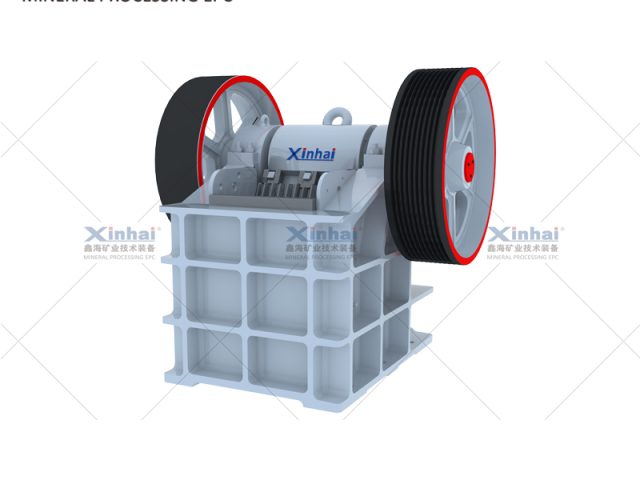
The spring cone crusher sits after primary crushing, taking product from a PE jaw crusher and reducing it to a finer, more uniform size ahead of screening and grinding. It is built for hard and abrasive ores where impact crushers would wear too quickly, and is a standard second or third stage in gold, copper and iron flowsheets.
How it works
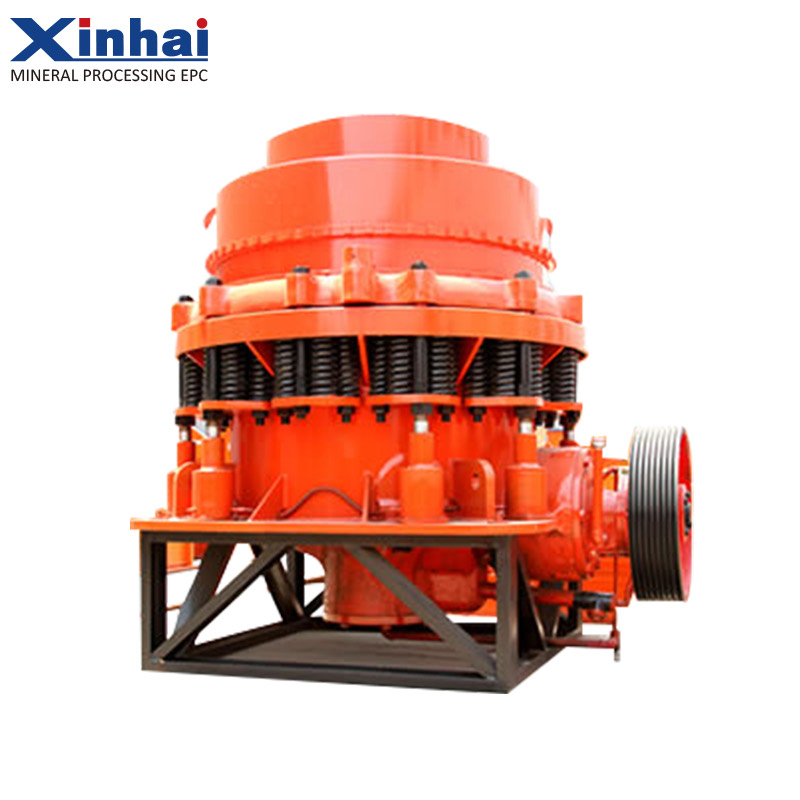
Ore enters the top and is crushed in the gap between a gyrating mantle and a fixed concave (bowl liner). The mantle is mounted on an eccentric that traces a small circular path, so each point in the chamber alternately opens and closes, compressing rock until it passes through. The defining feature is the spring-cushioned bowl: if tramp metal or an uncrushable enters, the springs let the bowl lift, pass the obstruction, and reset, protecting the machine from damage.
Sizing and product control
Cone crusher capacity and product size are set by the closed-side setting and the chamber profile. Standard, medium and short-head chambers trade throughput for fineness: a coarse chamber maximizes tonnage, while a fine chamber produces a tighter product for grinding feed. As a rule of thumb, keep the reduction ratio per stage between roughly 3:1 and 6:1, and choke-feed the chamber so liners wear evenly and the product stays cubical.
- Spring overload protection against tramp metal
- Cubical product ideal as grinding-circuit feed
- Standard / medium / short-head chambers for coarse-to-fine duty
- Manganese mantle and concave for abrasive ore
Wear parts and operation
The mantle and concave are the primary wear items and are cast from high-manganese steel. Liner life depends on ore hardness, feed gradation and the setting; running the crusher fully choke-fed keeps wear uniform and avoids the ring bounce that comes with trickle feeding. Lubrication temperature and pressure should be monitored, as the bearing and bushing system carries high crushing forces.
For coarser product or higher throughput at a single stage, compare with the rest of our crushing machinery. Cone crusher product typically feeds a circular vibrating screen before grinding. To match a chamber and setting to your ore, contact our process team.
Technical Specifications
| Capacity | 5-750 t/h (configurable) |
|---|---|
| Max feed size | Up to ~300 mm |
| Closed-side setting | 3-60 mm, adjustable |
| Motor power | 30-280 kW |
| Chamber types | Standard, medium, short-head |
| Liner material | High-manganese steel mantle & concave |
| Overload protection | Spring-cushioned bowl |
| Application | Hard, abrasive ore (gold, copper, iron, granite) |
| Customization | OEM / ODM, sized to your ore |
Frequently Asked Questions
What is the difference between a spring cone crusher and a hydraulic cone crusher?
A spring cone crusher uses a coil-spring system for overload protection and setting adjustment, making it simple and economical for steady secondary or fine crushing. Hydraulic cones add hydraulic clearing and adjustment for faster setting changes and higher reduction. For most mid-size mineral plants the spring type is reliable and cost-effective.
What capacity spring cone crusher do I need?
Capacity depends on your circuit tonnage, feed size and required product size. Xinhai cone crushers cover roughly 5-750 t/h. We size the chamber type and closed-side setting to balance throughput against fineness, and match the unit to the jaw crusher feeding it so the stages run in balance.
Can a cone crusher handle wet or sticky material?
Cone crushers work best on relatively dry, hard ore. Wet or clay-bearing feed can pack in the chamber and reduce capacity, so sticky material is usually screened or scrubbed first. For clean, hard rock such as gold quartz or copper ore, the spring cone crusher performs reliably as a secondary stage.
How often do the liners need replacing?
Mantle and concave life depends on ore abrasiveness, feed gradation and setting, typically running several months under normal duty. Choke-feeding the chamber keeps wear even and product cubical. Xinhai supplies high-manganese spare liners and can advise on liner profiles for your specific ore.