
Grinding reduces crushed ore to the liberation size that separation needs, and it is usually the highest power consumer in a plant. Ball mills handle wet ore grinding ahead of flotation, leaching or gravity, while roller mills produce fine dry powder from non-metallics. Xinhai sizes each mill to your target grind, hardness and tonnage.
Grinding sits between crushing and separation in the flowsheet, and its job is precise: deliver the particle size at which valuable minerals are liberated from gangue, no finer. Over-grinding wastes power and creates slimes that hurt recovery, while under-grinding leaves locked particles. Because grinding typically draws the most power of any unit operation, mill selection has an outsized effect on operating cost.This hub covers two complementary machines. The wet ball mill is the workhorse for metallic ores, grinding crushed feed in a water slurry to produce the 200-mesh-class product that flotation and gold leaching circuits require, with throughput from a few tonnes per hour to several hundred t/d. The Raymond roller mill grinds dry, brittle non-metallics such as limestone, gypsum, barite and kaolin to a fine 80-400 mesh powder, with an integral classifier to control top size. Choosing between them is mainly a question of wet versus dry duty and metallic versus industrial-mineral feed.Key selection criteria are feed and product size, ore Bond work index (hardness), required tonnage, and circuit type, open or closed with a classifier or hydrocyclone. A closed circuit returns oversize for regrind and tightens the product distribution, which matters when downstream recovery is size-sensitive. Liner choice and ball charge also affect wear cost and energy, so we specify these against your ore. Upstream, mill feed comes from the crushing circuit, and matching crusher product to mill feed avoids bottlenecks.Mill sizing leans on the Bond work index, a measured value for your ore that converts the required size reduction into a specific energy figure and, with tonnage, into the motor power the mill needs. A practical starting point is a ball charge filling roughly a third of the mill volume and running the mill at about 70-80% of critical speed, where the charge cascades rather than centrifuges; the final values are tuned to the ore. Ball size matters too: larger balls break coarse feed while smaller balls grind fines efficiently, so the charge is graded to the feed. A closed circuit with the right circulating load is almost always more efficient than open-circuit grinding because it removes finished material promptly and prevents over-grinding.For a structured walk-through of mill sizing, circuit choice and media, see our guide on how to choose a ball mill for your grinding circuit. Send us your ore hardness, target grind and tonnage through the contact page and we will recommend a mill and circuit.
Ball Mills & Grinding Machines models
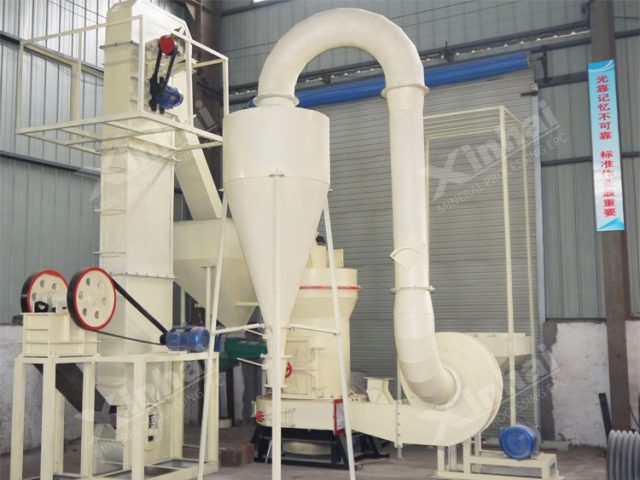
Raymond Roller Mill for Limestone & Non-Metallic Minerals
1-25 t/h (configurable)
View details →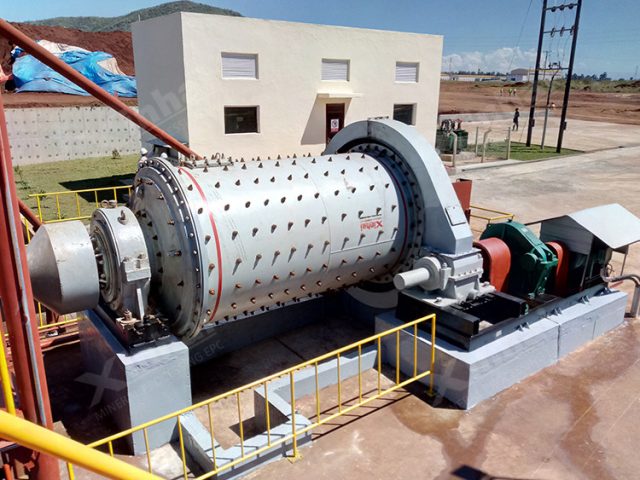
Wet Ball Mill for Ore Grinding | Grid & Overflow Types
0.65-615 t/h (configurable)
View details →Frequently asked questions
What grind size can a ball mill achieve?
A wet ball mill typically produces a product in the 65-325 mesh range, with the common metallurgical target around 70-80% passing 200 mesh (about 74 microns). Final size depends on ore hardness, residence time and whether the mill runs in closed circuit with a classifier or hydrocyclone returning oversize for regrind.
Should I choose a wet ball mill or a dry roller mill?
Use a wet ball mill for metallic ores headed to flotation, gravity or leaching, where downstream steps already run as a slurry. Choose a Raymond roller mill for dry non-metallic minerals such as limestone, barite or kaolin where a fine dry powder is the product. Duty type, not just fineness, decides the right machine.
How much power does a ball mill consume?
Grinding is usually the largest single power draw in a plant. Specific energy depends on feed hardness and the size reduction required, but a closed grinding circuit, correct ball charge and well-maintained liners keep consumption down. We size the motor to your tonnage and work index, with typical drives ranging from a few kilowatts to several hundred kW.
What maintenance and wear parts does a ball mill need?
Main wear items are mill liners and grinding media (steel balls), both consumed against ore abrasiveness. Routine checks cover bearing lubrication, gear alignment and trunnion seals. We supply spare liners and media, and we recommend matching liner profile and ball size to your ore to balance grinding efficiency against wear cost.