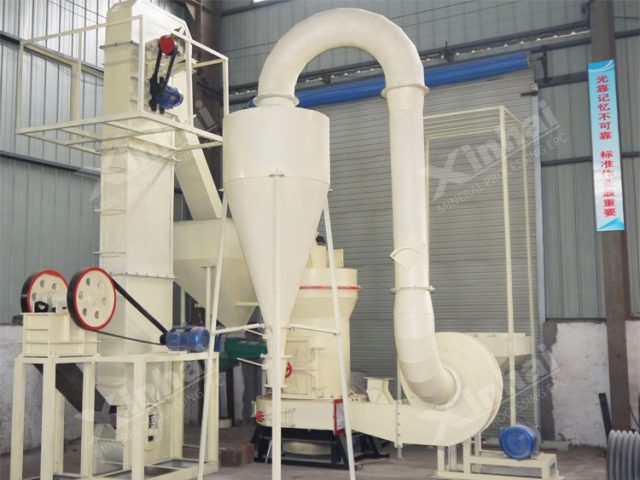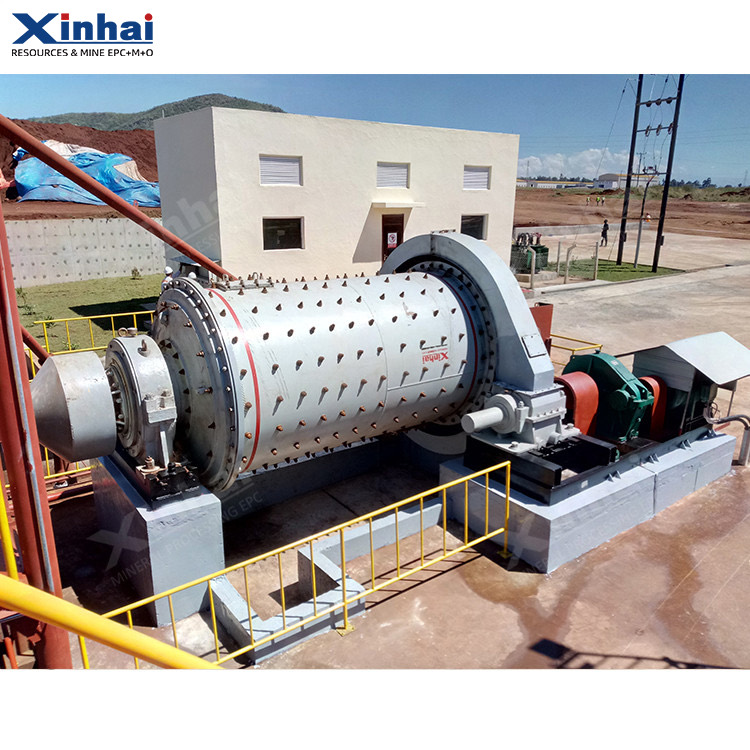
The wet ball mill is the workhorse of the grinding circuit, sitting between crushing and concentration. It takes crushed ore (typically -25 mm), grinds it in a water slurry, and delivers a controlled particle size to flotation, gravity, magnetic separation, or leaching. Because grind size drives liberation and downstream recovery, mill selection is one of the highest-leverage decisions in a flowsheet.
Grid type vs. overflow type
Two discharge designs cover most duties. The grid (grate) type uses a discharge grate that pulls product out quickly, giving a coarser grind, higher throughput, and lower over-grinding risk. It is the common choice for the primary stage and works well ahead of gravity or coarse flotation circuits. The overflow type holds slurry longer, producing a finer, more uniform product, which suits secondary grinding and fine-flotation or leach feed.
- Grid type: coarser product, higher capacity, ideal for primary grinding and closed circuit with a spiral classifier.
- Overflow type: finer product, simpler design, common in regrind and leach-feed duties.
How Xinhai sizes a wet ball mill
We start from your ore: Bond work index, feed top size, target P80, and required throughput. From there we set drum diameter and length, ball charge, liner profile, and motor rating. Energy-efficient rubber or composite liners cut wear-part cost and noise, while a properly matched ball charge keeps specific energy down. Most metallic-ore circuits target 70-85% passing 200 mesh (about 75 microns), but we tune to your liberation curve.
As a manufacturer offering OEM and ODM, Xinhai builds units across a wide capacity band rather than a single fixed model. Common wear and spare parts, gear and pinion sets, and trunnion bearings are stocked to keep lead times and maintenance predictable.
Where it fits in your plant
A wet ball mill rarely works alone. It runs in closed circuit with classification, feeds flotation or magnetic stages, and can be integrated into a complete turnkey concentrator. If you are weighing single-stage versus two-stage grinding, or grid versus overflow, our guide on how to choose a ball mill walks through the trade-offs, and the full ball mills and grinding machines range covers related units.
Send your ore type, feed size, target grind, and desired tonnage and we will recommend a configuration and budget. Reach the engineering team via our contact page.
Technical Specifications
| Capacity | 0.65-615 t/h (configurable to ore and grind target) |
|---|---|
| Feed size | Up to 25 mm |
| Discharge / product | Typically 0.074-0.4 mm (70-85% passing 200 mesh) |
| Drum diameter | 900-5,500 mm |
| Motor power | 18.5-4,500 kW |
| Discharge type | Grid (grate) or overflow |
| Liner options | Manganese steel, rubber, or composite |
| Applications | Gold, copper, iron, lead-zinc, polymetallic ores |
Frequently Asked Questions
Should I choose a grid or overflow ball mill?
Choose the grid (grate) type when you need higher throughput and a coarser product, typically for primary grinding ahead of gravity or coarse flotation. Choose the overflow type when you need a finer, more uniform grind for regrind or leach feed. Many circuits run grid in the first stage and overflow in the second.
What grind size can a wet ball mill achieve?
Most metallic-ore circuits target 70-85% passing 200 mesh, roughly 75 microns, though finer products are possible with overflow design and closed-circuit classification. The achievable grind depends on ore hardness, feed size, and residence time. We size the mill to the liberation size your concentration step requires.
How much does a wet ball mill cost?
Pricing starts from around US$9,800 per set for smaller units and rises with drum size, motor rating, and liner specification. Because Xinhai builds to order across a wide capacity band, the best way to get an accurate figure is to send your tonnage, ore type, and target grind for a tailored quote.
What capacity is available?
Configurations range from under 1 t/h for pilot and small-scale operations up to roughly 615 t/h for large concentrators. As an OEM manufacturer, Xinhai matches drum diameter, length, ball charge, and motor power to your throughput rather than offering a single fixed model.
Which liner should I specify?
Manganese steel liners suit coarse, abrasive primary grinding. Rubber liners reduce weight, noise, and energy use and last well in fine-grinding duties. Composite liners blend both. We recommend a profile based on your ore abrasiveness, ball size, and the wear-cost target you want to hit.