
Slurry pumps move abrasive solid-liquid mixtures, such as mill discharge, cyclone feed and tailings, between unit operations. Heavy-duty centrifugal designs use wear-resistant metal or rubber linings to survive coarse, abrasive solids. Xinhai sizes each pump to your flow rate, head, slurry density and particle size for reliable transfer and long wear-part life.
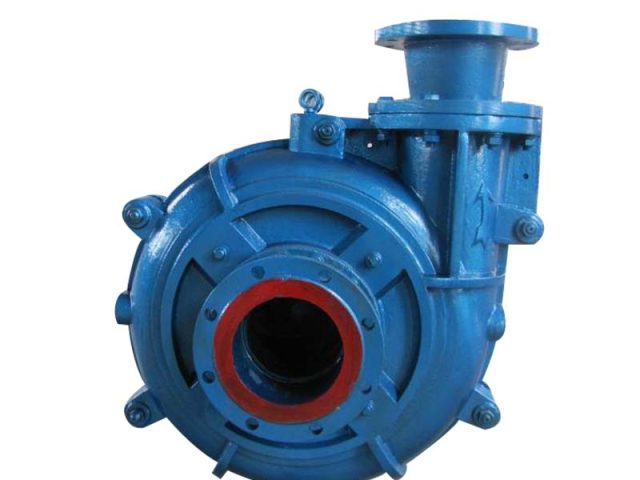
Slurry pumps are the circulatory system of a processing plant. Wherever solids travel as a slurry, between grinding and classification, up to cyclone clusters, from cell to cell, or out to the tailings facility, a slurry pump provides the head and flow. They differ sharply from clean-water pumps: the solids are abrasive and often coarse, so the casing, impeller and liners must be built from wear-resistant materials and the hydraulic design must pass particles without blocking or rapid erosion.This hub centers on the XPA centrifugal slurry pump, a long-life horizontal pump for the abrasive transfer duties that dominate a plant. It is offered with either hard-metal or replaceable rubber liners depending on slurry abrasiveness and particle size, with the impeller and throat bush selected to balance efficiency against wear life. Multiple frame sizes cover duties from small inter-stage transfers to high-head cyclone feed and long tailings runs.Correct selection is essential to wear life and energy cost. The key inputs are flow rate, total head, slurry specific gravity and the percent solids and top particle size, which together set pump size, speed and liner material. Running a pump too fast accelerates wear, while oversizing wastes energy, so the duty point is matched carefully. Slurry pumps tie the plant together: they feed the hydrocyclones and classifiers, circulate flotation streams, and deliver thickener and filter feed in the dewatering circuit.A practical guideline is to size the pump so it operates near its best-efficiency point at the lowest impeller speed that still delivers the duty, because wear rate rises steeply with tip speed; a pump run hard at high speed can wear out liners in a fraction of the life it would see at a moderate setting. Slurries with solids above roughly 40-50% by weight, or with coarse, angular particles, push the selection toward larger, slower pumps and hard-metal internals. For long pipelines, pipe diameter is chosen to keep velocity high enough to prevent solids settling but low enough to limit pipe and pump wear. We balance these factors at the design stage and supply spares so wear parts can be swapped quickly.For where pumping sits in an integrated plant, see our overview of a mineral processing EPC project. Send your flow, head, slurry density and particle size on the contact page and we will size the pump and recommend liner material.
Slurry Pumps models
Frequently asked questions
How do I select the right slurry pump?
Selection needs four numbers: flow rate, total head, slurry specific gravity, and percent solids with top particle size. These set the pump frame size, running speed and liner material. We size the pump to operate near its best-efficiency point at the design duty, which maximizes wear life and minimizes power. Send these figures and we will specify the pump.
Should I choose metal or rubber liners?
Choose hard-metal liners for coarse, sharp or high-velocity slurries and for high-head duties. Choose rubber liners for fine, abrasive but smaller-particle slurries and where corrosion is a factor, as rubber resists fine abrasion well. Particle size and slurry chemistry decide; we recommend the liner material based on your slurry analysis.
How long do slurry pump wear parts last?
Wear life depends on slurry abrasiveness, particle size and pump speed. Running the pump at the correct duty point rather than over-speeding it greatly extends liner and impeller life. We stock replaceable liners, impellers and throat bushes so maintenance is quick, and we advise on inspection intervals based on your slurry and duty.
Can one pump handle cyclone feed and tailings?
Usually not the same pump, because cyclone feed needs high, stable head while tailings transfer may need different flow and head over distance. Most plants use dedicated pumps for each duty, sized to its specific point. We can specify a coordinated set of pumps for the whole plant so each duty runs efficiently.