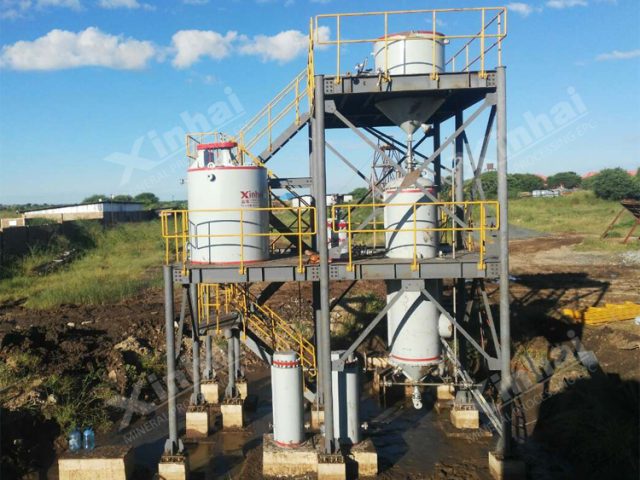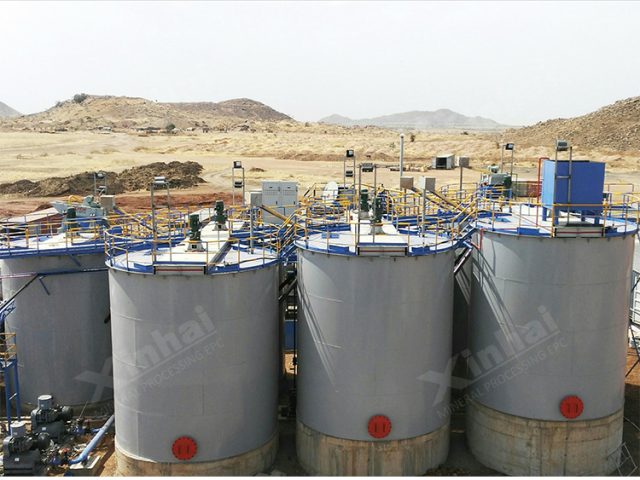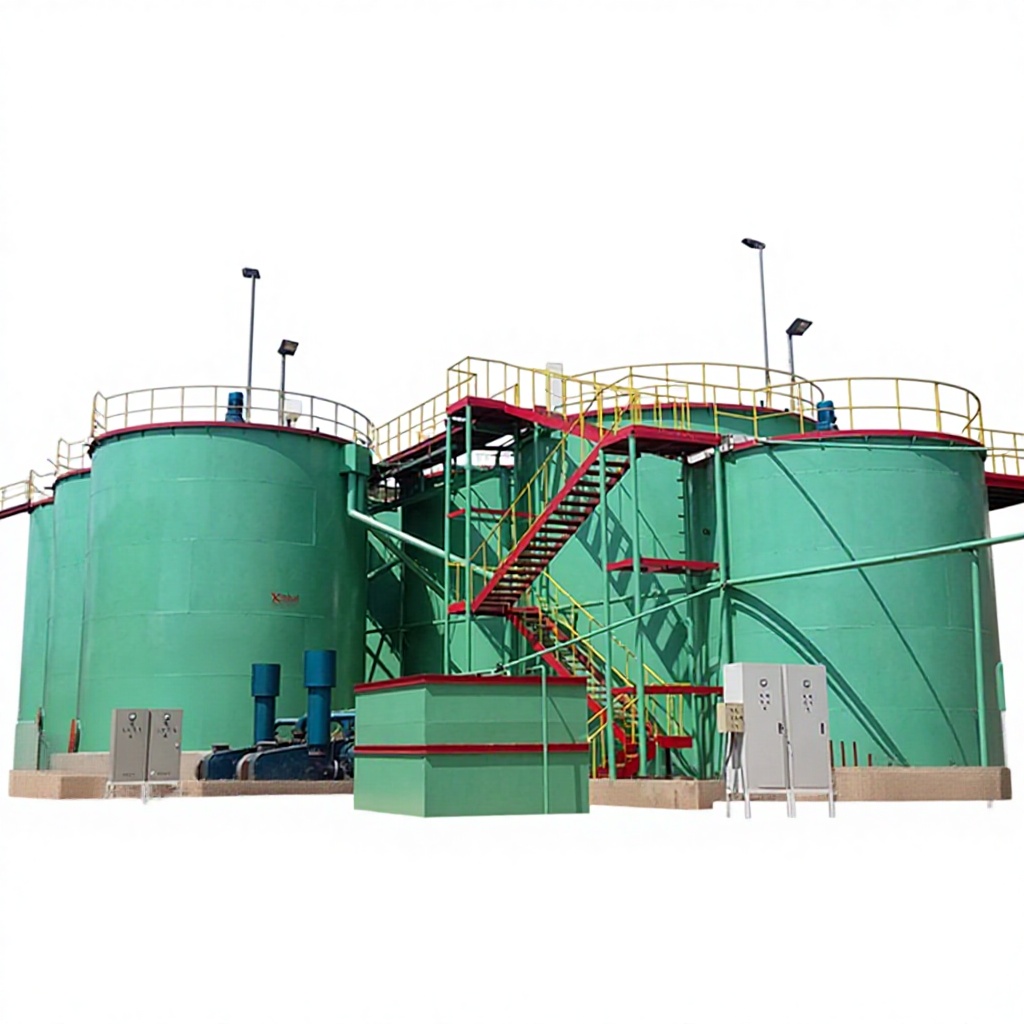
The tank where gold actually dissolves
Cyanide leaching only works if every gold particle stays in contact with oxygenated cyanide solution for long enough. The leaching agitation tank is the vessel that makes that happen, holding the pulp at controlled density and keeping solids suspended so the leach reaction runs to completion. A train of these tanks gives the residence time, typically 24 to 48 hours total, that gold cyanidation needs, split across stages so the pulp advances steadily without short-circuiting.
Why a double-impeller design
Xinhai’s tanks use a dual-impeller shaft: the lower impeller lifts and suspends settled solids while the upper impeller disperses injected air, raising dissolved oxygen across the whole tank. The result is uniform pulp density top to bottom and the consistent aeration that fast leach kinetics depend on. Compared with single-impeller designs, this cuts dead zones and short-circuiting, so gold dissolution is more complete at the same retention time. It also lowers the power needed to keep a given solids loading in suspension.
Where it sits in the flowsheet
- Downstream of grinding and thickening, where pulp is conditioned to the right density before leaching.
- Configured as a leach train ahead of adsorption in a CIP plant, or as combined leach-and-adsorb tanks in a CIL circuit.
- Followed by elution and electrowinning to recover gold from loaded carbon.
Tanks are offered from a few cubic meters up to several hundred, with the number and size set by your throughput and required leach time. Wear-resistant linings, replaceable impeller blades and a defined spares list keep maintenance predictable. Sound aeration control also helps trim cyanide consumption, which is one of the largest operating costs in a leach plant, so the agitation design directly affects cost per ounce as well as recovery.
Sized as part of the circuit
The right tank count and volume fall out of the leach kinetics for your specific ore, so we size them from testwork rather than rules of thumb. Xinhai supplies tanks individually or as a complete leach train under our EPC+M+O model. Browse related gold extraction equipment or learn to cut reagent cost in cyanidation. Contact us with your tonnage and leach time for sizing.
Technical Specifications
| Type | Double-impeller leaching / CIP-CIL agitation tank |
|---|---|
| Effective volume | 6u2013360 mu00b3 per tank (configurable) |
| Agitation | Dual impeller, mechanical + air injection |
| Power | 5.5u201375 kW per tank (size-dependent) |
| Typical leach time | 24u201348 h total across the train |
| Lining | Wear-resistant, replaceable impeller blades |
| Application | Gold cyanidation, CIP and CIL circuits |
| Delivery | Single tank or complete leach train |
Frequently Asked Questions
How many leaching tanks do I need?
The tank count and volume come from your throughput and the leach time your ore needs, usually 24 to 48 hours total. We split that residence time across a train so the pulp moves stage by stage. After ore testing we recommend a specific number and size of tanks for your CIP or CIL circuit.
Why a double impeller instead of single?
The lower impeller keeps solids suspended while the upper one disperses injected air, so the whole tank stays at uniform density and high dissolved oxygen. That removes dead zones and short-circuiting, giving more complete gold dissolution at the same retention time than a single-impeller tank delivers.
Can these tanks be used for CIL as well as CIP?
Yes. The same agitation tank serves both. In CIP it forms the leach train ahead of separate adsorption tanks; in CIL, carbon is added directly into the agitated leach tanks so leaching and adsorption happen together. We configure the internals and screening to match the route you choose.
What is the price of a gold leaching agitation tank?
Pricing starts around US$10,500 per set and depends mainly on tank volume, drive power and lining specification. Because tanks are normally bought as a train, we quote the full set sized to your circuit. Send your throughput and leach time for an itemized proposal.