Cut gold cyanidation costs by recovering free gold gravimetrically before leaching, optimizing grind size to avoid over-grinding, controlling cyanide and oxygen dosing to demand, managing pH efficiently with lime, and recycling process water and carbon. Together these measures commonly reduce reagent and energy cost per ounce by 10-30% without sacrificing recovery.
In a gold cyanidation plant, the cash cost per ounce is dominated by a handful of line items: grinding power, cyanide, lime, oxygen or air, carbon and water. The good news is that most of these are controllable with process discipline and the right flowsheet, not just capital spend. This guide walks through where the money goes in a CIL or CIP circuit and the practical levers that cut reagent and energy cost without giving up recovery.
Know where the money goes
Before optimizing, understand the typical split. Grinding usually consumes the largest share of plant energy, often 40% or more. Cyanide and lime are the biggest reagent costs, with carbon, flocculant and grinding media adding up. The table below shows the main cost drivers and the most effective lever for each.
| Cost driver | Why it costs | Main lever |
|---|---|---|
| Grinding energy | Fine grinding is power-intensive | Optimize grind to liberation, no finer |
| Cyanide | Consumed by gold and cyanicides | Gravity pre-recovery, dose to demand |
| Lime | pH control to prevent HCN loss | Efficient slaking, target pH 10-10.5 |
| Oxygen/air | Leaching needs dissolved oxygen | Match aeration to kinetics, avoid over-blowing |
| Water | Make-up and pumping | Thickener water recycle |
Lever 1: recover free gold by gravity first
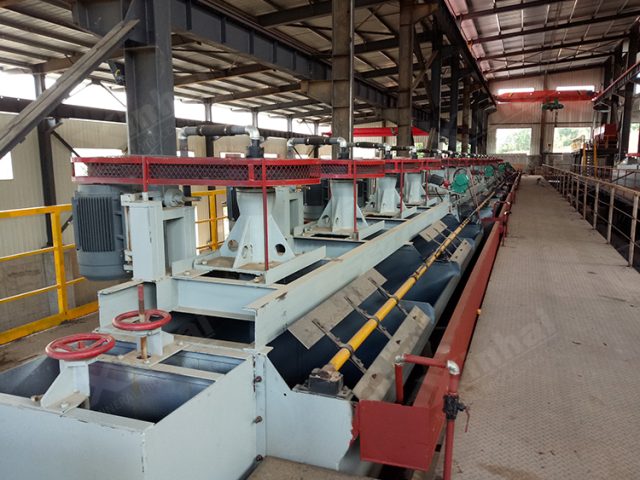
The cheapest gold to recover is the gold you never leach. Installing a centrifugal concentrator in the grinding circuit captures coarse free gold as soon as it is liberated, before it has to be dissolved. A shaking table cleans that gravity concentrate to a smeltable product. Removing free gold ahead of the leach cuts cyanide consumption, shortens leach time and reduces the gold inventory tied up in carbon. For many free-milling ores this single change is the biggest cost reducer available. See the gravity concentration range for sizing.
Lever 2: grind to liberation, not finer
Over-grinding burns power and generates slimes that slow settling and raise reagent demand, while under-grinding leaves gold locked and uextractable. The optimum, often 70-80% passing 75 micron for free-milling ore, comes from liberation testwork. Running a closed grinding circuit with a well-tuned hydrocyclone keeps the product size consistent and avoids both over- and under-grinding. A few micron of unnecessary fineness can add measurable cost per tonne across the life of a plant.
Lever 3: dose cyanide and oxygen to demand
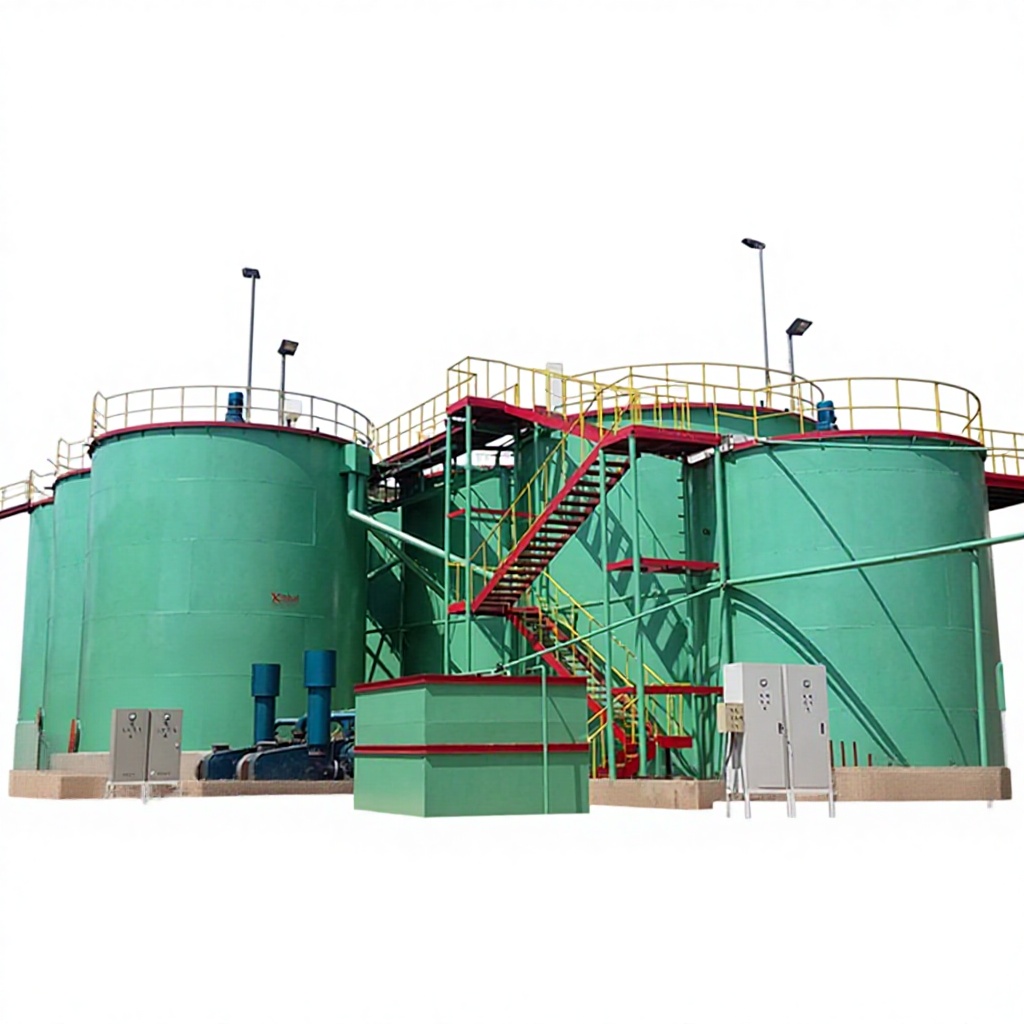
Cyanide is consumed not only by gold but by cyanicides such as copper and reactive sulphides. Measuring free cyanide and titrating to a target, rather than running a fixed high addition, prevents the costly habit of over-dosing for safety margin. Likewise, gold dissolution needs dissolved oxygen; matching aeration or oxygen injection to the actual leach kinetics in the early tanks, where demand is highest, speeds leaching and lets you hold cyanide lower. Modern leaching agitation tanks with efficient aeration help here.
The two reagents interact, which is where real savings hide. Gold dissolution depends on both free cyanide and dissolved oxygen, and if oxygen is the limiting factor, adding more cyanide does nothing but raise cost and feed cyanicides. Many circuits are oxygen-starved in the first one or two tanks where leaching is fastest; supplying oxygen there, by sparging pure oxygen or by improving impeller aeration, lets the same recovery be reached at a lower cyanide concentration. A simple program of measuring dissolved oxygen and free cyanide profiles down the tank train usually reveals where reagent is being wasted, and the fix is operational rather than capital.
Lever 4: manage pH efficiently
Lime is added to hold pH around 10-10.5, which prevents cyanide from escaping as toxic HCN gas and protects against acid loss. Over-liming wastes reagent and can passivate gold surfaces; under-liming loses cyanide and creates a safety hazard. Efficient lime slaking and pH control instrumentation pay back quickly by keeping addition to what the circuit actually needs.
Lever 5: recycle water and carbon
- Water: a thickener returns most process water and, in a CIL/CIP plant, residual cyanide with it, lowering both make-up water and reagent make-up. This is decisive in arid regions.
- Carbon: efficient elution and regeneration in a well-run elution and electrowinning system keeps carbon activity high so less make-up carbon is needed.
- Tailings detox and reuse: recycling cyanide-bearing solution reduces fresh cyanide demand where regulations allow.
Lever 6: control grinding media and liner wear
Grinding is not only the largest energy consumer; steel media and mill liners are a steady consumable cost that often goes unmanaged. Matching ball size and charge to the feed, keeping the mill at its optimal filling and choosing liner profiles suited to the ore all reduce steel consumption per tonne and stabilize the grind, which in turn stabilizes downstream leach performance. Erratic grind size forces operators to over-dose reagents as a buffer, so tightening grinding control quietly lowers reagent cost as well as media cost. It is a good example of how energy and reagent savings are linked rather than independent.
CIL vs CIP and the cost picture
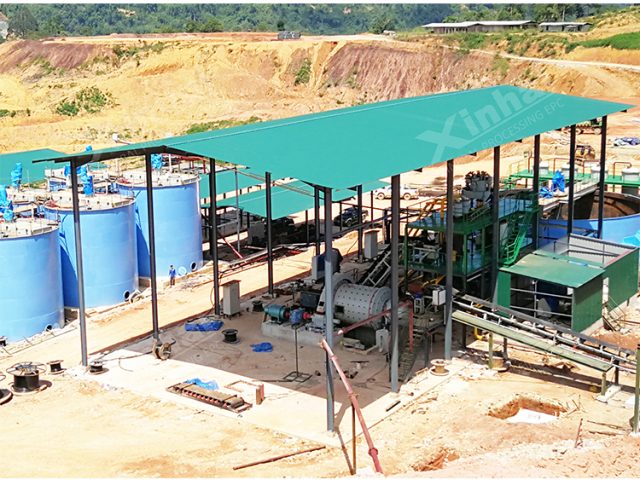
Circuit choice affects cost too. CIL combines leaching and adsorption in the same tanks, suiting ores with preg-robbing carbon, while CIP separates them and can be cheaper to operate on clean ores. The right choice depends on ore behavior; our guide to CIL vs CIP vs heap leach covers the trade-offs in detail. Either way, a properly sized gold extraction circuit with the right tank count avoids the cost penalty of carbon attrition and incomplete leaching.
Put it together
None of these levers requires exotic technology; they require a flowsheet designed for the ore and instrumentation to dose to demand. Combined, gravity pre-recovery, optimized grind, demand-based cyanide and oxygen, efficient pH control and water and carbon recycling commonly trim 10-30% off reagent and energy cost per ounce. Because Xinhai designs and builds the full circuit under an EPC+M+O contract, these efficiencies are built into the plant from the testwork stage rather than retrofitted later.
Frequently Asked Questions
How much can gravity pre-recovery cut cyanide use?
For free-milling ores, recovering coarse free gold by gravity before the leach can remove a meaningful share of the gold from the leach feed, shortening leach time and lowering cyanide consumption. The exact saving depends on how much gold is gravity-recoverable, which a GRG test measures. Beyond cyanide, it also cuts carbon inventory and speeds the overall circuit.
Does finer grinding always improve gold recovery?
No. Grinding improves recovery only up to the liberation size; beyond that, finer grinding mainly burns extra power and creates slimes that slow settling and raise reagent demand. The cost-optimal grind, often around 70-80% passing 75 micron for free-milling ore, comes from liberation testwork. Grinding finer than liberation requires is one of the most common and avoidable cost leaks.
What pH should a cyanidation circuit run at?
Gold cyanidation is typically run at pH 10-10.5, maintained with lime. This range keeps cyanide in solution rather than escaping as toxic HCN gas, which is both a safety and a cost issue. Over-liming wastes reagent and can passivate gold surfaces; under-liming loses cyanide. pH instrumentation and efficient lime slaking keep addition matched to actual demand.
How does water recycling reduce costs?
A thickener returns most process water to the plant as clarified overflow, cutting freshwater make-up and the energy to pump it. In a cyanidation circuit it also returns residual cyanide with the water, reducing fresh cyanide make-up where regulations permit. In arid regions this recovered water is often the single largest operating saving and a permitting requirement as well.
Is CIL or CIP cheaper to operate?
It depends on the ore. CIP separates leaching from carbon adsorption and can be cheaper on clean, non-preg-robbing ores. CIL adds carbon directly into the leach tanks, which is essential for ores with preg-robbing carbonaceous matter but raises carbon attrition. The lower-cost choice is the one matched to your ore behavior, confirmed by testwork before the plant is sized.