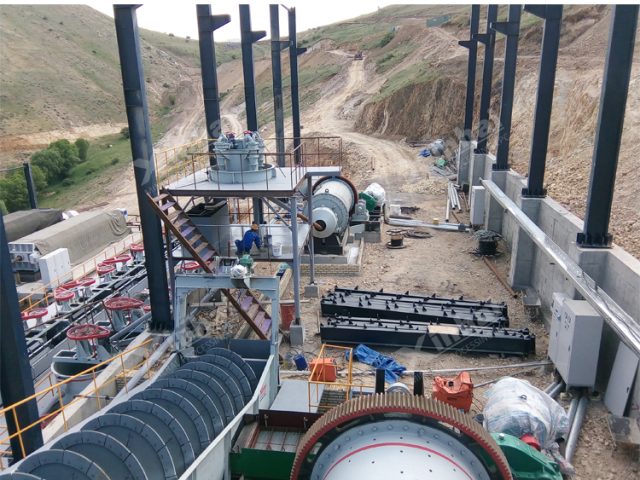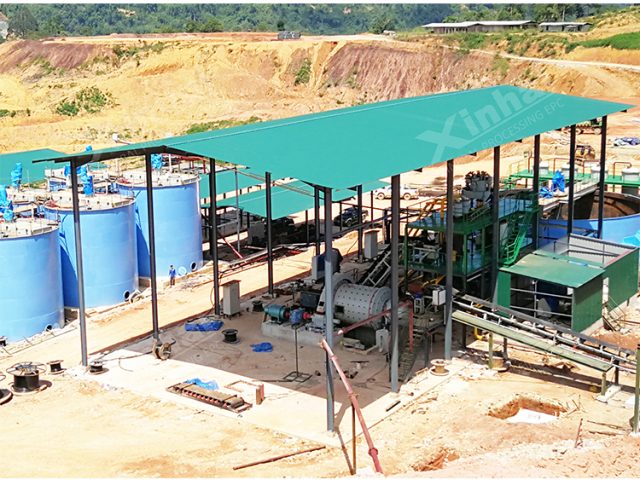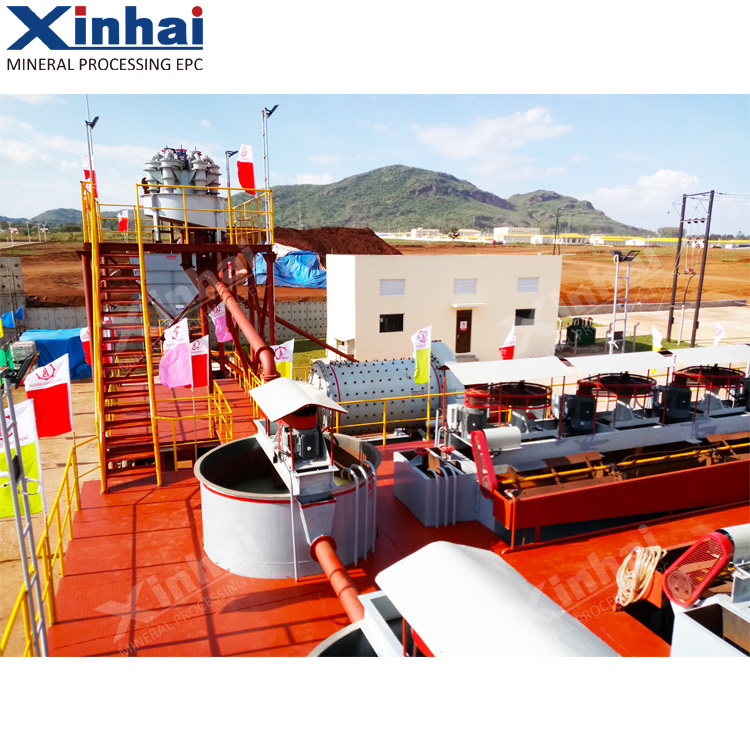
Complete chrome beneficiation, gravity-based
Chromite carries a high specific gravity (around 4.3 to 4.6) against the silicate gangue around it, which makes gravity concentration the workhorse route for chrome. Xinhai designs and builds the full plant, alluvial or hard-rock, as a single EPC scope so the scrubbing, sizing and separation stages all match the way your chromite is liberated. Because gravity needs no reagents, the operating cost per ton stays low, which matters on the often-modest grades that chrome deposits carry.
A typical chrome flowsheet
Run-of-mine ore is scrubbed and washed to break down clay, then screened into size fractions, since each separator works best within a narrow size band. Coarse material reports to jigging, while the finer fractions are concentrated on spiral chute separators and cleaned on shaking tables. Hard-rock chromite first passes through crushing and grinding to liberate the chromite grains before the same gravity train upgrades it. Dewatering and water recovery close the circuit so the plant can run on a tight water balance.
Alluvial versus hard-rock
- Alluvial chrome: already liberated, so the plant centers on washing, screening and gravity separation with minimal comminution and lower capital cost.
- Hard-rock chrome: needs crushing and grinding ahead of gravity to free the chromite grains; the grind size is set by liberation testing rather than guesswork.
On suitable feed, gravity concentration typically lifts chromite to a 40 to 46 percent Cr2O3 saleable concentrate with stage recoveries in the 85 to 95 percent band. The chrome-to-iron ratio of the product is just as important to buyers as the Cr2O3 grade, so we design the circuit with that specification in mind. Where iron-bearing gangue limits the gravity grade, a magnetic cleaning stage can be added; we evaluate that during flowsheet design.
Built and supported as one scope
Buying the chrome plant as a single engineered package keeps the mass balance, water balance and equipment ratings consistent from feed bin to product stockpile, with one party accountable for the result. Under our EPC+M+O model, Xinhai runs the ore testing, design, in-house manufacturing, installation and operator training. See the full range of mineral processing plants or send us your chrome assay for a sized proposal.
Technical Specifications
| Plant type | Gravity chrome beneficiation (alluvial / hard-rock) |
|---|---|
| Capacity | 10u2013500 t/d (configurable) |
| Feed | Alluvial chromite or crushed hard-rock chrome |
| Concentrate grade | 40u201346% Cr2O3 (ore-dependent) |
| Typical recovery | 85u201395% on suitable feed |
| Core equipment | Scrubber, screens, jigs, spirals, shaking tables |
| Optional cleaning | Magnetic separation for iron-bearing gangue |
| Delivery model | Turnkey EPC+M+O, OEM/ODM |
Frequently Asked Questions
What concentrate grade can a chrome gravity plant reach?
On well-liberated chromite, a gravity flowsheet typically produces a 40 to 46 percent Cr2O3 concentrate. The achievable grade depends on the chrome-to-iron ratio and gangue mineralogy, so we run ore testing first. If iron-bearing minerals cap the gravity grade, a magnetic cleaning stage can lift it further.
Can the plant handle both alluvial and hard-rock chrome?
Yes. Alluvial chrome is already liberated, so the line focuses on washing, screening and gravity separation. Hard-rock chrome needs crushing and grinding ahead of the gravity train to free the chromite grains. We configure the comminution and separation stages to match your specific feed type.
How much does a complete chrome processing plant cost?
A complete gravity chrome plant starts around US$119,800 and scales with throughput, feed type and the amount of crushing and grinding required. After we review your assay and target capacity, we return an itemized budget covering equipment, installation and commissioning.
Do you provide installation and commissioning?
Yes. Xinhai delivers chrome plants under the EPC+M+O model, which covers ore testing, engineering and flowsheet design, in-house manufacturing, on-site installation, commissioning and operator training. We stay through ramp-up so the plant reaches its design concentrate grade and recovery before handover, and our team trains your operators to hold those numbers in day-to-day running.