High-tonnage gravity separation with no moving parts
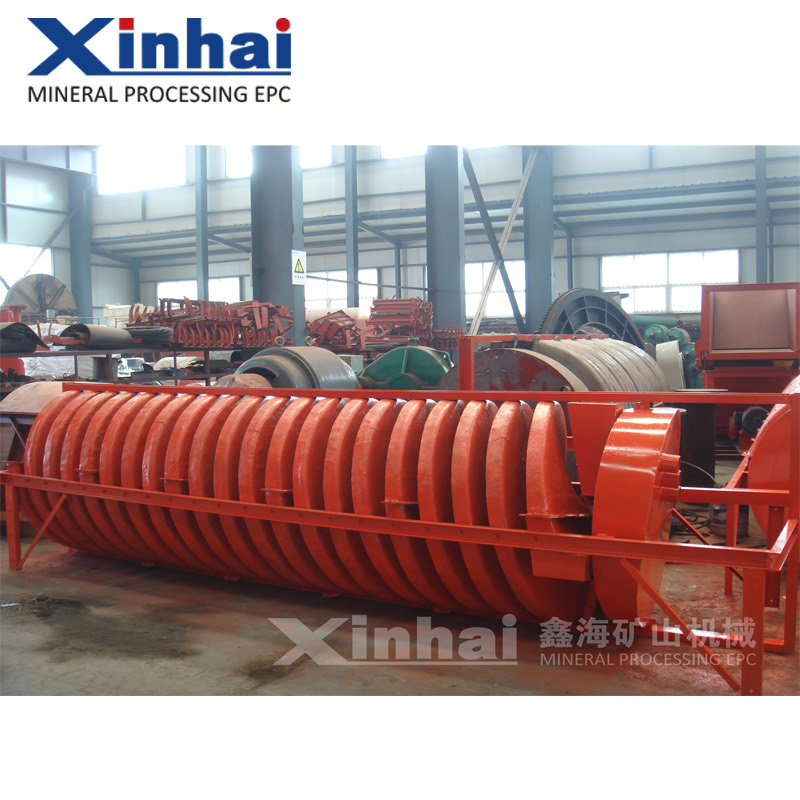
The spiral chute separator is one of the most economical gravity devices in a plant: a helical fiberglass trough that separates minerals by density and shape as slurry simply flows down it under gravity. With no motor and no reagents, it concentrates large tonnages of fine heavy minerals at very low operating cost, which is why spirals are deployed in large numbers across iron, chrome, mineral-sands and fine-gold circuits. Their simplicity also makes them well suited to remote sites with limited power and maintenance support.
How a spiral concentrates minerals
Slurry fed at the top spirals downward, and the combination of gravity, centrifugal force and the flowing water film stratifies the bed. Dense particles such as iron, chromite or gold settle and migrate to the inner edge of the trough, while lighter gangue is carried to the outer rim. Adjustable splitters near the discharge cut the band into concentrate, middlings and tailings. Because separation depends only on density and flow, the device is robust and almost maintenance-free, with no bearings or drives to service.
Where spirals fit
- Iron and chrome: as roughers and cleaners on fine fractions; central to a chrome processing plant.
- Mineral sands: recovering zircon, rutile and ilmenite from beach and dune deposits.
- Fine gold and tin: as a high-tonnage pre-concentration stage ahead of a shaking table for final cleaning.
A typical spiral start handles roughly 1 to 8 tons per hour of solids in the fine size range, usually below about 2 mm down to fine sand. Multi-start assemblies pack several intertwined troughs on one column to multiply tonnage in a small footprint, which keeps a high-capacity plant compact. The fiberglass trough with a wear-resistant lining gives long service life, and with no power draw the cost per recovered ton is among the lowest of any separator.
Part of the gravity circuit
Spirals deliver a rougher concentrate that is normally polished by a table or centrifugal concentrator, so they are designed as one stage in a balanced circuit rather than a finished-product device. Xinhai supplies spirals standalone or within a complete gravity concentration plant under our EPC+M+O model. Read our gravity concentration guide or contact us with your feed size and mineralogy for sizing.
Technical Specifications
| Type | Gravity spiral chute separator (fiberglass) |
|---|---|
| Capacity | 1u20138 t/h per start (multi-start available) |
| Best feed size | Fine fraction, roughly <2 mm to fine sand |
| Power | None; gravity-fed operation |
| Reagents | None; water-only |
| Adjustments | Splitter positions, feed density |
| Construction | Fiberglass trough, wear-resistant lining |
| Application | Gold, iron, chrome, tin, zircon, rutile |
Frequently Asked Questions
What feed size suits a spiral chute?
Spirals work best on fine material, roughly below 2 mm down to fine sand, where the density contrast and flowing water film can stratify the bed. Coarser feed is better handled by jigs, and very fine slimes may need flotation. We confirm the right size range from your feed analysis before sizing the spirals.
Does a spiral separator need electricity?
No. The spiral runs purely on gravity, with slurry flowing down the helical trough under its own weight, so there is no motor and no power consumption. That, plus no reagents and minimal wear, makes the cost per recovered ton among the lowest of any concentrating device, which is why spirals are used in such high numbers.
How many spirals or starts do I need?
Each start handles roughly 1 to 8 tons per hour, so the count follows your throughput and the number of rougher and cleaner passes the ore needs. Multi-start columns pack several troughs together to save floor space. We calculate the number of starts from your tonnage and target recovery during flowsheet design.
Which ores are spirals used for?
Spirals are widely used for iron ore, chromite, mineral sands such as zircon, rutile and ilmenite, plus fine gold and tin. Any fine heavy mineral with a clear density contrast against its gangue is a good candidate. Send your mineralogy and we will confirm whether a spiral suits your application.