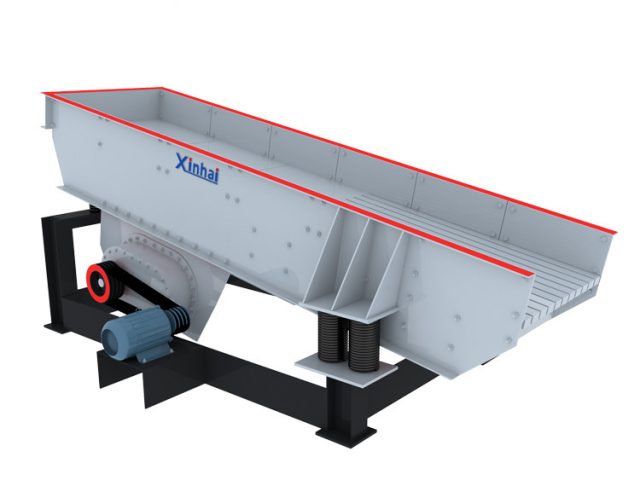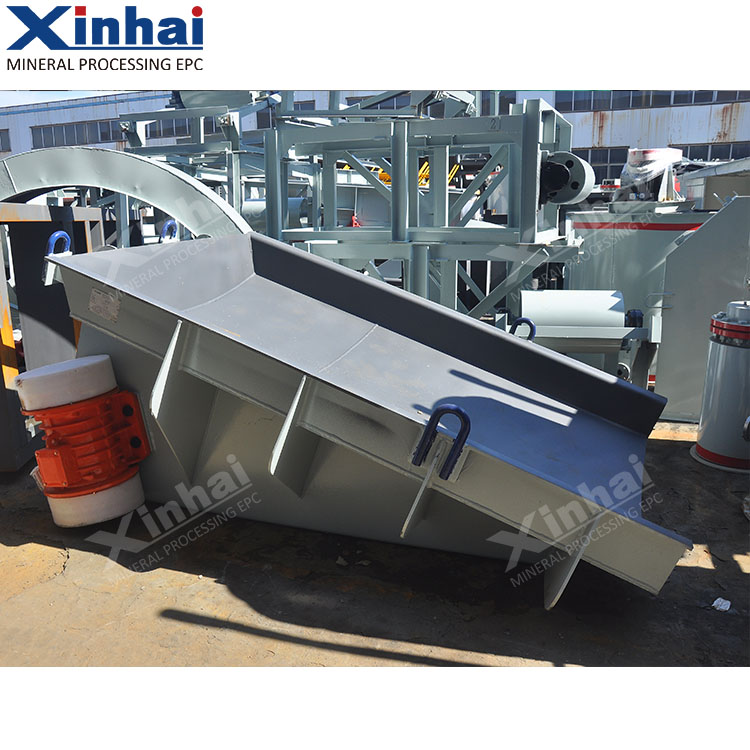
Where the GZ electromagnetic feeder fits
The GZ electromagnetic vibrating feeder is the precision metering device of a mineral plant. Where the heavy ZSW grizzly feeder handles surging run-of-mine, the electromagnetic feeder excels at fine, controlled dosing of smaller, drier material, feeding a steady, even stream onto belts, into mills, ahead of screens, or to reagent and concentrate dosing points. Its hallmark is responsiveness: output can be ramped from zero to full instantly by varying the control current.
How it works
An electromagnet pulses against a spring-loaded armature, driving the trough in a high-frequency, short-stroke vibration (typically near 3,000 cycles per minute on standard mains). Each micro-throw nudges material forward in tiny hops, so flow is smooth and continuous. Because the feed rate is set purely by the electromagnet’s current, it can be regulated precisely with a simple thyristor controller and tied into automatic plant control.
Why choose electromagnetic
The feeder has no rotating bearings, no eccentric and no motor to lubricate, so wear and maintenance are minimal and energy use is very low, often under 1.5 kW even on large troughs. As a rule of thumb, choose an electromagnetic feeder when you need accurate, fast-responding control of dry fines or granular material; choose a heavy mechanical feeder for coarse, abrasive run-of-mine. Xinhai sizes trough width and length to your rate and material bulk density.
- Instant, stepless feed-rate control
- No rotating parts – low wear and maintenance
- Very low energy consumption
- Easy automation via current control
Selection and operation
Material should be reasonably dry and free-flowing; very wet or sticky feed damps the vibration and reduces output, and abrasive material calls for a wear-lined trough to protect service life. The feeder is commonly mounted under a hopper to meter onto a belt or into a crusher or grinding circuit, complementing the coarse-duty ZSW grizzly feeder at the plant front end where surging run-of-mine arrives. Accurate, steady feed stabilizes downstream units such as a vibrating screen or a mill, improving sizing and grinding efficiency, because most processing equipment performs best at a constant feed rate rather than a fluctuating one.
See the full feeders and conveying range. For help selecting trough size and controller for your duty, contact our engineers.
Technical Specifications
| Capacity | 1-100 t/h (configurable) |
|---|---|
| Drive | Electromagnetic vibration (~3,000 cpm) |
| Feed-rate control | Stepless, via thyristor controller |
| Motor power | 0.06-1.5 kW |
| Moving parts | None rotating (no bearings/eccentric) |
| Trough lining | Wear-resistant / lined options |
| Max feed size | Up to ~50 mm (granular/fine) |
| Application | Precise metering of dry fines & granular material |
| Customization | OEM / ODM, sized to rate & bulk density |
Frequently Asked Questions
What is the difference between electromagnetic and mechanical vibrating feeders?
An electromagnetic feeder uses a pulsed electromagnet with no rotating parts, giving instant, stepless rate control and very low energy use, best for precise dosing of dry fines. A mechanical feeder uses vibrating motors or an eccentric and handles heavier, coarser, more abrasive material. They serve different points in the plant rather than competing directly.
Can it handle wet or sticky material?
Electromagnetic feeders work best with reasonably dry, free-flowing material. Wet or sticky feed damps the high-frequency vibration and cuts output, and can build up in the trough. For damp or coarse run-of-mine a heavy mechanical or grizzly feeder is the better choice; the electromagnetic type is for clean, controllable fines.
How precise is the feed-rate control?
Very precise. Because output is set purely by the electromagnet's control current, the rate adjusts instantly and steplessly from zero to full and can be tied into automatic plant control loops. This makes it ideal for dosing reagents or metering steady feed to a mill or screen where consistency directly affects performance.
How much maintenance does it need?
Minimal. With no rotating bearings, eccentric or gearbox, there is nothing to lubricate and few parts to wear, so downtime is low. The main checks are the spring stack and the electromagnet gap. This low-maintenance profile, combined with sub-1.5 kW power draw, makes it economical to run continuously.