
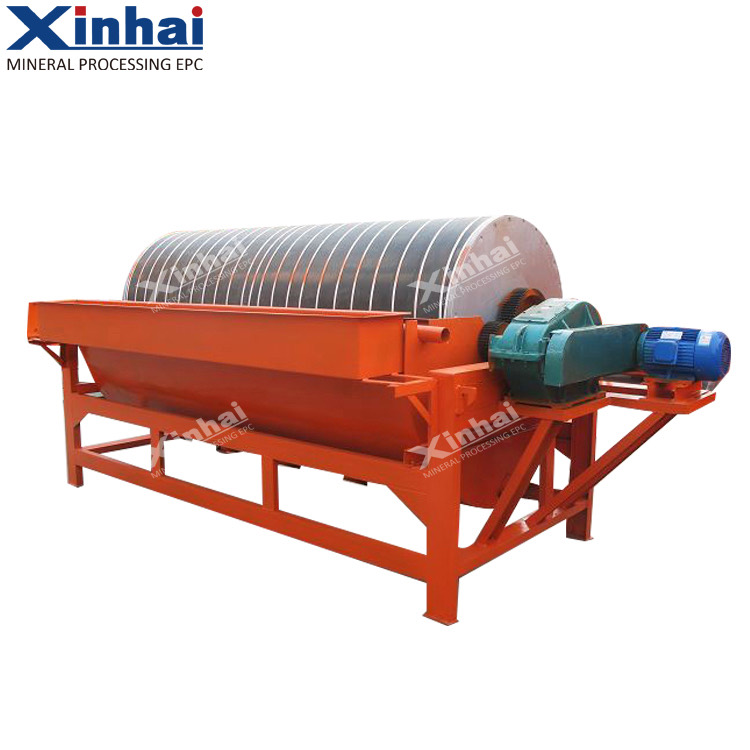
Typical process flow
- 1Crushing & screening
Three-stage crushing reduces run-of-mine ore to grinding feed, with dry magnetic cobbing optional on coarse magnetite to reject waste early.
- 2Grinding & classification
Ball mills in closed circuit with classifiers or hydrocyclones liberate iron minerals, with grind fineness set by the ore.
- 3Magnetic separation
Low-intensity drum separators recover magnetite; high-intensity or wet high-gradient units recover weakly magnetic hematite.
- 4Cleaning / reverse flotation
Multi-stage magnetic cleaning, gravity or reverse flotation upgrades the concentrate and lowers silica to target grade.
- 5Concentrate dewatering & tailings
Thickeners and filters dewater the iron concentrate and recover process water; tailings are thickened for storage.
The iron ore challenge
The flowsheet for iron ore is decided by magnetism. Magnetite is strongly magnetic and separates easily with low-intensity magnetic drums, making it the cheapest iron ore to upgrade. Hematite and limonite are only weakly magnetic, so they need high-intensity separation, gravity or reverse flotation to reach a saleable concentrate. Many deposits are a mix of the two. Xinhai begins every iron project with a bench and pilot test at its 3,000 m² mineral test center to confirm iron deportment, the liberation grind and the right separation route.
The recommended flowsheet
For magnetite, the route is crush, grind, magnetically separate. After three-stage crushing, coarse ore can be dry-cobbed on a dry magnetic separator to reject barren waste before grinding, saving mill energy. The ore is then ground in a wet ball mill closed with a high weir spiral classifier to liberate magnetite, and upgraded over several stages of a wet drum magnetic separator. Two or three magnetic cleaning passes typically lift the concentrate to 62-68% Fe. Browse the full magnetic separation equipment range to match drum intensity to your ore.
Stage grinding paired with stage separation is the efficient way to treat magnetite. Rather than grinding everything to final fineness in one pass, the ore is ground coarse, the liberated magnetite is pulled out on a first magnetic stage, and only the locked middlings are reground. This staged approach removes liberated concentrate early, cuts overgrinding and lowers overall mill power. Typical final grinds run 80-95% passing 200 mesh on fine-grained magnetite, but the exact target is set by the liberation curve from testwork, since over-grinding wastes energy and generates slimes that hurt downstream cleaning.
The number of cleaning stages is a grade-recovery decision. More cleaning passes raise concentrate iron grade and lower silica, but each pass can shave a little recovery, so the circuit is built around your concentrate specification and pellet-feed or sinter-feed target.
Hematite and weakly magnetic ore
Weakly magnetic hematite will not respond to low-intensity drums. It is treated with wet high-gradient magnetic separation, gravity concentration on a spiral chute separator, or reverse flotation to remove silica, often in combination. Choosing dry or wet separation is itself a key decision; our guide to wet vs dry magnetic separation explains the trade-offs in moisture, power and recovery.
Closing the circuit
Final concentrate is dewatered to transport moisture on filters, while thickeners recover process water and thicken tailings for storage. Typical results are a 62-68% Fe concentrate at 70-90% iron recovery, depending on ore type and liberation, framed against your own testwork rather than promised. For a representative build, review our 2,000 t/d iron ore magnetic plant in Kazakhstan. As an EPC+M+O contractor, Xinhai delivers flowsheet design, in-house manufacturing, construction and operator training as a single source. To size a plant to your deposit, contact us for an ore test.
Frequently Asked Questions
Is my iron ore magnetite or hematite?
Magnetite is strongly magnetic and is picked up easily by a hand magnet and low-intensity drum separators, while hematite is only weakly magnetic and needs high-intensity separation, gravity or flotation. Many ores contain both. Xinhai runs a Davis tube and bench separation test to measure iron deportment and select the right flowsheet for your ore.
Should I use wet or dry magnetic separation?
Dry separation suits coarse, low-moisture magnetite and is useful for cobbing waste before grinding, while wet separation gives sharper recovery on fine, ground material and is standard for upgrading to concentrate grade. Many plants use dry cobbing early and wet drums after grinding. The choice depends on ore moisture, grind size and water availability.
What iron concentrate grade can I expect?
Magnetite typically upgrades to a 62-68% Fe concentrate at 70-90% iron recovery after several magnetic cleaning stages. Hematite reaches similar grades through high-intensity separation, gravity or reverse flotation but usually at higher cost. Grade and recovery depend on liberation and silica content, so Xinhai frames both as achievable ranges tied to your ore test.
Can Xinhai supply a complete iron ore plant?
Yes. Under the EPC+M+O model Xinhai delivers ore testing and flowsheet design, in-house manufacturing of crushers, mills, classifiers and magnetic separators, on-site construction and commissioning, and operator training. The complete line covers crushing, grinding, magnetic separation, concentrate dewatering and tailings as a single-source package.
Related projects
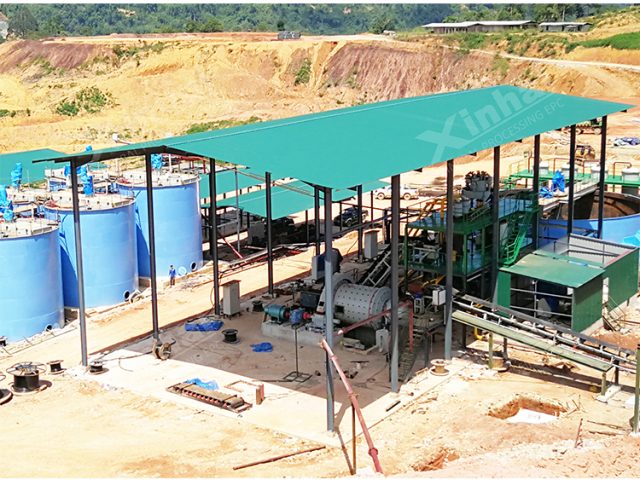
500 t/d Gold CIP Plant — Sudan
Typical 90-94% Au recovery on free-milling ore; compact CIP layout for fast deployment
Read case →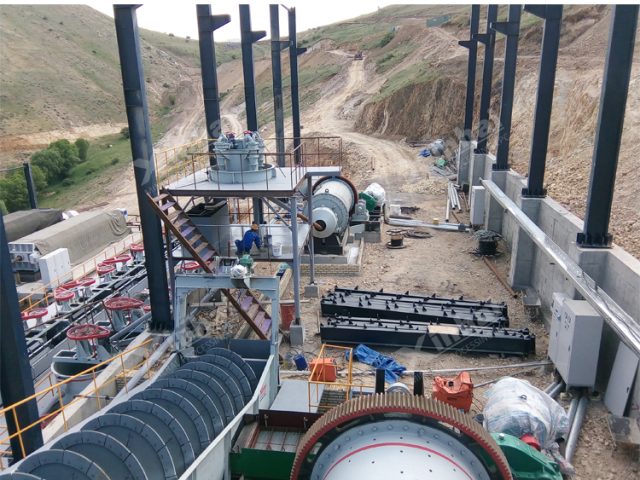
2 Mt/a Spodumene (Lithium) Plant — Zimbabwe
Typical 6% Li2O concentrate at 75-85% recovery; DMS plus flotation flowsheet
Read case →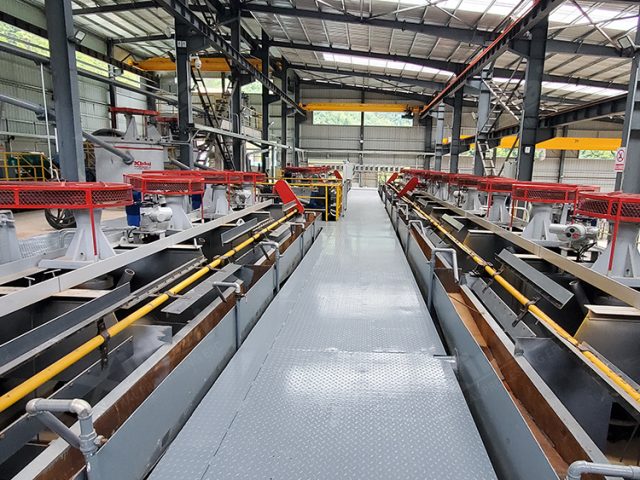
1,200 t/d Lead-Zinc Flotation Plant — Morocco
Separate Pb and Zn concentrates; typical 85-92% recovery via differential flotation
Read case →