
Background
This profile represents a typical 1,200 t/d lead-zinc operation in Morocco, part of Xinhai’s North African and Mediterranean market. The ore was a sulfide lead-zinc ore in which galena (lead) and sphalerite (zinc) occur together, so the plant had to produce two separate saleable concentrates rather than a bulk product. Clean separation of lead from zinc, with controlled cross-contamination, was the central metallurgical challenge.
Solution
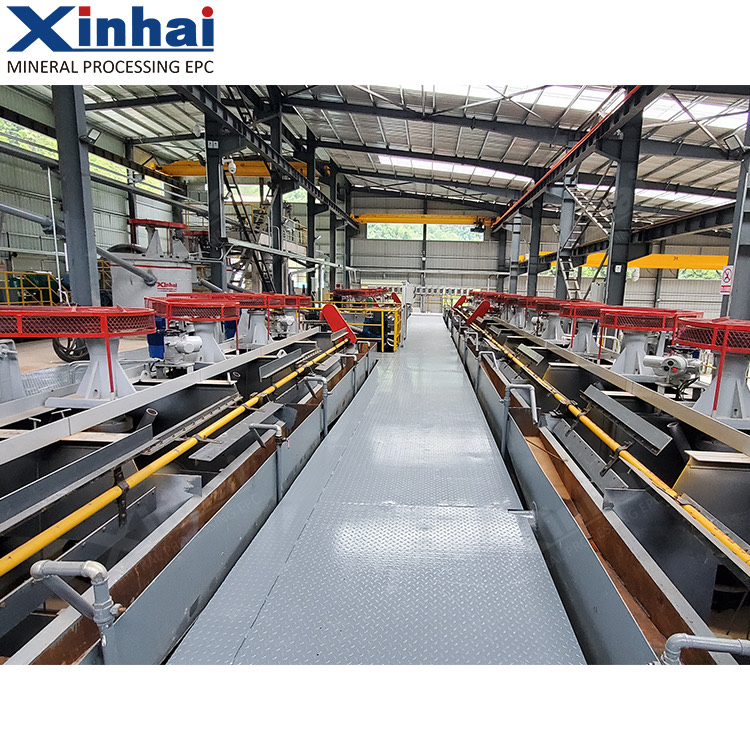
Testwork established the grind size for mineral liberation and the reagent scheme for differential flotation, the standard route for polymetallic sulfides. After crushing and closed-circuit grinding with a wet ball mill, the pulp first floats galena while sphalerite is depressed with zinc sulfate and other depressants. The lead-depleted pulp is then reactivated with copper sulfate and the zinc is floated in a second stage. Both circuits use JJF flotation cells in a rougher-cleaner arrangement, with regrinding of rougher concentrates to reach saleable grade. Each concentrate is thickened and dewatered on a filter press for shipment, and tailings water is recovered.
Delivered as EPC+M+O, the project covered ore testing, in-house manufacturing, construction, commissioning and operator training. The decisive work was the reagent scheme: selective depression and reactivation are what keep zinc out of the lead concentrate and lead out of the zinc concentrate, which is the difference between two saleable products and a downgraded mixed concentrate. The lead circuit ran at controlled pH with zinc sulfate to depress sphalerite, while the zinc circuit used copper sulfate to activate it and lime to depress pyrite. Each rougher concentrate was reground to liberate locked grains before cleaning, which lifted both concentrate grades and reduced misplaced metal between the two products.
Outcome
Differential flotation on a sulfide lead-zinc ore typically recovers around 85-92% of each metal into its own concentrate, with grades tuned in the cleaning stages and cross-contamination controlled by the depressant regime. Producing separate Pb and Zn concentrates improved the payable value of the ore versus a bulk product. These are representative ranges, not guarantees; actual results depend on mineralogy, liberation and reagent control.
For the full flowsheet logic see the lead-zinc processing solution and the flotation equipment range. To size a lead-zinc plant to your ore, contact us for an ore test.
Frequently Asked Questions
Why float lead and zinc separately instead of as a bulk concentrate?
Galena and sphalerite command better payable terms as separate clean concentrates than as a mixed product, which smelters discount. Differential flotation floats lead first while depressing zinc, then reactivates and floats zinc, giving two saleable concentrates. The reagent scheme that controls this selective separation is confirmed in testwork before the circuit is sized.
What lead-zinc recovery is achievable?
Differential flotation typically recovers around 85-92% of each metal into its own concentrate, depending on mineralogy, liberation and how cleanly the depressant and activator regime separates the two minerals. Fine intergrowths or weathered ore can lower recovery. Xinhai frames recovery as an achievable range tied to your ore test rather than a fixed guarantee.
More projects
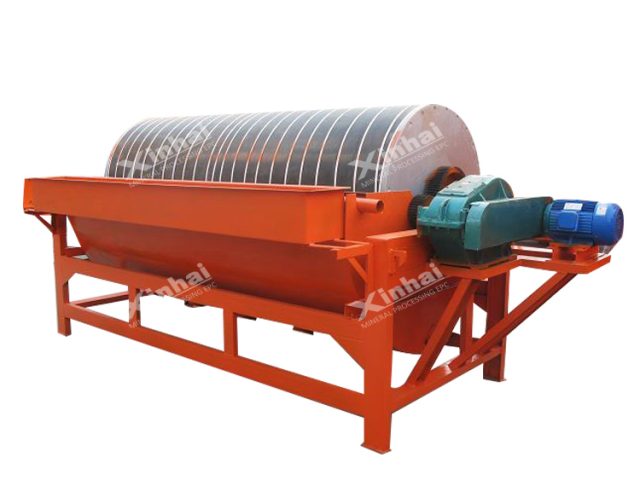
2,000 t/d Iron Ore Magnetic Plant — Kazakhstan
Typical 64-66% Fe concentrate at 90-95% recovery; staged wet magnetic separation
Read case →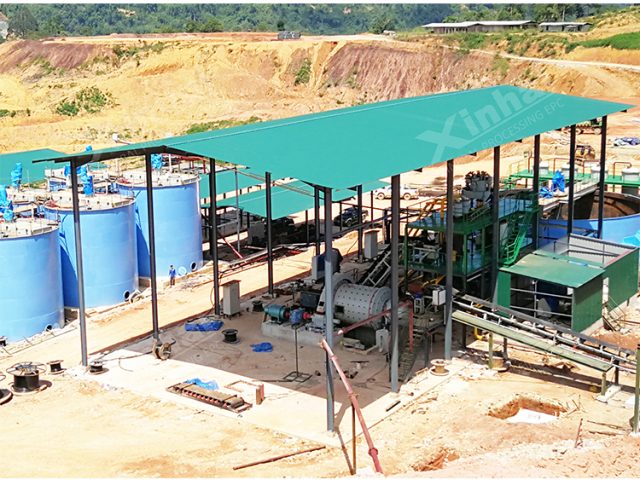
1,000 t/d Gold CIP Plant — Nicaragua
Typical 90-95% Au recovery on clean free-milling ore; CIP route lowered carbon cost
Read case →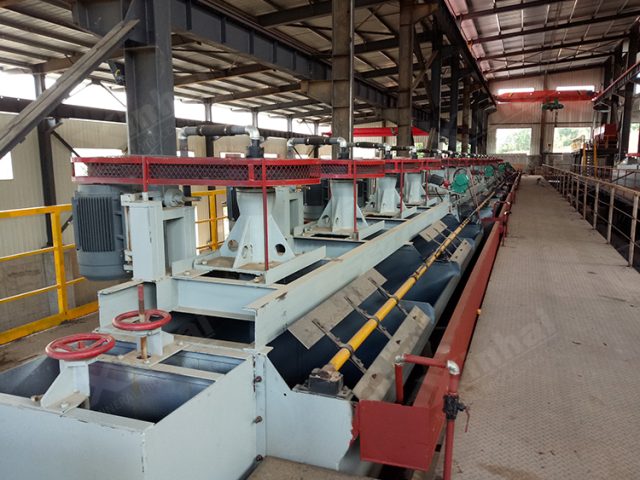
1,500 t/d Copper Flotation Plant — DR Congo
Typical 88-93% Cu recovery to a saleable concentrate; conventional sulfide flotation flowsheet
Read case →