
Background
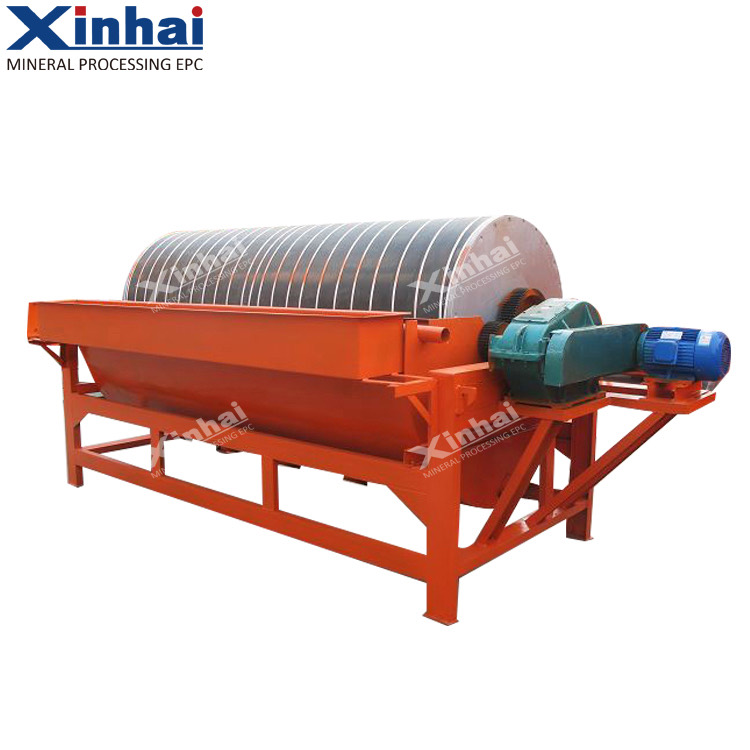
This profile represents a typical 2,000 t/d magnetite operation in Kazakhstan, part of Xinhai’s Eastern European and Central Asian market. The ore was a low-to-medium-grade magnetite, and the owner needed to upgrade it to a high-grade iron concentrate of roughly 64-66% Fe suitable for steelmaking feed or pelletizing. Because magnetite is strongly magnetic, the flowsheet was built around staged magnetic separation rather than flotation.
Solution
Testwork fixed the liberation size at which magnetite separates cleanly from gangue and set the number of separation stages. The flowsheet uses stage-grinding and stage-separation: coarse cobbing rejects barren gangue early, then progressively finer grinding and cleaning lift the concentrate to grade. After crushing, the ore is ground in a wet ball mill in closed circuit with a hydrocyclone, and the magnetite is recovered on wet drum magnetic separators across rougher, scavenger and cleaner stages. Concentrate is thickened and dewatered on a disc vacuum filter for handling and transport, while tailings are thickened to recover process water.
Delivered as EPC+M+O, the project covered ore testing, in-house manufacturing, construction, commissioning and operator training. The decisive design choice was stage-grinding and stage-separation: grinding only as fine as each stage requires, and rejecting gangue as early as possible, minimizes energy use while protecting both concentrate grade and iron recovery. Coarse cobbing after primary grinding discarded a large barren fraction at low cost, so only the magnetic middlings advanced to regrinding and cleaner separation. Magnetic field strength and drum speed were set per stage to balance recovery against the entrainment of locked or weakly magnetic particles that would dilute the concentrate.
Outcome
Staged wet magnetic separation on a liberated magnetite ore typically yields a 64-66% Fe concentrate at around 90-95% iron recovery, depending on head grade and liberation size. Early cobbing reduced the tonnage sent to fine grinding, keeping energy cost down. These are representative ranges for magnetite, not guarantees; actual results depend on ore grade, mineralogy and target concentrate grade.
For the full process logic see the iron ore processing solution, and to weigh separation methods read wet vs dry magnetic separation. To size an iron ore plant to your deposit, contact us for an ore test.
Frequently Asked Questions
Why magnetic separation rather than flotation for this iron ore?
Magnetite is strongly magnetic, so low-intensity wet magnetic separation recovers it cleanly and cheaply once the ore is liberated, with no reagents required. Flotation is generally reserved for hematite or other weakly magnetic iron ores. Xinhai confirms iron mineralogy in testwork first, because it determines whether magnetic separation, flotation or a combination is the right route.
Why grind in stages instead of all at once?
Stage-grinding grinds the ore only as fine as each separation step needs, rejecting liberated gangue early before spending energy grinding it further. This lowers overall power consumption and reduces overgrinding, which can hurt downstream dewatering. On magnetite, stage-grinding paired with stage magnetic separation is the standard way to balance concentrate grade, recovery and energy cost.
More projects
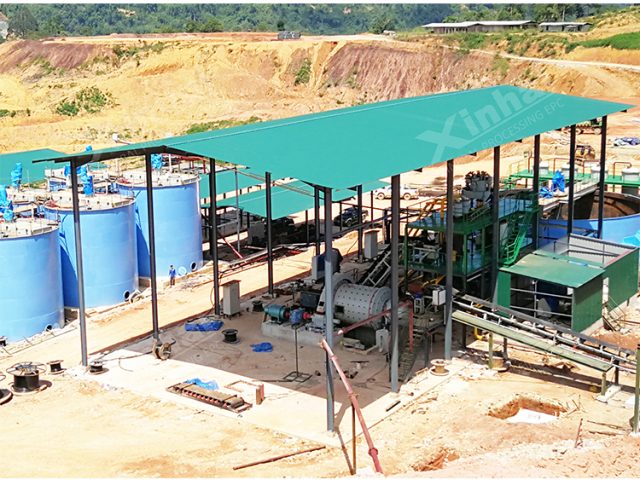
500 t/d Gold CIP Plant — Sudan
Typical 90-94% Au recovery on free-milling ore; compact CIP layout for fast deployment
Read case →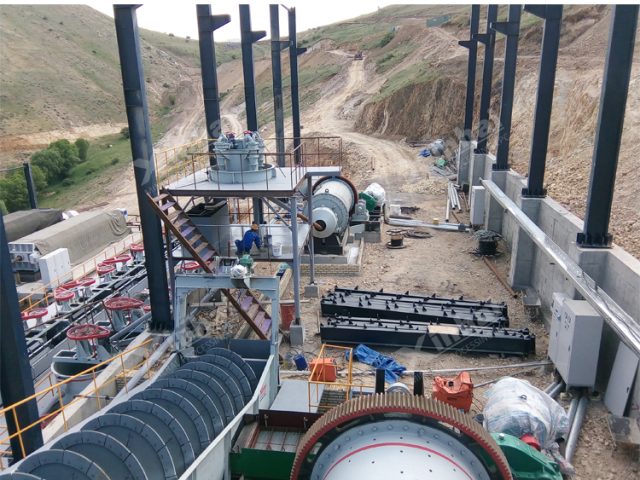
2 Mt/a Spodumene (Lithium) Plant — Zimbabwe
Typical 6% Li2O concentrate at 75-85% recovery; DMS plus flotation flowsheet
Read case →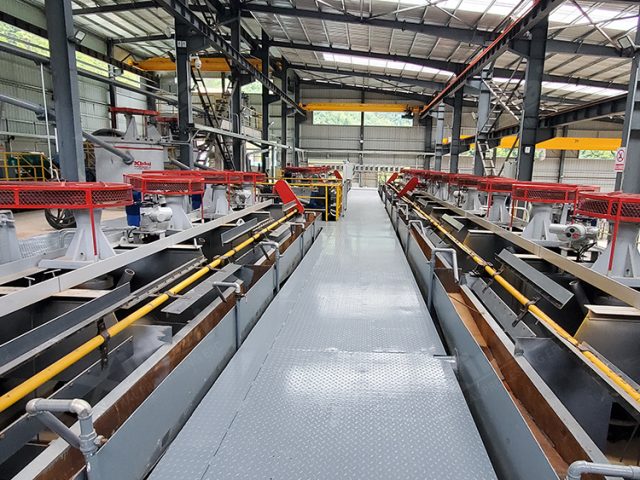
1,200 t/d Lead-Zinc Flotation Plant — Morocco
Separate Pb and Zn concentrates; typical 85-92% recovery via differential flotation
Read case →