
Background
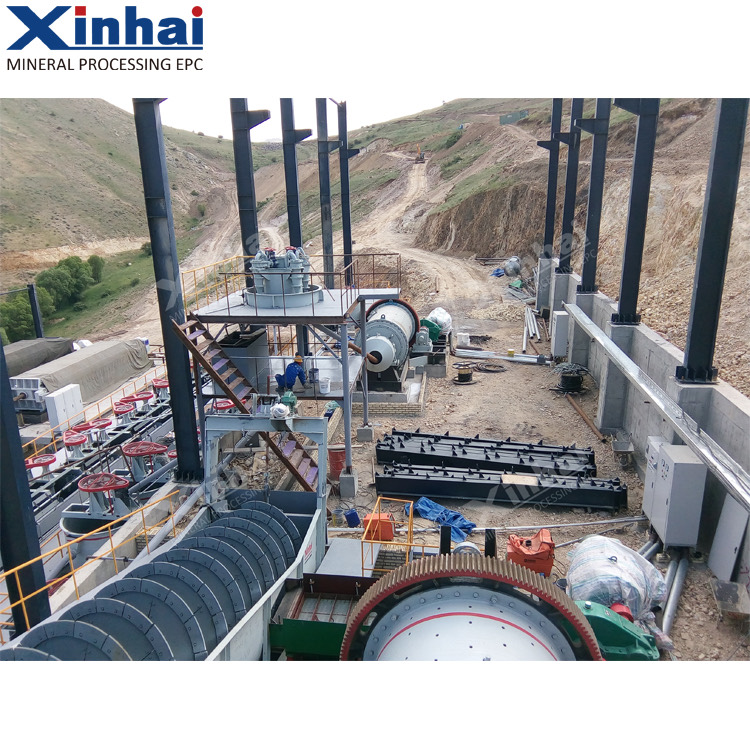
This profile represents a typical large spodumene project in Zimbabwe, one of Africa’s leading hard-rock lithium provinces. The orebody was a coarse-grained pegmatite-hosted spodumene, and the owner needed a high-throughput plant to upgrade run-of-mine ore to a saleable spodumene concentrate of roughly 6% Li2O. The target market was lithium converters, so concentrate grade and low impurity content drove the flowsheet.
Solution
Testwork characterized the spodumene liberation size and the proportion of coarse, gangue-free material suitable for pre-concentration. The confirmed flowsheet combined dense-media separation (DMS) with spodumene flotation. After crushing and screening, a DMS stage rejects barren gangue at coarse sizes, sharply reducing the tonnage that must be ground and floated and lowering overall energy use. The finer fraction is ground in a wet ball mill in closed circuit, then upgraded in a spodumene lithium processing line using a flotation circuit with mica and amphibole depression to reach concentrate grade. Magnetic separation removes iron-bearing minerals to control impurities, and the concentrate is thickened and filtered for shipment.
Delivered as EPC+M+O, the project spanned ore testing, in-house manufacturing, construction, commissioning and operator training. Using DMS ahead of flotation was the key economic decision at this scale: rejecting waste early cut grinding and flotation load and improved the plant’s cost per tonne of concentrate. The flotation circuit ran a desliming stage and selective reagents to depress mica and amphibole gangue while floating spodumene, since fine mica is the most common contaminant that drags down concentrate grade. Reagent temperature and pulp pH were controlled to hold spodumene recovery without over-floating gangue.
Outcome
A DMS-plus-flotation flowsheet on coarse-grained spodumene typically produces a concentrate around 6% Li2O at 75-85% lithium recovery, depending on liberation, mica content and concentrate grade target. The combined route balanced grade and recovery while keeping energy use in check. These are representative ranges for this ore type, not guarantees; actual results depend on mineralogy, grind and impurity limits.
Operator training during ramp-up focused on reagent dosing and the DMS density set-point, the two controls that most affect concentrate grade and lithium recovery. For the full process logic see the lithium processing solution and our spodumene flowsheet guide. To size a lithium plant to your pegmatite, contact us for an ore test.
Frequently Asked Questions
Why use DMS before flotation on spodumene?
Dense-media separation rejects low-density barren gangue at coarse sizes before fine grinding, so only the lithium-bearing fraction is ground and floated. On coarse-grained pegmatite this can remove a large share of the feed tonnage early, cutting grinding energy and flotation reagent cost. DMS plus flotation usually delivers better plant economics than flotation alone at high throughput.
What concentrate grade can a spodumene plant reach?
Hard-rock spodumene plants typically target a 6% Li2O concentrate, the common specification for lithium converters, at around 75-85% recovery. The achievable grade-recovery balance depends on spodumene liberation, mica and iron content, and impurity limits, all confirmed in testwork before the flotation circuit and magnetic cleaning stages are sized.
More projects
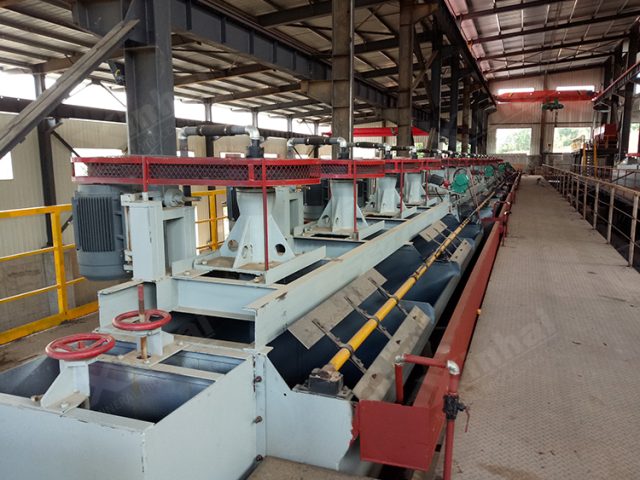
1,500 t/d Copper Flotation Plant — DR Congo
Typical 88-93% Cu recovery to a saleable concentrate; conventional sulfide flotation flowsheet
Read case →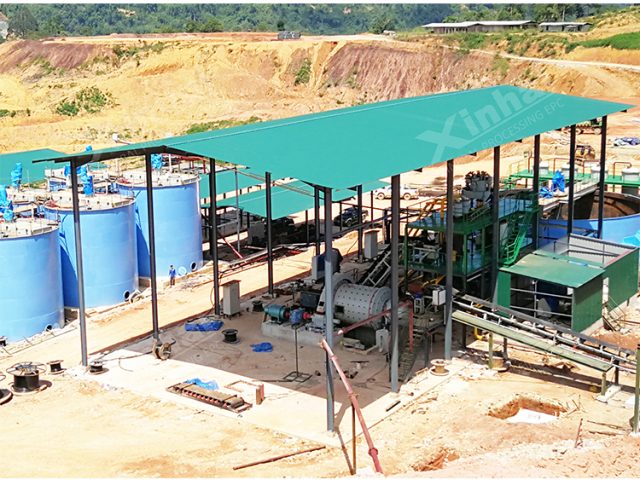
1,000 t/d Gold CIP Plant — Nicaragua
Typical 90-95% Au recovery on clean free-milling ore; CIP route lowered carbon cost
Read case →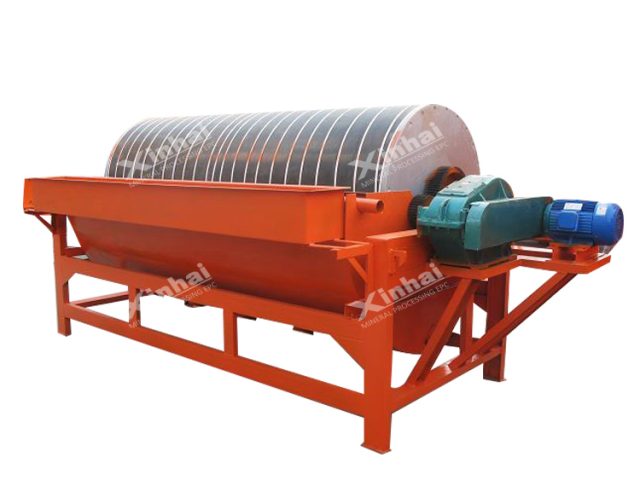
2,000 t/d Iron Ore Magnetic Plant — Kazakhstan
Typical 64-66% Fe concentrate at 90-95% recovery; staged wet magnetic separation
Read case →