
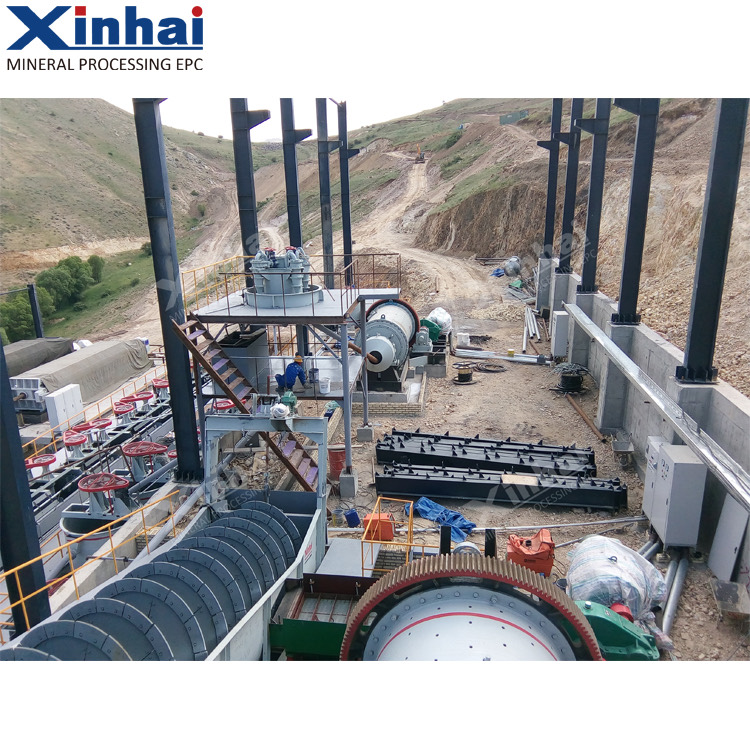
Typical process flow
- 1Crushing & screening
Three-stage crushing reduces pegmatite ore to a DMS feed size, typically below 25 mm, with screening to remove fines.
- 2Dense-media separation (DMS)
Coarse spodumene is pre-concentrated in a ferrosilicon medium, rejecting low-density gangue and cutting downstream flotation load.
- 3Grinding & desliming
DMS middlings and fines are ground to liberate spodumene, then deslimed by hydrocyclone ahead of flotation.
- 4Mica & spodumene flotation
Mica is floated off first, then spodumene is floated with fatty-acid collectors after activation to recover the fine fraction.
- 5Magnetic iron removal
High-intensity magnetic separation strips iron-bearing minerals to meet battery-grade iron limits in the concentrate.
- 6Dewatering & tailings
Concentrate is thickened and filtered to a transport moisture; thickeners recover process water and manage tailings.
The spodumene ore challenge
Hard-rock lithium comes mainly from spodumene in granitic pegmatites, alongside quartz, feldspar, mica and iron minerals. Converters need a chemical-grade concentrate around 6% Li2O with tightly controlled iron, so the plant must both upgrade lithium and reject contaminants. Coarse, well-liberated spodumene can be pre-concentrated cheaply by density, while fine, intergrown material must be floated. Xinhai begins every lithium project with a bench and pilot test at its 3,000 m² mineral test center to map liberation and set the DMS-flotation split.
The recommended flowsheet
The most economical spodumene flowsheet pairs dense-media separation with flotation. After three-stage crushing to a DMS feed, coarse ore reports to a heavy-medium circuit where a ferrosilicon medium floats off low-density quartz and feldspar, rejecting a large share of the gangue before any grinding. This DMS pre-concentration cuts grinding energy and flotation reagent cost. DMS middlings and the fine fraction are then ground in a wet ball mill and deslimed on a hydrocyclone to prepare a clean flotation feed.
Flotation removes mica first, then floats spodumene with a fatty-acid collector after surface activation, typically in a JJF flotation machine circuit. Our turnkey spodumene lithium processing plant packages crushing, DMS, grinding and flotation into one line, and the wider flotation equipment range scales cell sizes to throughput. For the full step-by-step, see our spodumene processing flowsheet guide.
Spodumene flotation depends heavily on pulp chemistry. The fresh spodumene surface is activated, commonly with sodium hydroxide conditioning and an attrition or desliming step, before a fatty-acid or hydroxamate collector is added at roughly pH 8-9. Removing slimes is critical: ultrafine particles consume reagent and depress selectivity, which is why desliming on hydrocyclones sits ahead of the rougher. Grind size is a balance, fine enough to liberate spodumene from quartz and feldspar but coarse enough to limit slimes, and that optimum is read off the liberation work done during testing.
DMS is what keeps the operating cost down. By rejecting a large mass of low-density gangue before grinding, the heavy-medium circuit shrinks the tonnage that has to be ground and floated, cutting both energy and reagent spend per tonne of concentrate. The cut point of the ferrosilicon medium is tuned so that liberated spodumene reports to sinks while barren quartz and feldspar float away.
Hitting battery-grade iron limits
Iron is the critical impurity for converters. A high-intensity wet drum magnetic separator removes iron-bearing minerals from the spodumene concentrate so it meets the low-iron specification chemical plants demand. Without this step a high-Li2O concentrate can still be rejected on iron.
Closing the circuit
Concentrate is thickened and filtered to transport moisture, while thickeners recover water from the tailings stream for reuse. Typical results are 70-85% Li2O recovery to a 5.5-6.5% Li2O concentrate, framed against your own testwork rather than promised. For a representative build, review our 2 Mt/a spodumene plant in Zimbabwe. As an EPC+M+O contractor, Xinhai delivers flowsheet design, in-house manufacturing, construction and operator training as a single source. To size a plant to your deposit, contact us for an ore test.
Frequently Asked Questions
Why use DMS before flotation on spodumene?
Dense-media separation pre-concentrates coarse, well-liberated spodumene by density, rejecting quartz and feldspar gangue before grinding. This removes a large mass of waste cheaply, reducing grinding energy and flotation reagent consumption. The finer, intergrown fraction still needs flotation, so most modern plants combine DMS for the coarse fraction with flotation for the fines.
What concentrate grade can a spodumene plant reach?
Chemical-grade spodumene concentrate is typically 5.5-6.5% Li2O, with about 6% the common target for converters. Reaching this requires mica removal, spodumene flotation and tight iron control. Final grade and recovery depend on pegmatite mineralogy and liberation, so Xinhai frames both as achievable ranges tied to your specific ore test.
How is iron removed to meet battery-grade specs?
High-intensity magnetic separation strips iron-bearing minerals from the spodumene concentrate after flotation. Iron is the impurity most likely to cause a concentrate to be rejected by lithium chemical plants, so a magnetic cleaning stage is standard. The required iron limit comes from your offtake specification and is built into the flowsheet.
What lithium recovery is realistic?
Typical overall recovery is 70-85% of contained Li2O to a 6% concentrate, combining DMS and flotation. Recovery depends on spodumene liberation, slimes generation and reagent regime. Xinhai measures these during bench and pilot testing and frames recovery as an achievable range tied to your ore rather than a fixed guarantee.
Related projects
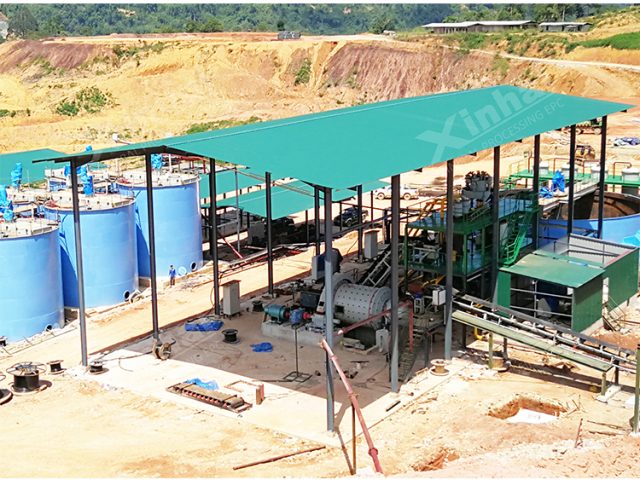
700 t/d Gold CIL Plant — Tanzania
Typical 89-93% Au recovery; CIL chosen to counter mild preg-robbing
Read case →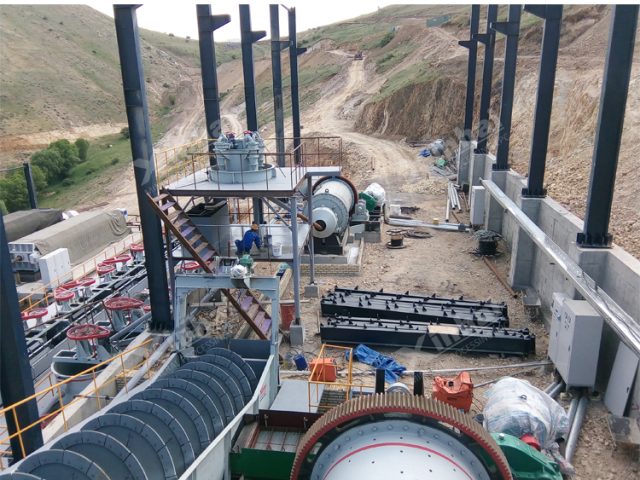
2 Mt/a Spodumene (Lithium) Plant — Zimbabwe
Typical 6% Li2O concentrate at 75-85% recovery; DMS plus flotation flowsheet
Read case →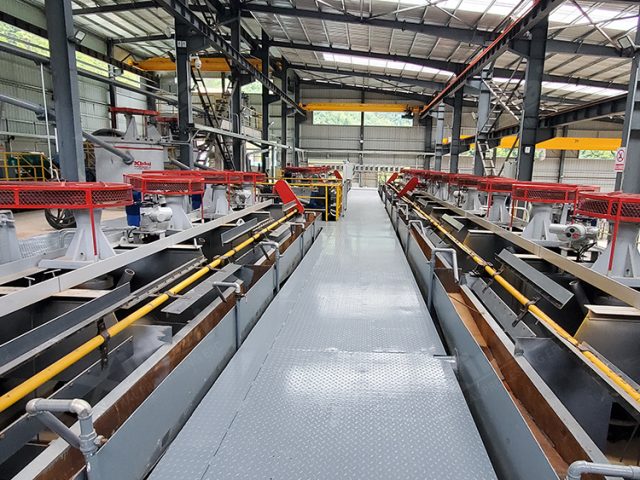
1,200 t/d Lead-Zinc Flotation Plant — Morocco
Separate Pb and Zn concentrates; typical 85-92% recovery via differential flotation
Read case →