
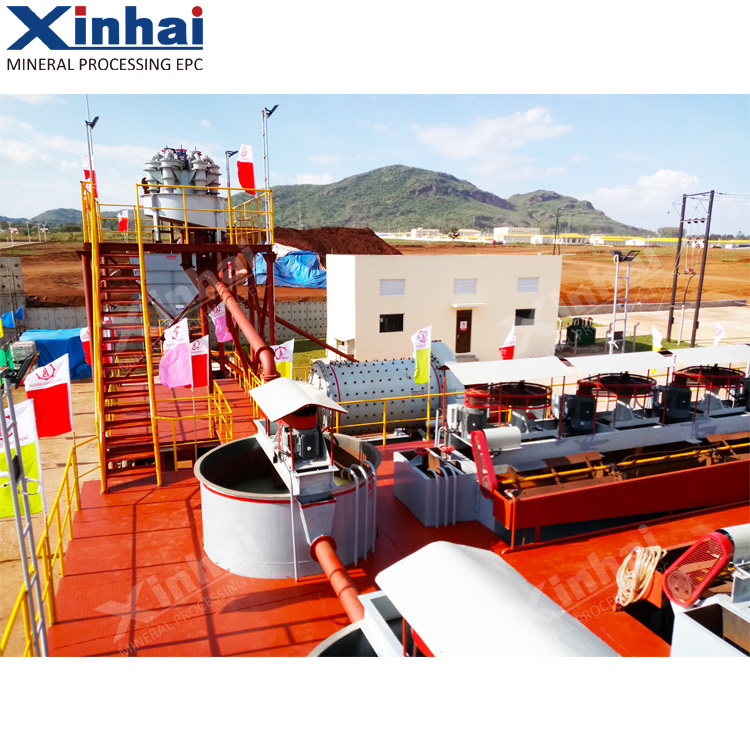
Typical process flow
- 1Screening & scrubbing
Alluvial feed is scrubbed and screened to remove clay and oversize, presenting clean liberated chromite to gravity units.
- 2Crushing & grinding (hard-rock)
Hard-rock chromite is crushed and ground only as fine as needed to liberate chromite from the silicate matrix.
- 3Coarse gravity - jigs
Jigs recover coarse, well-liberated chromite efficiently and at low operating cost as a primary concentration stage.
- 4Fine gravity - spirals & tables
Spiral chutes and shaking tables recover the finer chromite fraction that jigs miss, sharpening the grade-recovery split.
- 5Magnetic cleaning
High-intensity magnetic separation removes iron-bearing gangue to raise the Cr2O3:Fe ratio toward metallurgical grade.
- 6Dewatering & tailings
Concentrate is dewatered for transport while thickeners recover process water and manage the tailings stream.
The chromite ore challenge
Chromite is dense, roughly 4.5-4.8 specific gravity against silicate gangue near 2.7, which makes gravity concentration the natural recovery method. The complication is that buyers care about both Cr2O3 grade and the chromium-to-iron ratio, so an effective flowsheet must reject iron-bearing gangue as well as light silicates. Whether the ore is loose alluvial sand or massive hard rock changes the front end completely. Xinhai begins every chrome project with a bench and pilot test at its 3,000 m² mineral test center to fix the liberation size and the gravity-magnetic split.
Alluvial chrome
Alluvial and placer chromite is already liberated, so no grinding is needed. The feed is scrubbed to break down clay and screened to size, then concentrated by gravity. A jig recovers the coarse fraction cheaply, while a spiral chute separator and a shaking table recover the finer chromite that jigs miss. Our complete chrome ore processing plant packages scrubbing, screening and a staged gravity circuit into one mobile or fixed line. The full gravity concentration equipment range lets us match unit types to your particle-size distribution.
Matching the gravity unit to the particle size is what makes a chrome plant work. Jigs are most effective on coarse material, roughly above 0.5 mm, where they deliver high tonnage at low cost. Spiral chutes cover the intermediate fraction efficiently with no moving parts and low water use, while shaking tables give the sharpest separation on fine chromite down to around 0.1 mm but at lower throughput per deck. A staged circuit that hands each size fraction to the unit best suited to it recovers far more chromite than any single device, which is why we read the size distribution off the testwork before fixing the layout.
Hard-rock chromite
Massive or disseminated chromite must be crushed and ground to liberate chromite grains from the silicate matrix, but only as fine as necessary, since over-grinding produces hard-to-recover slimes. The liberated material then follows the same gravity route. For a grounding in unit selection, see our guide to gravity concentration equipment.
Raising the chrome-to-iron ratio
Gravity alone upgrades grade but does not always lower iron enough. A high-intensity dry magnetic separator removes iron-bearing gangue from the gravity concentrate, lifting the Cr2O3:Fe ratio toward the specification ferrochrome smelters require.
Closing the circuit
Concentrate is dewatered for transport and thickeners recover process water from tailings. Typical results are a 42-50% Cr2O3 concentrate at 70-90% recovery, framed against your own testwork rather than promised. For an example of how Xinhai delivers a turnkey plant end to end, review our EPC+M+O project case studies. As an EPC+M+O contractor, Xinhai delivers flowsheet design, in-house manufacturing, construction and operator training as a single source. To size a plant to your deposit, contact us for an ore test.
Frequently Asked Questions
Why is gravity separation used for chrome ore?
Chromite has a high specific gravity of about 4.5-4.8 against silicate gangue near 2.7, a large enough density difference for gravity units to separate it efficiently and at low cost. Jigs, spirals and shaking tables recover chromite across a range of sizes, which is why gravity is the backbone of almost every chrome flowsheet.
Do I need to grind alluvial chrome ore?
Usually not. Alluvial and placer chromite is already liberated, so it only needs scrubbing to remove clay and screening to size before gravity concentration. Grinding is reserved for hard-rock chromite, where chromite grains must be freed from the silicate matrix, and even then only as fine as required to avoid generating slimes.
How do I raise the chrome-to-iron ratio?
Gravity concentration upgrades Cr2O3 grade but does not always meet the chromium-to-iron ratio smelters require. High-intensity magnetic separation removes iron-bearing gangue minerals from the gravity concentrate, raising the Cr2O3:Fe ratio. The required ratio comes from your offtake specification and is built into the flowsheet during testwork.
What chrome concentrate grade is achievable?
Gravity concentration typically produces a 42-50% Cr2O3 concentrate at 70-90% recovery, with magnetic cleaning used to meet the chrome-to-iron ratio. Final grade and recovery depend on liberation size and the amount of fine chromite, so Xinhai frames both as achievable ranges tied to your specific ore test rather than a guarantee.
Related projects
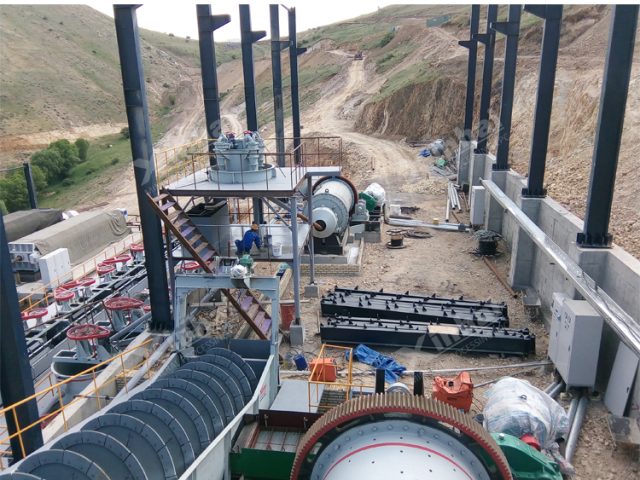
2 Mt/a Spodumene (Lithium) Plant — Zimbabwe
Typical 6% Li2O concentrate at 75-85% recovery; DMS plus flotation flowsheet
Read case →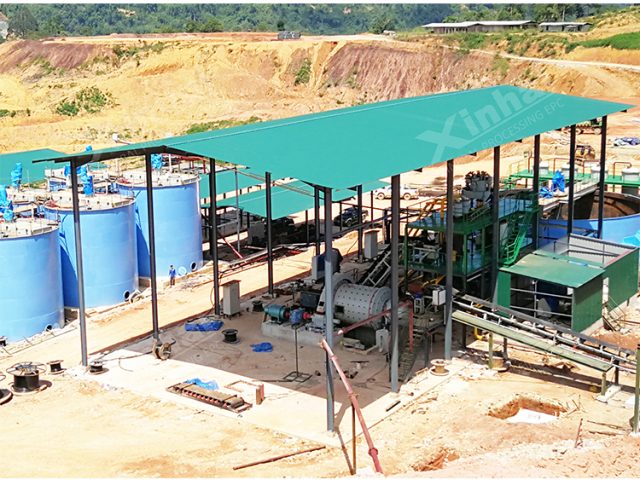
500 t/d Gold CIP Plant — Sudan
Typical 90-94% Au recovery on free-milling ore; compact CIP layout for fast deployment
Read case →700 t/d Gold CIL Plant — Tanzania
Typical 89-93% Au recovery; CIL chosen to counter mild preg-robbing
Read case →