
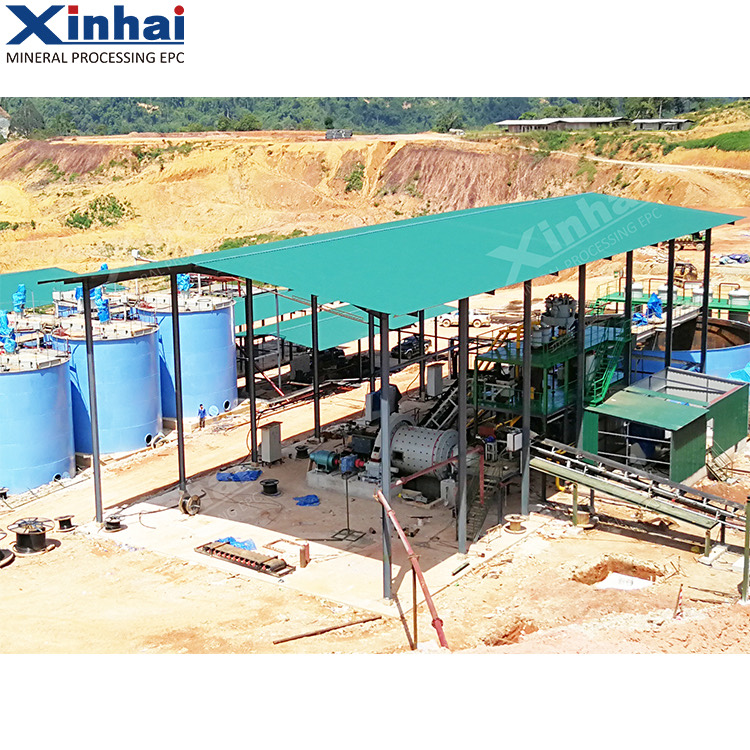
Typical process flow
- 1Crushing & screening
Three-stage crushing reduces run-of-mine ore to roughly 10-25 mm ahead of grinding, with vibrating screens closing the circuit.
- 2Grinding & classification
Ball milling in closed circuit with hydrocyclones liberates gold to a typical 75-80% passing 200 mesh (about 74 microns).
- 3Gravity recovery
Centrifugal concentrators and shaking tables capture coarse free gold early, lifting overall recovery and cutting reagent load.
- 4Flotation (refractory ore)
For sulfide-locked gold, flotation produces a gold-bearing sulfide concentrate for leaching or oxidative pretreatment.
- 5Cyanidation - CIL or CIP
Leaching in agitation tanks with activated carbon dissolves and adsorbs gold; CIL leaches and adsorbs simultaneously, CIP in sequence.
- 6Elution, electrowinning & dewatering
Loaded carbon is stripped, gold is electrowon and smelted to dore, while thickeners and filters recover water and manage tailings.
The gold ore challenge
No two gold deposits behave the same way. The single biggest decision is whether your ore is free-milling or refractory, because that sets the entire flowsheet. Free-milling ore releases gold to cyanide once it is ground; refractory ore locks gold inside sulfides or carbon, so leaching alone leaves money in the tailings. Xinhai begins every project with a bench and pilot test at its 3,000 m² mineral test center to confirm gold deportment, grind size and reagent demand before any equipment is sized.
The recommended flowsheet
For most free-milling ores we combine gravity and cyanidation. After three-stage crushing and closed-circuit grinding to roughly 75-80% passing 200 mesh, a gold centrifugal concentrator and shaking table recover coarse free gold first. This gravity stage reduces the gold that must be dissolved downstream, lowering cyanide and carbon consumption. The remaining gold is leached in agitation leaching tanks using a carbon-in-leach or carbon-in-pulp circuit.
CIL leaches and adsorbs gold simultaneously and suits ores with preg-robbing tendencies or moderate grades; CIP adsorbs after leaching and can be more economical on clean, fast-leaching ore. Our turnkey CIP gold processing plant packages tanks, screens, carbon transfer and the full reagent system. Whichever route fits, see our breakdown of CIL vs CIP vs heap leach to understand the trade-offs.
Reagent regime and residence time are set by testwork. A typical cyanidation circuit holds the pulp at 40-45% solids and pH 10.5-11 with lime, dosing sodium cyanide to a residual concentration that the leach kinetics demand, over a residence time of roughly 24-36 hours across a tank train. Activated carbon at around 10-25 g/L scrubs the dissolved gold from solution as it forms. Right-sizing cyanide and carbon is the largest single lever on operating cost, which is why we measure it rather than assume it.
Refractory ore
When gold is sulfide-locked, carbonaceous or arsenical, a flotation step on a flotation circuit concentrates the gold-bearing sulfides, which are then oxidized (roasting, pressure or bacterial oxidation) before cyanidation. Skipping pretreatment on refractory ore is the most common cause of poor recovery.
Recovering the gold and closing the circuit
Loaded carbon passes to a gold elution and electrowinning system, where it is stripped at elevated temperature and pressure, gold is electrowon onto cathodes, and barren carbon is regenerated and returned. Thickeners and filters recover process water and dewater tailings for safe storage. Browse the full gold extraction equipment range to see how the units fit together.
Typical recoveries are 90-96% on free-milling ore and 80-90% on refractory ore after flotation and pretreatment, always framed against your specific testwork rather than promised in advance. For a representative build, review our 6,000 t/d gold CIL plant in Guinea. As an EPC+M+O contractor, Xinhai delivers the engineering, in-house manufacturing, construction and operator training as a single source. To size a plant to your deposit, contact us for an ore test.
Frequently Asked Questions
Is my gold ore free-milling or refractory?
Only a metallurgical test confirms it. Free-milling ore gives high cyanide recovery after grinding alone, while refractory ore yields poor recovery because gold is locked in sulfides or carbon. Xinhai runs bench and pilot diagnostic leach tests to measure gold deportment and recommend whether flotation or oxidative pretreatment is needed.
Should I choose CIL or CIP for my gold plant?
CIL leaches and adsorbs gold onto carbon at the same time and suits preg-robbing or moderate-grade ores, while CIP adsorbs after leaching and can lower carbon costs on clean, fast-leaching ore. The right choice depends on leach kinetics and ore character, which we confirm during testwork before sizing the circuit.
Why add gravity recovery if I am already cyanide leaching?
Gravity concentrators capture coarse free gold before it reaches the leach, which lifts overall recovery, shortens leach residence time and cuts cyanide and carbon consumption. Coarse gold dissolves slowly, so removing it early reduces reagent cost and reduces gold lost to tailings, especially on ores with a gravity-recoverable gold fraction.
What gold recovery can I expect?
Typical recoveries are around 90-96% on free-milling ore and 80-90% on refractory ore after flotation and oxidative pretreatment. Actual recovery depends on grind size, gold deportment, reagent regime and residence time, so Xinhai frames recovery as an achievable range tied to your specific ore test rather than a guarantee.
Can Xinhai deliver a complete gold plant turnkey?
Yes. Under the EPC+M+O model Xinhai provides ore testing and flowsheet design, in-house equipment manufacturing, on-site construction and commissioning, plus operator training and production ramp-up. This single-source delivery covers crushing, grinding, gravity, flotation, CIL or CIP, elution-electrowinning and tailings, reducing interface risk across the project.
Related projects
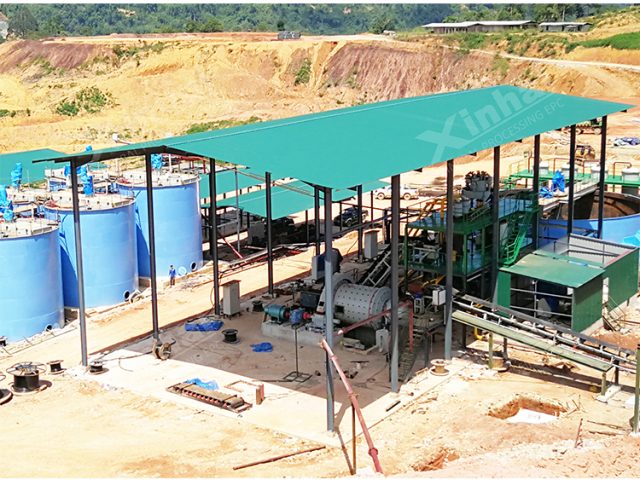
500 t/d Gold CIP Plant — Sudan
Typical 90-94% Au recovery on free-milling ore; compact CIP layout for fast deployment
Read case →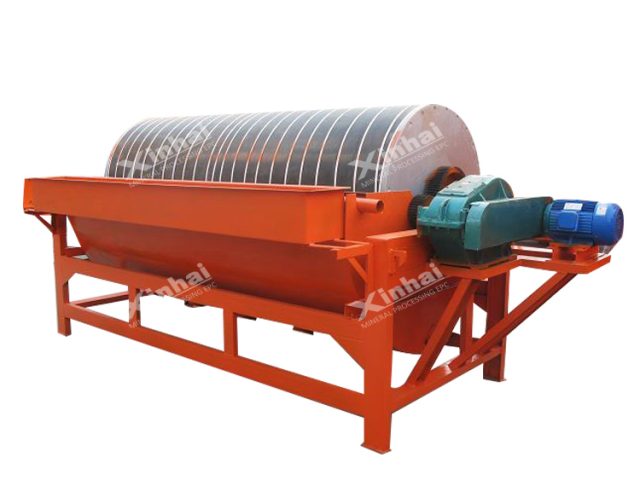
2,000 t/d Iron Ore Magnetic Plant — Kazakhstan
Typical 64-66% Fe concentrate at 90-95% recovery; staged wet magnetic separation
Read case →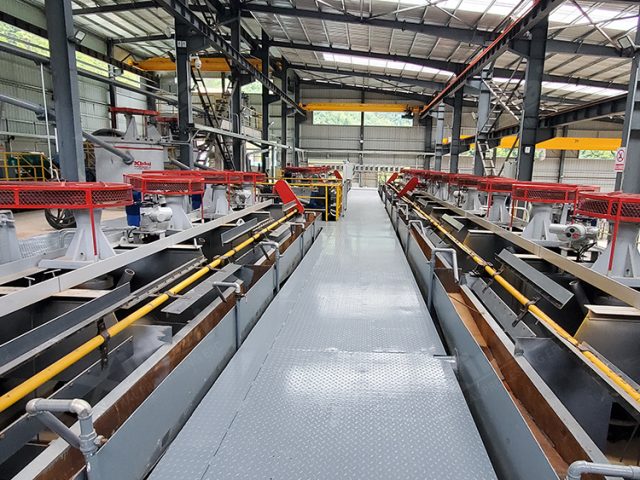
1,200 t/d Lead-Zinc Flotation Plant — Morocco
Separate Pb and Zn concentrates; typical 85-92% recovery via differential flotation
Read case →