
Typical process flow
- 1Crushing & screening
Run-of-mine ore is crushed in stages to a ball-mill feed below 10-15 mm using jaw and cone crushers in closed circuit with screens.
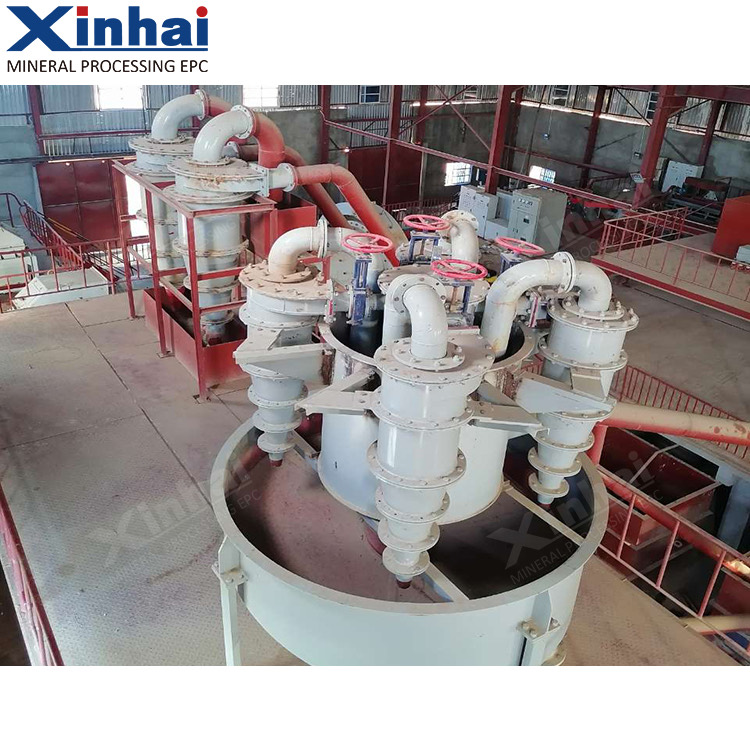
- 2Grinding & classification
A wet ball mill closed with hydrocyclones grinds to 55-70% passing 75 micron, enough to liberate molybdenite without over-sliming the soft, flaky mineral.
- 3Rougher (bulk) flotation
Molybdenite floats readily with only a hydrocarbon oil collector and frother; a rougher-scavenger circuit recovers a low-grade bulk concentrate.
- 4Regrind & multi-stage cleaning
The rougher concentrate is reground and cleaned through five to eight stages, liberating locked gangue to lift the grade to 45-57% Mo.
- 5Cu-Mo separation & dewatering
Where copper is present, copper is depressed to leave a clean moly concentrate; the product is thickened and filtered to a shippable cake.
Molybdenum is unusual among flotation ores: molybdenite (MoS2) is one of the most naturally floatable minerals there is, so getting it to float is easy. The difficulty is grade. Final molybdenum concentrate must reach 45-57% Mo, far higher than most base-metal concentrates, which means the rougher concentrate has to be cleaned many times over. The flowsheet is therefore defined less by the rougher and more by a long, carefully staged cleaning train.
Why bulk flotation then heavy cleaning
Molybdenite has a layered, graphite-like crystal structure that is naturally hydrophobic, so it floats with little more than a hydrocarbon oil collector (such as diesel or kerosene) and a frother, no expensive sulphide collector needed. A rougher-scavenger circuit quickly recovers nearly all the moly into a bulk concentrate, but at a low grade because fine gangue and middlings float with it. Reaching a saleable 45-57% Mo then requires re-floating that concentrate five to eight times, with a regrind early in the cleaning train to liberate gangue trapped in molybdenite flakes. Each cleaner rejects more gangue; the trade-off is that aggressive cleaning can lose moly, so stage count and regrind size are tuned to the ore.
The recommended flowsheet
Crushing, grinding and classification
Ore is crushed with a jaw crusher and cone crusher, then ground in a wet ball mill closed with a hydrocyclone cluster to 55-70% passing 75 micron. Molybdenite is soft and flaky, so grinding is set to liberate without over-sliming, which would smear moly across the froth and hurt selectivity.
Rougher flotation and multi-stage cleaning
The rougher circuit, built from mechanical flotation cells, floats a bulk concentrate with oil collector and frother. That concentrate is reground and sent through a long cleaner train, a packaged flotation plant can be configured for the rougher and cleaner stages, with the full flotation equipment range covering cell sizing. Sodium silicate or other depressants hold back silica and talc through the cleaners to protect grade. For the selective-separation principles behind cleaner circuits, see our copper flotation flowsheet guide.
Copper-molybdenum separation
In porphyry ores moly is a by-product of copper, and the two float together into a bulk Cu-Mo concentrate. Separation reverses the usual logic: the easily floated molybdenite is floated again while copper sulphides are depressed (commonly with sodium hydrosulphide or Nokes reagent), yielding a clean moly concentrate and a copper concentrate. This is a specialized circuit that needs careful reagent control.
Dewatering
The finished moly concentrate is thickened on a thickener and filtered to a low-moisture cake for shipment to a roaster.
Design choices that drive results
- Number of cleaner stages: the dominant control on final grade; more stages lift grade but risk moly loss.
- Regrind size: liberates gangue locked in molybdenite flakes and is essential to reach 50%+ Mo.
- Gangue type: talc and carbonaceous matter float naturally and dilute the concentrate, so depressant choice is critical.
- Cu-Mo ratio: in porphyry ores, decides whether a dedicated copper-molybdenum separation circuit is warranted.
Molybdenite grade and the cleaning effort needed vary with gangue mineralogy, so the cleaner train and regrind must be designed from testwork. Xinhai runs the ore test, designs the rougher and multi-stage cleaner circuit and delivers the complete processing plant under an EPC+M+O contract. To define the cleaning circuit for your ore, contact us for an ore test.
Frequently Asked Questions
Why does molybdenum need so many cleaning stages?
Molybdenite floats very easily, so the rougher concentrate also carries fine gangue and middlings, leaving it well below saleable grade. Final concentrate must reach 45-57% Mo, which requires re-floating the rougher product five to eight times, with a regrind to free gangue locked in molybdenite flakes. Each cleaner rejects more gangue, so the long cleaner train is what produces a high-grade moly concentrate.
What collector is used to float molybdenite?
Molybdenite has a naturally hydrophobic, graphite-like surface, so it floats with an inexpensive hydrocarbon oil collector such as diesel or kerosene, plus a frother. No specialized sulphide collector is needed for the molybdenum itself. The reagent challenge lies in the cleaning stages, where depressants like sodium silicate hold back silica and talc to protect the final concentrate grade.
How is molybdenum separated from copper in porphyry ore?
Copper and molybdenum first float together into a bulk Cu-Mo concentrate. Separation then floats the easily floated molybdenite again while depressing the copper sulphides, commonly with sodium hydrosulphide or Nokes reagent. This yields a clean molybdenum concentrate and a separate copper concentrate. It is a specialized, reagent-sensitive circuit, so it is designed and tested specifically for the ore's copper-to-molybdenum ratio.
What molybdenum concentrate grade and recovery are typical?
A well-designed flowsheet typically recovers 80-90% of the molybdenum to a 45-57% Mo concentrate, roughly 85-95% MoS2. Achievable grade depends on gangue mineralogy, regrind size and the number of cleaner stages. Talc and carbonaceous gangue cap the grade unless well depressed. Targets are set from testwork rather than promised, since cleaning effort varies significantly between deposits.
Does talc in the ore affect molybdenum flotation?
Yes, significantly. Talc and carbonaceous gangue are naturally floatable, so they float with molybdenite and dilute the concentrate, making target grade hard to reach. The flowsheet controls them with depressants such as carboxymethyl cellulose or guar in the cleaner stages. Identifying naturally floatable gangue during testwork is essential, because it dictates the depressant scheme and how many cleaner stages are needed.
Related projects
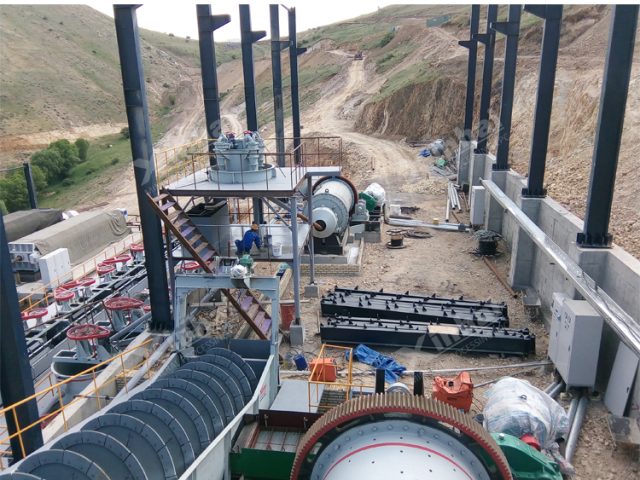
2 Mt/a Spodumene (Lithium) Plant — Zimbabwe
Typical 6% Li2O concentrate at 75-85% recovery; DMS plus flotation flowsheet
Read case →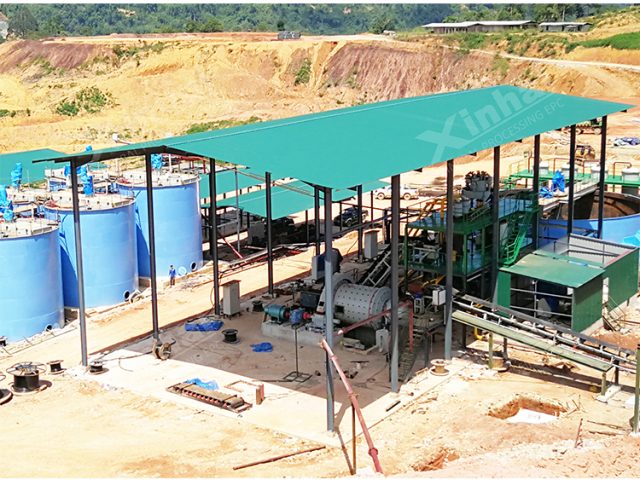
500 t/d Gold CIP Plant — Sudan
Typical 90-94% Au recovery on free-milling ore; compact CIP layout for fast deployment
Read case →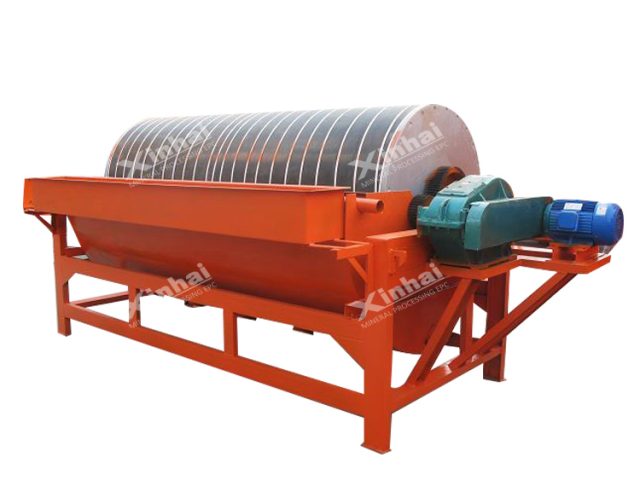
2,000 t/d Iron Ore Magnetic Plant — Kazakhstan
Typical 64-66% Fe concentrate at 90-95% recovery; staged wet magnetic separation
Read case →