
Background
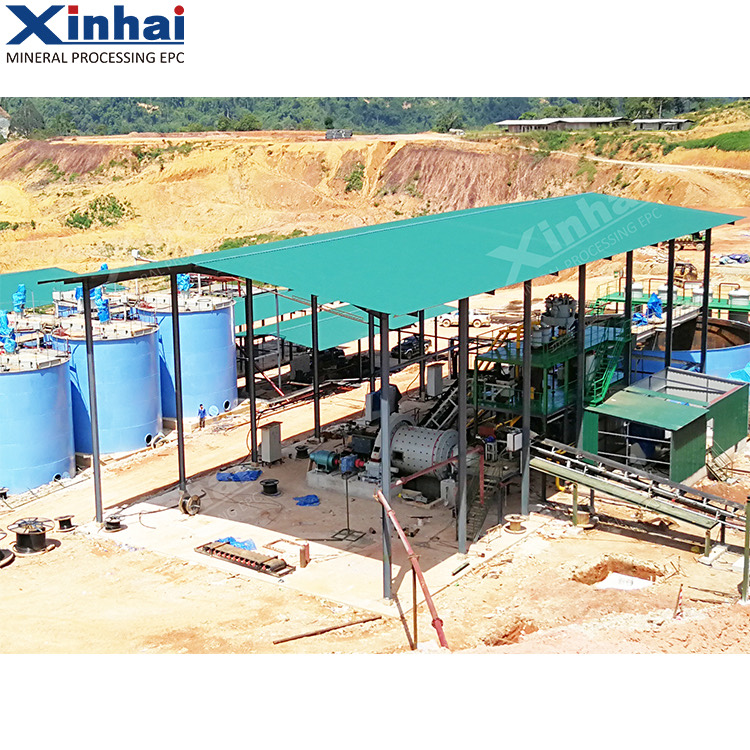
This profile represents a typical 700 t/d gold operation in Tanzania, a core market within Xinhai’s East African work. The ore was largely free-milling but carried a mild carbonaceous, preg-robbing tendency, meaning some dissolved gold could re-adsorb onto the ore during leaching if not captured promptly. The owner needed a robust circuit that would protect recovery against that risk at a moderate throughput.
Solution
Diagnostic leach testwork measured the preg-robbing tendency and fixed the grind and reagent regime. The selected flowsheet used carbon-in-leach so that activated carbon is present throughout leaching, keeping dissolved gold on carbon rather than letting it re-adsorb onto carbonaceous matter. After crushing and grinding in a closed circuit with a wet ball mill to roughly 75-80% passing 200 mesh, a gold centrifugal concentrator recovers coarse free gold. The pulp then enters a CIL train of leaching agitation tanks, and loaded carbon is stripped in a gold elution and electrowinning system.
Delivered as EPC+M+O, the project covered ore testing, in-house manufacturing, construction, commissioning and operator training. Choosing CIL over CIP was the key metallurgical decision: on a preg-robbing ore, keeping carbon in contact through the leach is the most reliable defense against soluble gold losses. The circuit ran a higher carbon concentration in the lead tanks where dissolution is fastest, and inter-stage screens moved loaded carbon counter-current toward the feed. Residence time was set with a margin over the diagnostic leach result so dissolved gold is adsorbed before the carbonaceous matter can re-capture it.
Outcome
For a mildly preg-robbing free-milling ore, a gravity-plus-CIL circuit typically achieves around 89-93% gold recovery once leach residence time and carbon concentration are tuned to the ore. Early gravity recovery and the CIL configuration together limited soluble losses during ramp-up. These figures are representative for this ore type rather than guarantees; actual recovery depends on the degree of preg-robbing, grind and residence time.
Operator training during ramp-up centered on carbon activity and cyanide dosing, the controls that keep a CIL circuit ahead of preg-robbing losses. See the broader gold processing solution for the full flowsheet logic. To diagnose preg-robbing on your ore and size a plant, contact us for an ore test.
Frequently Asked Questions
What is preg-robbing and why does it favor CIL?
Preg-robbing occurs when carbonaceous matter in the ore re-adsorbs gold that has already dissolved in the leach, sending it to tailings. CIL keeps activated carbon in the leach tanks throughout, so dissolved gold is captured on the process carbon faster than the ore can rob it. That is why CIL is the safer choice on carbonaceous or mildly refractory gold ore.
More projects
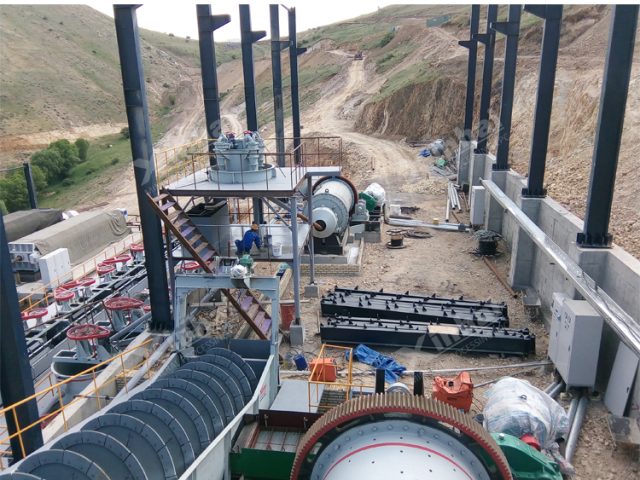
2 Mt/a Spodumene (Lithium) Plant — Zimbabwe
Typical 6% Li2O concentrate at 75-85% recovery; DMS plus flotation flowsheet
Read case →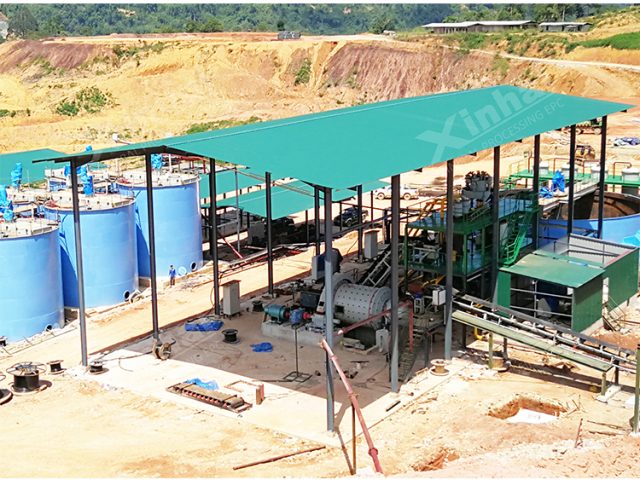
6,000 t/d Gold CIL Plant — Guinea
Typical 90-94% Au recovery on free-milling ore; built and commissioned to schedule
Read case →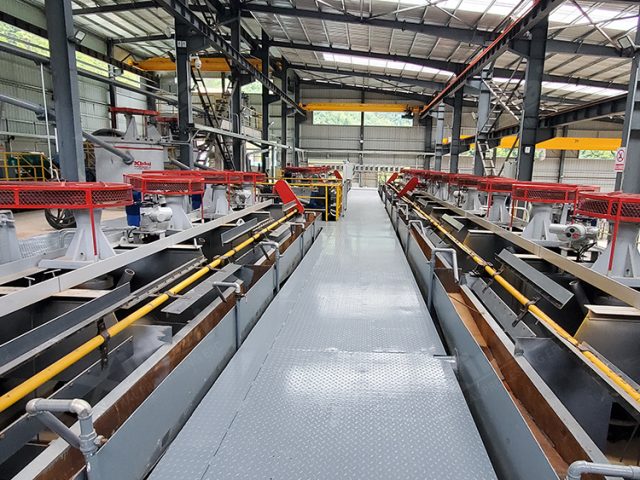
1,200 t/d Lead-Zinc Flotation Plant — Morocco
Separate Pb and Zn concentrates; typical 85-92% recovery via differential flotation
Read case →