
Typical process flow
- 1Crushing & screening
Hard-rock ore is crushed in stages to liberation size; placer feed is scrubbed and screened. Crushing is kept gentle to avoid sliming brittle cassiterite.
- 2Grinding & sizing
Primary ore is ground only as far as needed to liberate cassiterite, then closely sized by screens and hydrocyclones so each gravity unit sees a narrow size range.
- 3Coarse gravity (jigs & spirals)
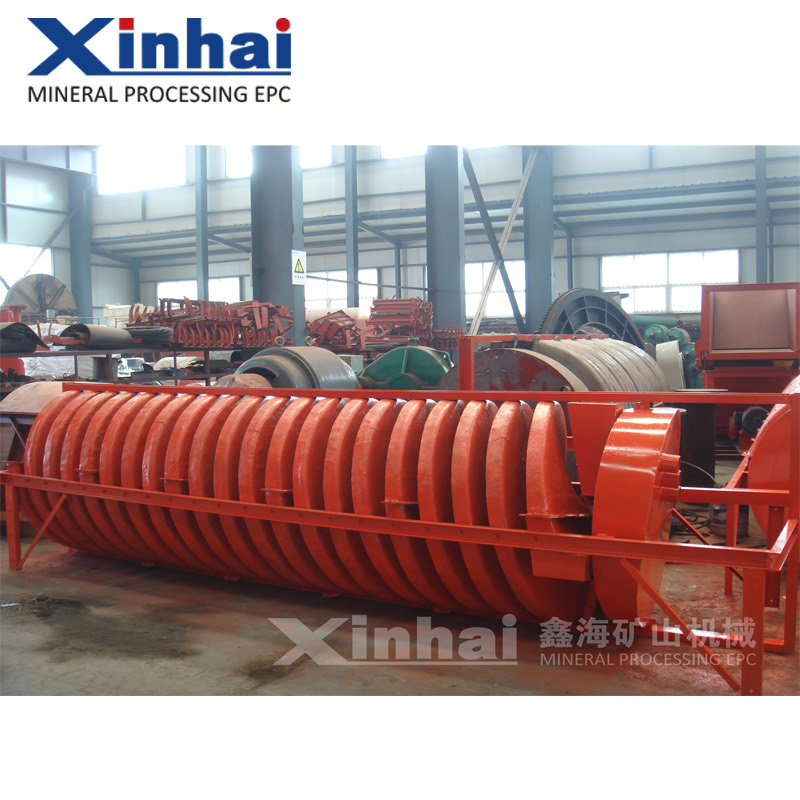
Jigs and spiral chutes recover coarse and middle-size cassiterite as a high-density preconcentrate, rejecting most light gangue early.
- 4Fine gravity (tables & centrifugal)
Sands are upgraded on shaking tables; liberated fines below 100 micron are caught on centrifugal concentrators to limit tin loss in slimes.
- 5Cleaning & dewatering
Gravity concentrate is cleaned, optionally floated or magnetically separated to remove sulphides and tantalum-niobium, then dewatered to a shippable Sn product.
Tin is the gravity engineer’s ore. Cassiterite (SnO2) has a specific gravity near 7, far heavier than the quartz and silicate gangue around it, so density-based separation is the natural and lowest-cost route. The catch is that cassiterite is brittle and slimes easily: over-grind it or pump it hard and the tin reports to the minus-20-micron fraction where conventional gravity units cannot catch it. The whole flowsheet is built to liberate the tin without sliming it, and to treat each size fraction with the right device.
Why gravity, and why size control matters
Because of the large density contrast, gravity concentration recovers cassiterite cheaply and without reagents, which is decisive for remote tin projects. But every gravity device, jig, spiral, table or centrifuge, works best over a narrow particle-size band. The governing rule is to size first, then concentrate: feed a unit a mix of coarse and fine particles and the fine heavies behave like coarse lights, and selectivity collapses. So the circuit screens and classifies the feed into fractions and routes each to the device suited to it. Gentle, stage-wise comminution that liberates tin at the coarsest possible size is the other half of the strategy, because every gram of cassiterite turned to slime is tin at risk of loss.
The recommended flowsheet
Comminution and sizing
Hard-rock ore is crushed with a jaw crusher and cone crusher, then ground only as far as liberation requires. Placer feed is scrubbed and screened. Close sizing with screens and a hydrocyclone splits the feed into coarse, sand and fine streams for the gravity units.
Staged gravity concentration
Coarse and middle sizes are preconcentrated on spiral chutes, which reject the bulk of light gangue with no moving parts and low cost. The sand fraction is upgraded on a shaking table, the workhorse for clean tin concentrate at fine sizes. Liberated fines below about 100 micron, where tables lose efficiency, are recovered on a centrifugal concentrator that uses enhanced g-force to catch tin that would otherwise be lost to tailings. The complete gravity concentration range covers each duty. For background on choosing between these devices, see our guide to tables, spirals, jigs and concentrators.
Cleaning and dewatering
The gravity concentrate often still carries iron sulphides and, in some deposits, tantalum-niobium minerals. A cleaning stage, magnetic separation or a small flotation step, removes sulphides and lifts the tin grade, and a magnetic separator can split paramagnetic tantalum-niobium from the cassiterite as a saleable by-product. The finished concentrate is dewatered to a shippable product.
Design choices that drive results
- Comminution philosophy: liberate at the coarsest size and minimize slimes; this is the dominant control on tin recovery.
- Number of size fractions: more, narrower fractions improve recovery but add units and cost; balance is set from sizing analysis.
- Fines circuit: centrifugal concentrators recover tin that tables miss; skipping them is the most common cause of low overall recovery.
- By-products: tungsten, tantalum and niobium can add value and need a dedicated cleaning path.
No two tin ores share the same grain size or slimes behaviour, so the circuit must be designed from sizing and liberation testwork rather than copied. Xinhai runs the ore test, designs the staged gravity flowsheet and delivers the complete processing plant under an EPC+M+O contract. To recover the most tin from your ore, contact us for an ore test.
Frequently Asked Questions
Why is gravity concentration preferred for tin ore?
Cassiterite has a specific gravity near 7, much higher than the quartz and silicate gangue around it, so density-based separation cleanly recovers it without reagents. Gravity units like jigs, spirals, tables and centrifugal concentrators are low in operating cost and well suited to remote tin projects. Flotation is usually reserved as a cleaning step or for very fine tin that gravity cannot catch.
How is fine cassiterite recovered without losing it to slimes?
Fine tin is the main recovery challenge because cassiterite is brittle and slimes easily. The flowsheet minimizes sliming with gentle, stage-wise grinding, then sizes the feed and treats the fine fraction on centrifugal concentrators that use high g-force to capture particles down to roughly 20-40 micron. Material finer than that is largely unrecoverable, so avoiding over-grinding protects recovery.
What tin grade and recovery are achievable?
A well-designed gravity circuit typically recovers 60-85% of the tin to a 40-65% Sn concentrate. Coarse-grained, low-slimes ores recover at the high end; fine-grained or heavily oxidized ores recover less. Because tin loss to slimes is hard to avoid entirely, the exact figures come from sizing and liberation testwork on your specific ore, not from a fixed promise.
Can a single shaking table treat the whole feed?
No. Every gravity device works best over a narrow size range, so a single table fed coarse-to-fine material separates poorly. An effective tin plant sizes the feed into fractions and routes each to the right device: jigs and spirals for coarse, tables for sands, and centrifugal concentrators for fines. This staged approach is what gives both high grade and high recovery.
How are sulphides and tantalum removed from the concentrate?
The gravity concentrate often carries iron sulphides and sometimes tantalum-niobium minerals. A cleaning stage upgrades the tin: low-intensity magnetic separation or a small flotation step removes sulphides, and magnetic separation can split paramagnetic tantalum-niobium from non-magnetic cassiterite. This both raises the tin grade and recovers tantalum-niobium as a saleable by-product where present.
Related projects
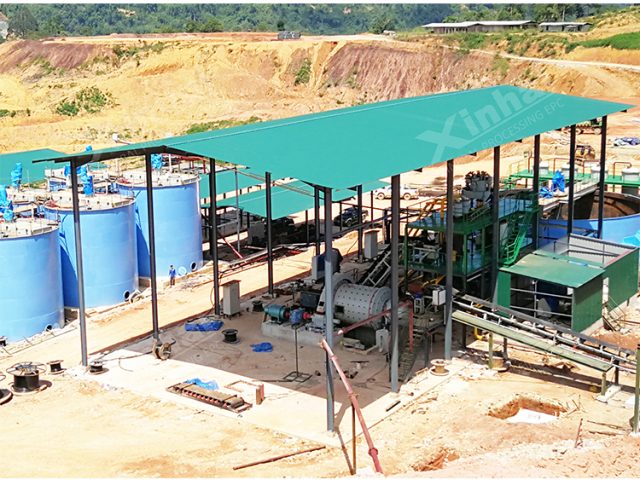
700 t/d Gold CIL Plant — Tanzania
Typical 89-93% Au recovery; CIL chosen to counter mild preg-robbing
Read case →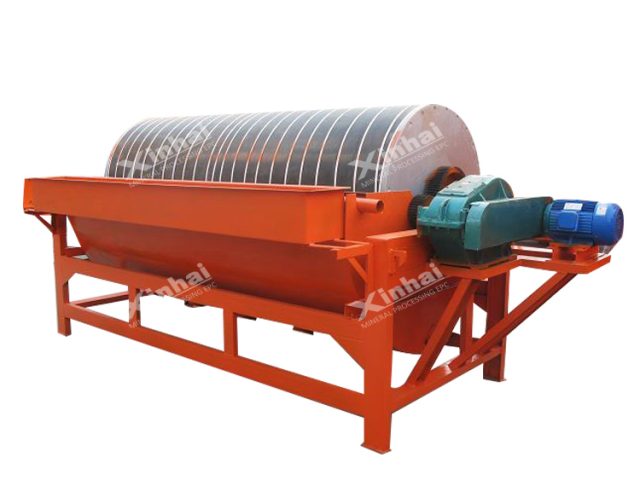
2,000 t/d Iron Ore Magnetic Plant — Kazakhstan
Typical 64-66% Fe concentrate at 90-95% recovery; staged wet magnetic separation
Read case →6,000 t/d Gold CIL Plant — Guinea
Typical 90-94% Au recovery on free-milling ore; built and commissioned to schedule
Read case →