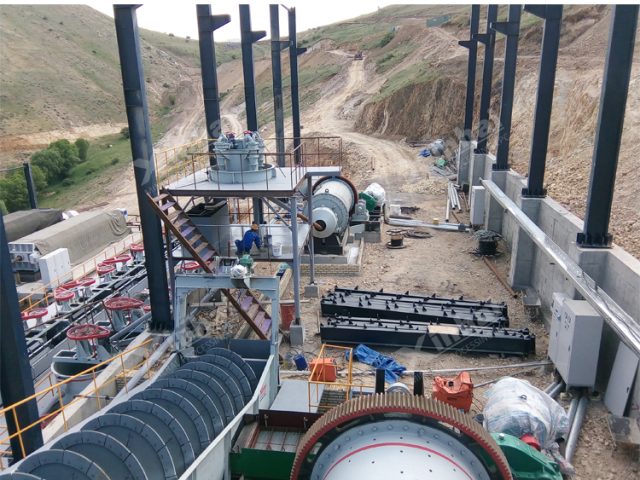
Choose a spiral classifier for coarse separations, lower capacity and simple, low-maintenance operation, often on small plants. Choose a hydrocyclone for fine cut sizes, high capacity in a small footprint and tight control of grinding-circuit product size. Many large plants use hydrocyclones; spiral classifiers suit coarse duties and gravity circuits.
Classification sits right next to grinding in the flowsheet: its job is to send coarse particles back to the mill and let properly ground fines move on. Get it right and the mill runs efficiently at the target product size; get it wrong and you either over-grind (wasting energy) or pass coarse material to recovery (losing metal). The two dominant classifiers are the spiral (screw) classifier and the hydrocyclone. They do the same job by very different physics.
How each one works
A spiral classifier uses gravity settling in an inclined tank. Coarse particles settle and a slow-turning spiral rakes them up the incline to the mill feed, while fine particles overflow with the water at the lower end. It is a mechanical, low-speed device.
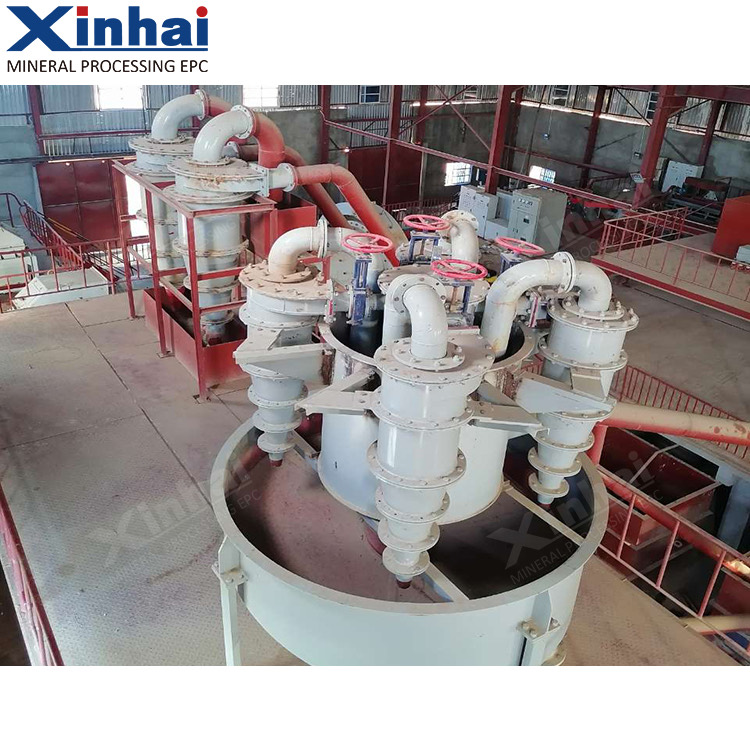
A hydrocyclone uses centrifugal force. Slurry is pumped tangentially into a conical body; coarse particles are thrown to the wall and report to the underflow (back to the mill), while fines exit the top as overflow. It has no moving parts but needs a feed pump.
Head-to-head comparison
| Factor | Spiral classifier | Hydrocyclone |
|---|---|---|
| Separation principle | Gravity settling | Centrifugal force |
| Typical cut size | Coarse (~150 microns and up) | Fine (down to ~10-40 microns) |
| Capacity per unit | Lower | High |
| Footprint | Large (long tank) | Very small |
| Moving parts | Yes (spiral, drive) | None (needs feed pump) |
| Overflow clarity | Cleaner, lower turbulence | Sharper cut, higher throughput |
| Maintenance | Simple, low-speed wear | Apex/vortex liner wear |
| Energy | Low (slow drive) | Pumping energy |
When to choose a spiral classifier
Spiral classifiers shine where the separation is coarse and the operation values simplicity. They are forgiving, easy to operate, tolerant of surges, and need no feed pump, which makes them popular on small and medium plants and ahead of gravity concentration where a clean coarse overflow helps. The high-weir design suits coarser cuts; submerged designs handle finer overflow. The trade-offs are a large footprint, lower capacity per unit, and an inability to make very fine cuts. See the high weir spiral classifier for a typical coarse-duty unit.
When to choose a hydrocyclone
Hydrocyclones dominate modern, larger grinding circuits because they make a sharp, fine cut at high capacity in a tiny footprint, and a cluster of cyclones scales easily by adding units. They give tight control over circuit product size, which matters when downstream flotation or leaching needs a consistent P80. The costs are a feed pump (energy) and routine replacement of the apex and vortex finder liners, which wear in abrasive duty. For fine classification and high tonnage, the hydrocyclone separator is usually the better fit.
What drives a hydrocyclone’s cut size
A cyclone’s separation is tuned, not fixed. Cut size drops (gets finer) with smaller cyclone diameter, higher feed pressure and lower slurry density, and rises with a larger apex (spigot) opening. Operators adjust apex and vortex finder sizing to hold the target cut as ore and tonnage vary. This tunability is a real advantage, but it also means cyclones need a stable feed from a well-controlled pump and sump – surging feed gives a wandering cut. Apex wear gradually coarsens the cut, so liner condition is part of routine control, not just maintenance.
Capacity, wear and operating cost
Per unit of floor space, a hydrocyclone moves far more slurry than a spiral, and capacity scales simply by adding cyclones to a manifold or cluster. That density of throughput is why large concentrators favor them. The offsetting costs are pumping energy and wear-part replacement: apex and vortex finder liners in abrasive iron or hard-rock duty may need changing on a regular cycle. Spiral classifiers carry the opposite profile – low energy and slow, predictable wear on the spiral flights and tank liner, but a large footprint and modest capacity that make them impractical to scale to high tonnage. For small operations, the spiral’s lower complexity and absence of a feed pump often win on total cost of ownership, and its slow-moving mechanism is easy for less-experienced crews to run and maintain in remote locations where spare cyclone liners may be hard to source.
Quick selection guide
- Pick a spiral classifier if: the cut is coarse, the plant is small to medium, you want no feed pump and minimal maintenance, or you are feeding a gravity circuit.
- Pick a hydrocyclone if: you need a fine cut size, high capacity, a small footprint, or tight product-size control ahead of flotation or leaching.
- Consider both: some circuits use a spiral for coarse primary classification and cyclones for fine secondary control.
It is really a circuit decision
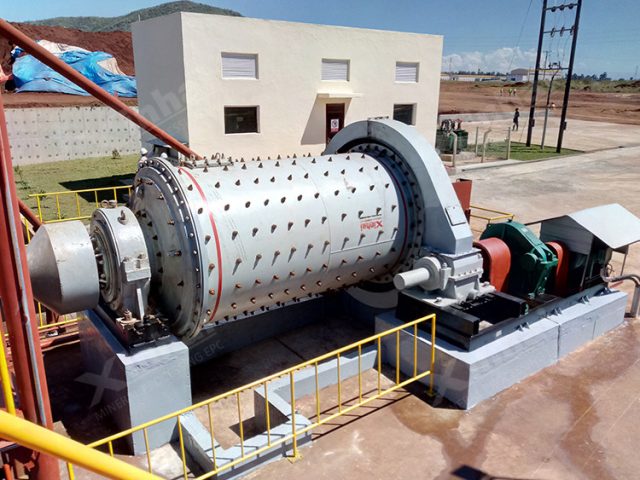
The classifier choice cannot be made in isolation from the mill it closes. Cut size sets the circulating load, which sets the effective mill capacity, which feeds back into mill sizing. A hydrocyclone making a fine cut will recirculate more coarse material and let the mill grind finer; a spiral making a coarse cut suits a coarser target. If you are still sizing the mill itself, see our guide on choosing a ball mill, and browse the full classifiers and hydrocyclones range alongside the grinding equipment so the two are matched.
Getting the cut size right
Specify classification from the product size your recovery process needs, then work back to cut size, circulating load and unit count. Xinhai sizes classifiers as part of the integrated grinding circuit under one EPC+M+O contract, so the classifier, mill and pump are balanced to your ore and target tonnage rather than picked from a catalog in isolation. Send your flowsheet and target P80 through the contact page for a sizing recommendation.
Frequently Asked Questions
What is the difference between a spiral classifier and a hydrocyclone?
A spiral classifier separates by gravity settling in an inclined tank with a rotating spiral, suiting coarse cuts and lower capacity with simple operation. A hydrocyclone separates by centrifugal force in a small conical body, making finer, sharper cuts at high capacity but needing a feed pump and periodic liner replacement. They do the same job by different physics.
Which is better for closing a grinding circuit?
Hydrocyclones are the more common choice for closing modern, larger grinding circuits because they make a fine, sharp cut at high capacity in a small footprint and scale easily as a cluster. Spiral classifiers remain a good fit for coarse cuts, small to medium plants, and circuits where simplicity and no feed pump are priorities.
What cut size can a hydrocyclone achieve?
Hydrocyclones can make cut sizes down to roughly 10-40 microns depending on cyclone diameter, feed pressure, apex and vortex finder dimensions and slurry density. Smaller-diameter cyclones make finer cuts. Spiral classifiers generally make coarser cuts, around 150 microns and above, so cyclones are preferred when a fine product size is required.
Does a spiral classifier need a pump?
No. A spiral classifier is gravity-fed and uses only a slow drive to turn the spiral, so it needs no feed pump and consumes little energy. A hydrocyclone, by contrast, must be fed under pressure by a slurry pump. This makes spirals simpler and cheaper to run where their coarse cut and lower capacity are acceptable.
Can I use both in one plant?
Yes. Some circuits use a spiral classifier for coarse primary classification and a bank of hydrocyclones for fine secondary control, combining the spiral's simplicity with the cyclone's sharp fine cut. The best arrangement depends on your target product size and tonnage. Xinhai sizes the full classification stage as part of the grinding circuit design.